Ray Kelly on NYPD becoming a global counterterrorism force after 9/11: "We should have been in this business a long time ago"
Ray Kelly served two non-consecutive terms and is the longest-serving NYPD commissioner in history. He's widely credited with driving down crime and ramping up the department's counterterrorism capacity.
CBS News New York recently caught up with Kelly just before his 85th birthday to talk about the 25 years since Sept. 11, 2001 terror attacks.
He said the time has "just seemed to whiz by," adding he remembers many things about that day.
"Well, I saw the first building fall. I was working for Bear Stearns at the time. I was in the executive dining room, and somebody came in and said a small plane hit the World Trade Center," Kelly said. "Well, you know, okay, small planes. When it came out that there were two planes, everybody started to run. It was obvious that it was some sort of terrorist event."
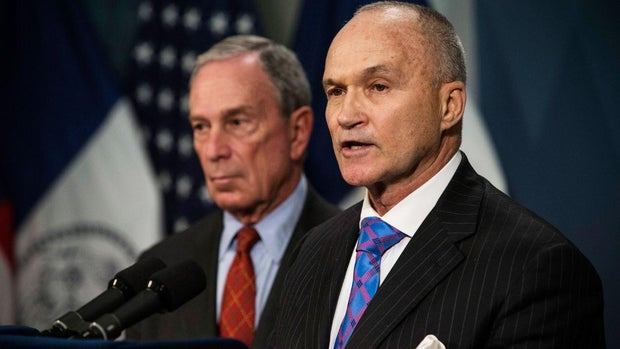
Kelly was a civilian on 9/11, but the 1993 World Trade Center bombing happened on his watch. His time working for the federal government had served him well, as newly elected Mayor Mike Bloomberg brought Kelly back in the months following the attacks. But this time the job was different.
"The big difference is that the NYPD was involved in fighting crime before 9/11. After 9/11, we got all hard, you might say, into the counterterrorism business. We had been attacked twice. We had, in my charge, been let down by the federal government. There was enough information out there for both events to at least put up a red flag," Kelly said.
The decorated Marine colonel in Ray Kelly would not allow him to sit by while his home of lower Manhattan burned.
"Oh yeah, I mean, I was really frustrated. I was not in government. I wasn't in the game. And I wanted to be somehow," Kelly said. "And then [Bloomberg] called me."
The transformation of the NYPD under Ray Kelly
Kelly said he wasn't necessarily sure he had a game plan to transform the NYPD to prevent future attacks.
"I don't know. I guess I did, but I don't think I thought of it like that. I just felt frustration that I was on the sidelines," Kelly said.
Needless to say, when Kelly returned, the NYPD was indeed reinvented and revolutionized.
"And people said it couldn't be done, but one of the things that we did was to bring on board people from the federal government who had retired or were perhaps seconded to NYPD," Kelly said. "We had CIA, FBI, DIA, DEA representatives from those organizations. So, cops are great, but they didn't have the skills that we needed right away, so we brought them on board, and they did a great job."
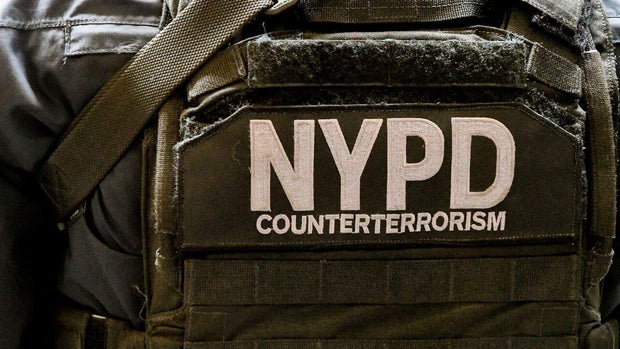
Kelly is credited with transforming the Police Academy, creating a multi-billion dollar OPS Center, and investing heavily in the creation of a worldwide counterterrorism bureau.
"Well, I don't think of them as achievements so much. I think of it as things that had to be done. You know, the biggest city in the country, we've been attacked twice. We need to take care of our own defenses. And we, to a certain extent, stood alone," Kelly said.
Kelly said there are things he wished the NYPD had done following the 1993 attack that might have prevented 9/11.
"You know, in hindsight, we never should have outsourced our security. We should have been in this business a long time ago," Kelly said. "During the Bloomberg administration, there were 16 plots. None of them came to fruition. Some was great work by the FBI, great work by NYPD, and sheer luck, but it worked."
"You think about their families"
A quarter-century later, Kelly said the pain doesn't lessen, and the memories don't fade. Sept. 11 remains an annual reminder of one of the worst days in history.
"You know, I went to a lot of funerals, talked to a lot of people, and it's a jolting experience for anybody who was in the city at that time," Kelly said.
Kelly described what it was like having the unenviable task of recovering the dead.
"What comes to my mind is several bodies of police officers that I walked out when the bodies were found. And I did that with [former Chief of Department] Joe Esposito, who, unfortunately, is no longer with us," Kelly said. "But I think about that. As a matter of fact, I'm just looking at a picture of that. Coming out of the hole, and it was a memorial. It was done slowly. It was done carefully, and taken to the medical examiner's office, and everybody filled up."
"You know, it's just ... you think about their families," he added.


