Colorado has been "making snow" since the 1950s. Here's how cloud seeding works.

Colorado heavily depends on snow. It is responsible for filling our rivers, reservoirs, fuels ski season and supports millions of people across the Western United States.
This got me thinking, what if we could help storms squeeze out just a little more?
It turns out, we already are.
Cloud seeding has been happening in Colorado since the 1950s, and state scientists say it's one tool that can help boost snowpack during our changing winters.
What is cloud seeding?
Cloud seeding is a weather modification method designed to enhance snowfall in storms that are already forming.
"We spray a minute amount of silver iodide across a propane flame. It's carried up into the clouds, and the ice crystals grow big enough to fall as snow," said Andrew Rickert, who is the program manager for Colorado's Weather Modification Program.
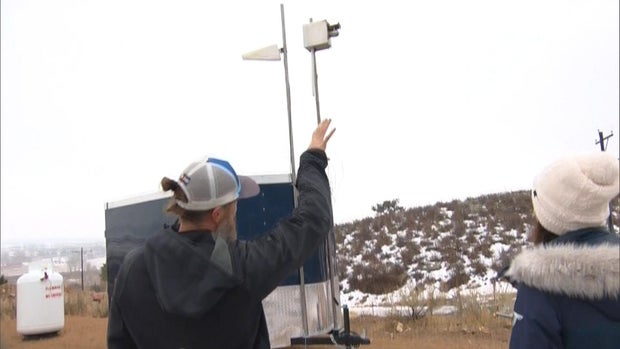
In simple terms, tiny particles help water droplets in the cloud form snowflakes more efficiently.
It doesn't create storms, but it can enhance existing ones.
How much snow can it actually add?
State scientists say cloud seeding can increase snowfall by 8% to 12% per storm when conditions line up.
"If a storm would naturally drop 10 inches, we might be able to get an extra inch out of it," Rickert said. "Over dozens of storms, that adds up to real water."
In a state where every flake matters, especially the Colorado River, those inches add up.
Where does cloud seeding happen?
Colorado currently has seven state-permitted cloud seeding programs, mostly in high-elevation mountain areas. They focus on major snow-producing basins, including:
- San Juan Mountains
- Gunnison Basin
- Grand Mesa
- Vail and Beaver Creek area
- North Platte region
- Central Colorado Mountain River Basin (Summit, Lake and Park Counties)
- St. Vrain / Left Hand Basin
An eighth warm-weather rain-enhancement permit is expected in Weld County -- a new approach to see if similar techniques can support rainfall.
Why it matters for Colorado and the west
Snow from Colorado's mountains feeds eight major river basins, including the Colorado River, which serves at least 40 million people downstream.

"This is one of the only ways to physically add water to a basin," Rickert said. "It's not the solution to drought, but it's an important tool."
Western states like Arizona, California and Nevada even help fund Colorado's cloud seeding efforts because they benefit, too.


