Mother sues Howard County police, alleges failed response led to deadly shooting of son with autism

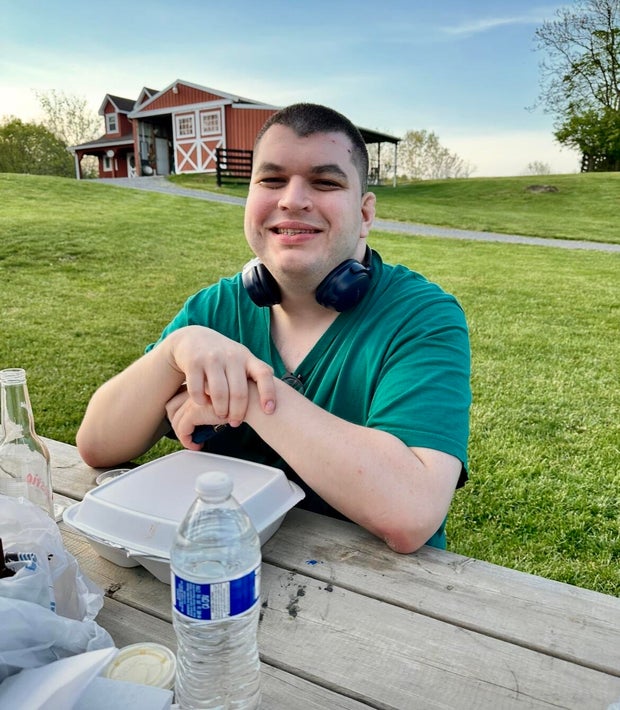
The family of Alexander LaMorie, a 25-year-old man with autism who was shot and killed by Howard County police officers last March, announced a federal lawsuit has been filed against the county and the officers involved in the shooting.
A lawyer for the family, Jamie Strawbridge, with the law firm Brown, Goldstein & Levy, LLP, made the announcement at a news conference Thursday morning.
The lawsuit alleges violations of federal laws, including the Americans with Disabilities Act, as well as state law.
"Alexander LaMorie should be alive today. Alex is dead, because in a moment of crisis he called 911 for help. Rather than provide the modified emergency response services that Alex needed, Howard County sent four police officers armed with deadly weapons and no mental health resources," Strawbridge said.
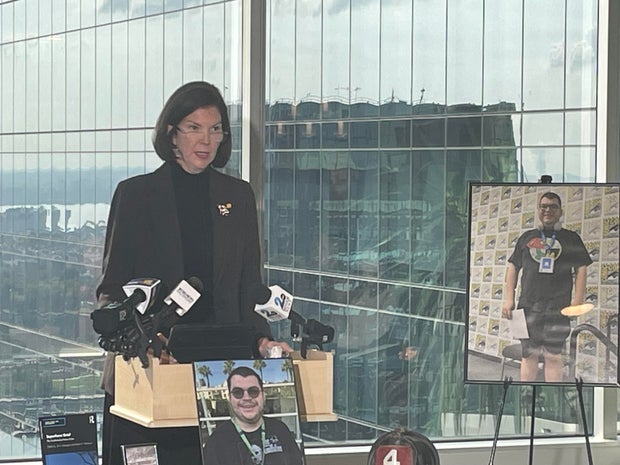
The lawsuit was filed in federal district court, on behalf of the estate of LaMorie and his mother, Dr. Jill Harrington. The defendants are Howard County and the three police officers who shot and killed him.
Howard County Police and Howard County government told CBS News Baltimore that they do not comment on pending litigation.
Patuxent Commons from "dream" to "nightmare"
LaMorie was shot by the officers during a mental health call outside his apartment building at Patuxent Commons in Columbia. The apartment complex is part of a multimillion-dollar project designed to provide safe, affordable housing for adults with disabilities and senior citizens.
Strawbridge said LaMorie had moved in just three days before the shooting.
"For Alex, the county's invitation into this community proved fatal," he said.
LaMorie's mother said they sought out the autism-inclusive facility and thought it would be a "dream" arrangement for her son.
"We wanted him to maintain his independence -- which, he had already been living in an apartment -- but this was more of an intentional community, so he could find friendship, connection and a sense of belonging," she said. "For adults with autism, affordable housing, meaningful relationships and consistent support can be really difficult to find. Like any young adult, Alex wanted a life of his own, a place where he could feel safe, understood and welcome."
She went on to say the apartment complex "appeared to offer that future."
"It emphasized disability inclusion, independent living and community engagement," she continued. "But most of all, we also believed that Howard County's stated commitment to disabilities awareness and specialized crisis response training meant Alex would be living in a community prepared to understand and response appropriately to his needs."
His mother added, "then came the nightmare."
"No plan, no specialized mental health resources"
Howard County police said at the time they received a 911 call from a man threatening to harm himself. Officers encountered LaMorie outside the apartment complex.
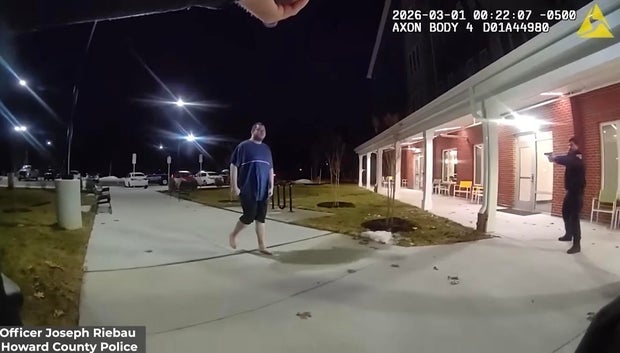
According to authorities, he was carrying a knife and walked toward officers, refusing to drop the weapon. He was shot 12 times.
Strawbridge alleged the officers were dispatched with "no plan, no specialized mental health resources, and no less lethal options appropriate for this situation, such as Tasers."
"Before they shot and killed Alex, they asked, 'Do you have your Taser? Does anyone have less lethal?' No one did," he said. "So those officers resorted to a force-first approach, escalating their encounter with Alex, rather than deescalating it."
A month after the shooting, the Maryland Attorney General's Office released body camera video of the encounter. The attorney general's office identified the officers involved as Officer Joel Rodriguez, a two-year veteran; Officer Cody Bostic, a six-year veteran; and PFC Joseph Riebau, a 10-year veteran.
The officers did not face criminal charges.
Calls for a different approach
The shooting sparked outrage from LaMorie's family, who have called for accountability and argued the officers were unprepared to respond to a mental health crisis.
"My son needed help. By calling 911, he did the right thing, like he was always taught," his mother said Thursday. "Instead of help for a mental health crisis, Alex was treated like a dangerous criminal, and he was fatally shot."
She went on to say, "his autism is not a crime, being in crisis is not a crime."
The shooting also prompted Howard County Executive Calvin Ball and then-Police Chief Gregory Der to pursue improvements to the county's response to mental health crises.
This May, the county established the Task Force on Disability Inclusion, Safety and Crisis Response. The group includes representatives from the police department, other county agencies, nonprofits and social service professionals. During a meeting in July, the task force reviewed the police department's existing training and protocols for responding to such crises.
"We hope this lawsuit will be a catalyst for accountability, meaningful reform and safer crisis responses for everyone. This is how we've chosen to honor Alex and help prevent another family from the profound and preventable loss that we endured and we will endure for the rest of our lives," his mother added.


