Clear skies on Wednesday create ideal conditions to catch glimmer of northern lights in North Texas

Wednesday has been a warmer-than-average day; the high should be in the upper 60s, but North Texas topped out in the upper 70s.
Overnight, temperatures will dip into the 50s and winds will carry moisture from the Gulf into our area. This will allow for some fog to form during the morning commute on Thursday. If you come across any fog, remember to use low beam headlights and to take it slow while driving.
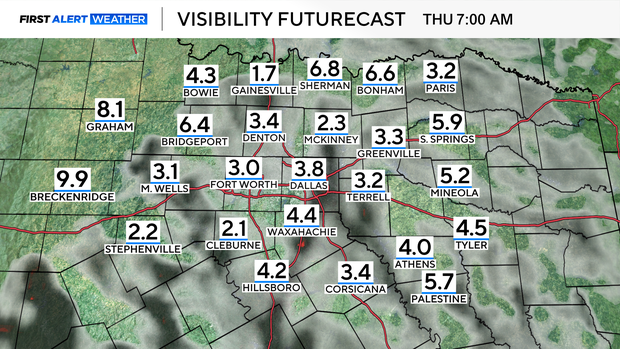
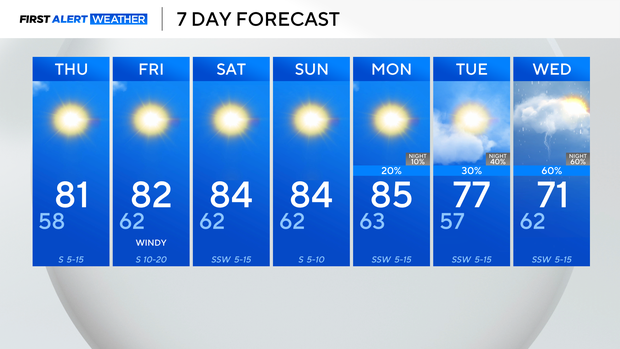
The fog will lift by late morning. Thursday, there will be plenty of sunshine, breezy winds, and a high of around 80 degrees.
Highs in the 80s and breezy winds will continue through the rest of the week and into the weekend. The next chance of rain has been delayed and will likely be by next Wednesday.
Are the northern lights visible in North Texas?
A severe geomagnetic storm is forecast to hit Earth's magnetic field on Wednesday, which could cause widespread disruption to infrastructure technology and make northern lights visible for much of the northern half of the U.S.
The National Oceanic and Atmospheric Administration on Tuesday issued a G4, or severe, geomagnetic storm watch in response to recent coronal mass ejections, or CMEs, from the sun. CMEs are huge bubbles of coronal plasma that the sun occasionally ejects, NASA says.
While the potential geomagnetic storms can cause disruptions to critical communication infrastructure, they could also make the aurora visible as far south as Alabama and in Northern California beginning Tuesday night, NOAA said. North Texans reported seeing northern lights Tuesday night.
The University of Alaska and Space Weather Prediction Center forecasts say the best chance of seeing the northern lights starts as early as 10 p.m. ET Tuesday and will last until around 1 a.m. Wednesday.
During that time, "highly active auroral displays" might be visible in places like Portland, Oregon; Cheyenne, Wyoming, and New York City, the University of Alaska said. The northern lights might also be visible close to the horizon as far south as Oklahoma City and Raleigh, North Carolina, the university said.