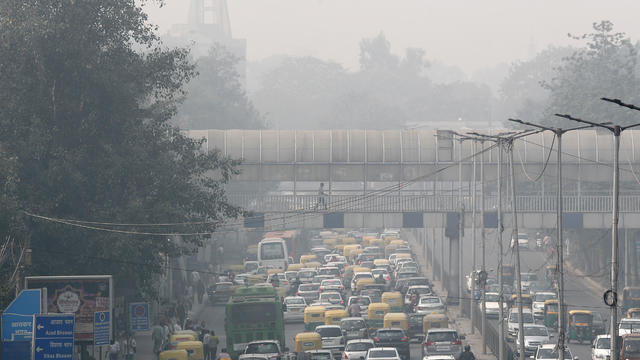
Air pollution slashing 10 years off life expectancy in India's capital, study says
Billions living in the world's top four most polluted countries — all of them in South Asia — could be facing a life shortening impact of air pollution.
Watch CBS News
Billions living in the world's top four most polluted countries — all of them in South Asia — could be facing a life shortening impact of air pollution.

A WHO advisor laments China "still refusing to share essential raw data" and grant access to Wuhan labs. Beijing calls the lab leak theory "a lie," but says U.S. labs should be probed.

More than 430 cases of monkeypox have been identified worldwide since the beginning of the month.
The cases, which have so far puzzled health officials, have been reported in 33 different countries since early April.

China is doubling down on its "zero-COVID" strategy that's forcing millions to stay isolated in their homes. Lawrence Gostin, a professor at Georgetown University, Founding O'Neill Chair in Global Health Law, and director of the World Health Organization Collaborating Center on National and Global Health Law spoke with CBS News anchor Tanya Rivero about how China is handling the pandemic.

This severe strain of acute hepatitis has been identified in nearly 170 children across 11 countries in recent weeks.

The Centers for Disease Control and Prevention and World Health Organization are investigating unusual cases of severe hepatitis in otherwise healthy children in the U.S. and Europe. CBS News' chief medical correspondent Dr. Jon LaPook joins "CBS Mornings" with the latest on the investigation.
No deaths have been reported, the WHO said.

The agency recently reversed recommendations against routine surveillance of the virus in wildlife, as officials huddle to strategize over the potential threat.

That air is often rife with particles that can penetrate deep into the lungs, enter the veins and arteries, and cause disease.

About 10 million new COVID infections and more than 45,000 deaths were reported worldwide over the past week, the U.N. health agency said.

The World Health Organization has endorsed the first-ever vaccine to prevent malaria. As Debora Patta reports, the infectious disease kills around half a million people each year, mainly in Africa, and over half of those deaths are in young children.

The rate of COVID transmission across Europe is of "grave concern," the World Health Organization said Thursday. CBS News senior foreign correspondent Charlie D'Agata spoke with WHO's regional director of Europe, Dr. Hans Kluge, who warns vaccines are not enough, and that we must continue to wear masks, wash our hands and socially distance.

A children's hospital and maternity facility in Mariupol suffered "colossal" damage from what Ukrainian officials said was a Russian strike.

When people learn how to make condoms "sexy," they're more likely to use them, researchers said.

The Omicron variant is causing spikes in COVID-19 cases throughout the world. Some European hospitals are at capacity as the virus threatens to derail the upcoming Beijing Olympics. Elizabeth Palmer reports.

it's unusual that a variant identified in France more than a month ago should be seizing so many headlines this week.

The World Health Organizations reported an 11% rise in COVID-19 cases last week, with nearly 5 million new cases reported worldwide. CBS News foreign correspondent Charlie D'Agata joins CBSN with more from London.

It remains unclear if the rapid growth is because the variant evades existing immunity, is inherently more transmissible than previous variants, or a combination of both.

Health officials are working to learn more about the new Omicron COVID-19 variant. Michael George speaks with CBS News chief medical correspondent Dr. Jon LaPook about what is known and what can be expected.

The following is a transcript of an interview with Maria Van Kerkhove, WHO COVID-19 technical lead, that aired December 5, 2021 on "Face the Nation."

With various countries in Europe seeing an increase in COVID-19 cases, the World Health Organization warns that as many as 500,000 people may die by next spring. Now European countries are turning to stricter restrictions. Imtiaz Tyab has the story.
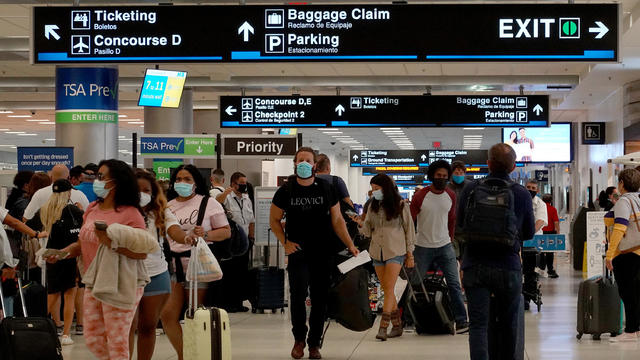
WHO named Omicron a variant of concern on Friday, and 56 countries issued travel restrictions in the following days.

The emergence of the new Omicron COVID-19 variant has countries reimposing some restrictions to limit the spread. Travel is also being limited once again. Debora Patta has more from South Africa where the variant was first detected.
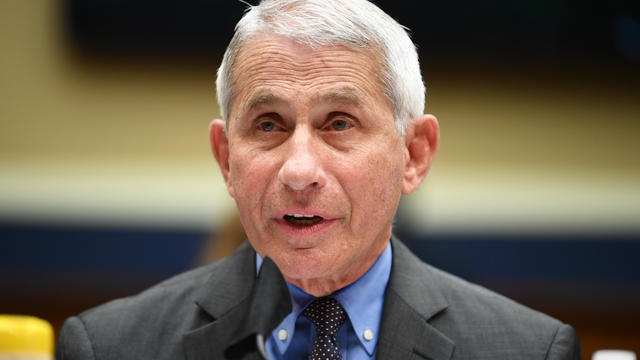
"When you have a virus like this, it almost invariably is ultimately going to go essentially all over," Fauci said.