Gas prices could hit new high if Strait of Hormuz closure continues
The unprecedented Strait of Hormuz closure amid the Iran war has spiked the price of oil and gas. It's also left thousands of crew members stranded on ships as the war rages on.
Watch CBS News
The unprecedented Strait of Hormuz closure amid the Iran war has spiked the price of oil and gas. It's also left thousands of crew members stranded on ships as the war rages on.

Iranian attacks on ships in the Strait of Hormuz threaten to drive U.S. gas prices to record highs. The attacks could also have a cascading effect on other prices.
The unprecedented Strait of Hormuz closure amid the Iran war has spiked the price of oil and gas. It's also left thousands of crew members stranded on ships as the war rages on.

The strategic shipping lane carries a fifth of the world's oil. Analysts warn prolonged disruption could send fuel prices soaring and trigger a global economic slowdown.

As the United States continues to intensify its war against Iran, the transit of oil through the Strait of Hormuz is still choked off – and the ramifications are being felt around the world. CBS News national security correspondent David Martin talks with Retired General Frank McKenzie about the hazards facing American ships; and how long it might take the U.S. Navy to open the Strait, a vital shipping channel through which one-fifth of the world's oil flows.

Iranian attacks on tankers and cargo ships have choked the flow of oil and goods through the Strait of Hormuz, a narrow passage connecting Persian Gulf oil producers to global markets. The disruption threatens to drive U.S. gas prices to record highs.

President Trump called on countries like the U.K., France, South Korea, Japan and even China to help keep the Strait of Hormuz open as Iran tries to strangle the flow of oil from the region. Charlie D'Agata reports.
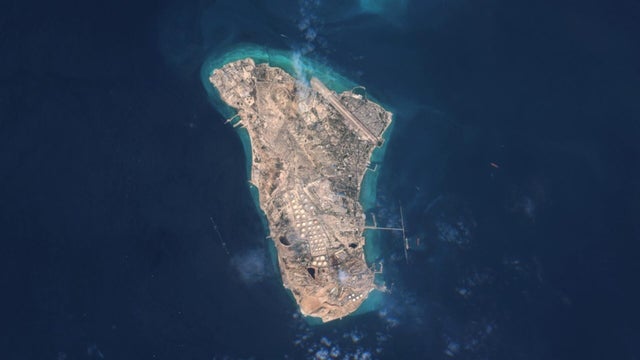
President Trump said Friday night on social media that the U.S. struck a key Iranian oil hub on Kharg Island as tensions over the global oil supply ramp up amid Iran's closure of the Strait of Hormuz.

With tankers on fire and ships dead in the water, Defense Secretary Pete Hegseth tried to project the U.S. was in control of the Strait of Hormuz. As Matt Gutman reports, hundreds of oil tankers remain stuck, terrorized by Iranian attacks.

The latest release of oil follows historic withdrawals from the Biden administration to combat gas prices from the Ukraine war.

Suspected Iranian cyber and drone attacks are already impacting U.S. tech companies, and Iran says a list of American firms are now on its target list.

As gas prices increase, AAA says the cost of diesel is rising even faster. Diesel powers trucks, planes, trains and farm equipment. One business owner said if the spike continues, they may have to pass on some of the cost to the consumer. Skyler Henry reports.

Treasury Secretary Scott Bessent signaled the U.S. Navy may begin to escort oil tankers in the Strait of Hormuz as the Iran war rages on. Mark Cancian, a senior adviser with the Center for Strategic and International Studies' Defense and Security Department, joins CBS News with more.

President Trump posted on social media Friday, warning to "watch what happens" as the Iran war enters a second week. CBS News' Charlie D'Agata has more as more details emerge about four more U.S. military deaths.

The U.S. is temporarily allowing the purchase of Russian oil that's already at sea, in the Trump administration's latest move to loosen sanctions on Russia's oil industry as the world grapples with high oil prices.
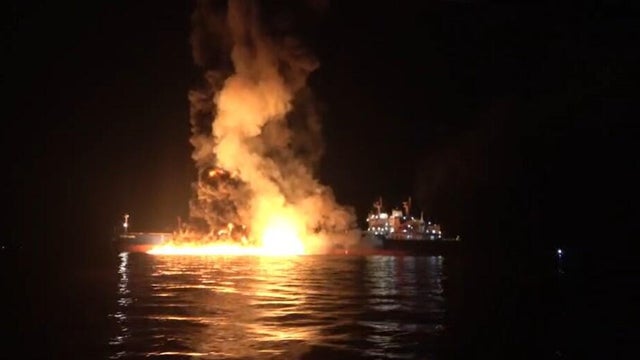
Iran's relentless attacks on Gulf states and infrastructure appear to be overshadowing interventions by the U.S. and its allies aimed at easing energy prices.

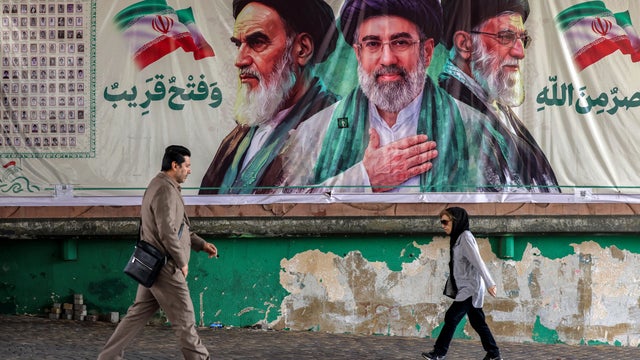
Ship traffic in the Strait of Hormuz was mostly stopped amid the war in Iran on Thursday, which contributed to rising oil prices. The waterway typically carries around 20% of the world's supply of oil. On Wednesday, President Trump ordered the release of 172 million barrels of oil from emergency reserves. In a statement attributed to Iran's new Supreme Leader, Ayatollah Mojtaba Khamenei, he said Iran should keep putting pressure on the critical chokepoint.

CBS News national security analyst Aaron MacLean walks through the potential options for a U.S. military mission to reopen the Strait of Hormuz.

Global energy prices remain elevated after Iran's new Supreme Leader vowed to keep the Strait of Hormuz closed in a statement released Thursday. Laura Sanicola, senior writer for Barron's, joins "The Daily Report" to discuss.

Iran's new Supreme Leader, Ayatollah Mojtaba Khamenei, issued his first public statement Thursday since taking his new position. A broadcaster read the statement on Iranian state media. CBS News' Eleanor Watson and Willie James Inman have more.
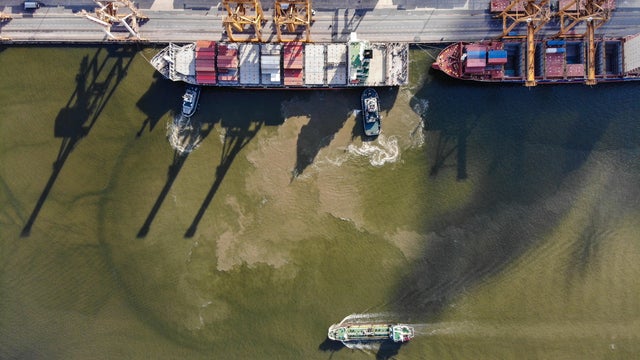
Energy prices won't ease up until the Strait of Hormuz is secure, experts say. Here's what it will take to get the oil flowing again.

Iran's offensive moves as the war with the U.S. and Israel roars on are threatening the supply chain at the Strait of Hormuz. CBS News' Matt Gutman and Avi Salzman, a senior writer at Barron's, explain.

President Trump is addressing concerns among investors and Americans over the rising prices of oil and gas. This comes as Iran's new supreme leader, Mojtaba Khamenei, issues his first public statement since taking over the regime. CBS News' Weijia Jiang reports.

Iran's new supreme leader, Mojtaba Khamenei, released a public message on Thursday as concerns rise about ships being attacked in the Strait of Hormuz. CBS News' Matt Gutman and Courtney Kealy report.

Iran's new Supreme Leader Mojtaba Khamenei issued a statement and demanded that all U.S. bases in the region be closed immediately. Khamenei also threatened to continue operations to keep the Strait of Hormuz closed. CBS News' Ramy Inocencio reports.