Lego drops prototype recycled blocks in blow to sustainability drive
Danish toy giant Lego said 2 years of experimentation with blocks made from recycled plastic bottles showed they "didn't reduce carbon emissions."
Watch CBS News
Danish toy giant Lego said 2 years of experimentation with blocks made from recycled plastic bottles showed they "didn't reduce carbon emissions."

Without replenishment from the Colorado River, the Salton Sea in Southern California is rapidly receding, exposing to the wind a dry and toxic lakebed that could pose ongoing health risks to the surrounding community. Jonathan Vigliotti has more.

A California winemaker is the first in the U.S. to embrace a British company's effort to decarbonize the drink industry, bottling wine in paper instead of glass.

School buses run on diesel and can be heavy polluters, releasing harmful gases into the air while ferrying millions of children. Around the country, there's a push to switch the buses to electric options. Manuel Bojorquez has more.

High-tech barges are being used to scoop up tons of floating plastic. The mission of nonprofit Ocean Cleanup is to ultimately collect 90% of floating plastic pollution from the world's waterways. Ben Tracy has more.

A spectrometer launched into orbit in the spring is collecting data on air pollution over North America.

As many as 1 in 3 lightning bug species in America could be under threat, scientists say.

Climate activists are celebrating a Monday court decision in which a judge ruled Montana had violated plaintiffs' rights to a clean and healthful environment. Experts call this ruling the "first of its kind" not only for its potential environmental effects, but also because the plaintiffs were some of the state's youngest citizens -- ranging in age from five to 22. Plaintiff Badge Busse and attorney Julia Olson join CBS News to discuss the case.
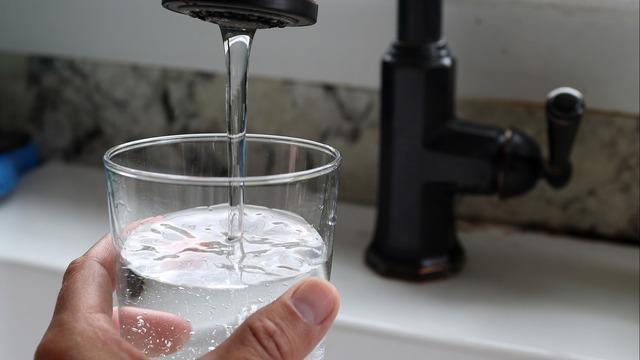
A new study found that nearly half of the nation's drinking water contains potentially harmful "forever chemicals," called PFAS. The substances have been linked to several serious health problems, including some cancers. Mark Strassmann reports on efforts to eliminate the chemicals, plus the study's lead author, Kelly Smalling, joins CBS News to break down the findings.

A new study has found that man-made toxic PFAS, known as "forever chemicals," may be found in 45% of the tap water in the U.S. However, a scientific company has developed a technology that uses an annihilator to completely eliminate PFAS within seconds. Mark Strassmann has more.
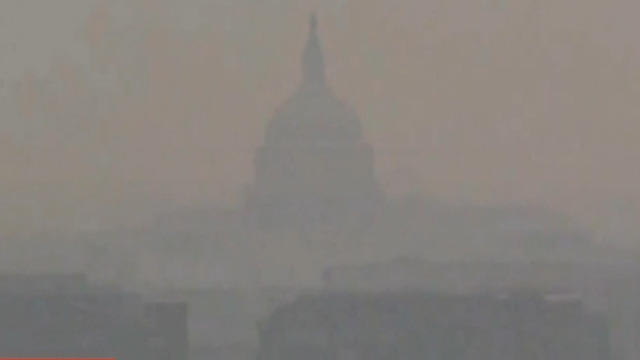
Nearly one-third of the U.S. population is being impacted by smoke from hundreds of wildfires burning across Canada. Scott MacFarlane has the latest.
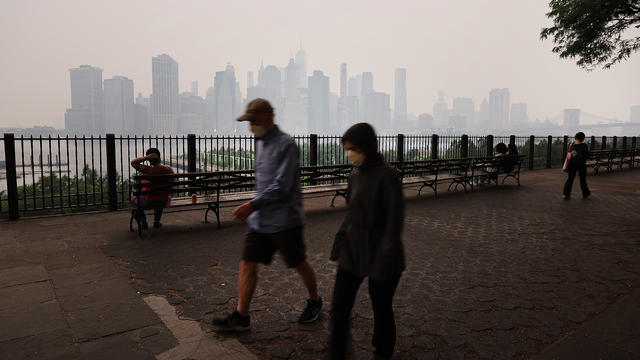
Here's what to know about the health effects of wildfire smoke as it continues to infiltrate the U.S.

The high seas treaty, once ratified by individual nations, will govern the use of international waters in a bid to protect ecosystems and head off disputes.

The air quality in New York City on Wednesday morning is 14.5 times the World Health Organization's annual air quality guideline value.

Officials say it "looks weird," and could have been an accident - or a protest over new environmental restrictions on diesel trucks hauling heavy loads.

Police were investigating the unexplained discoloration spotted near the iconic Rialto Bridge, amid speculation about a possible stunt by environmentalists.

Cemeteries are known to potentially contaminate soil and water, and cremation can unleash pollutants in the air. A new startup says mushrooms could be the key to "a new story."

According to the EPA, cancer risk in the community of Reserve is about 50 times the national average.

One family had to give up their dreams of an organic farm in Maine after discovering the land they bought had been contaminated years earlier.

New approvals for coal-fired power plants are fueling concern that China will backtrack on its goal to peak emissions by 2030.

Coastal species have been found living on the Great Pacific Garbage Patch in the middle of the ocean, according to a study published in Nature Ecology & Evolution journal.

The Biden administration on Wednesday proposed strict new tailpipe pollution standards that would effectively force auto manufacturers to accelerate their production of electric vehicles. Under the EPA's proposal, 67% of all vehicles manufactured in the U.S. would be electric by 2032. Ben Tracy has the details.

After decades of promises and disappointments -- renewable energy sources are finally taking hold in America. Vijay Vaitheeswaran, the global energy and climate innovation editor for The Economist, joined Prime Time to discuss what the future holds.
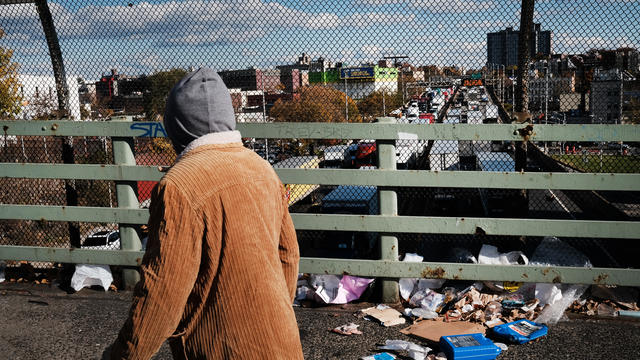
New York's Climate Act – said to be "the most aggressive climate and clean energy initiative in the nation" – will ensure "those most vulnerable to recurrent extreme weather events" get prioritized, leaders say.
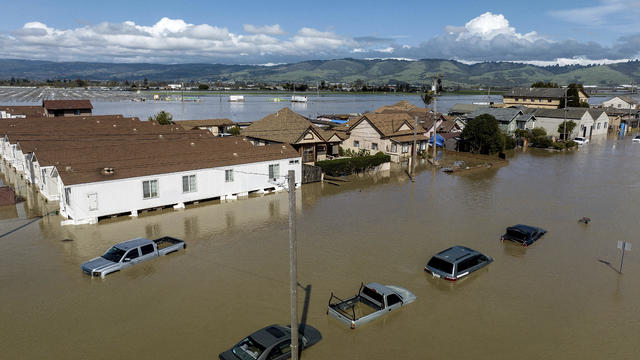
"Humanity is on thin ice, and that ice is melting fast," the U.N. chief said, calling a new report on the rate of climate change "a survival guide for humanity."