Iran claims another attack targeting U.S. radar site in Bahrain
Iran has claimed to hit U.S. radar systems in Bahrain three times in less than a week, but authorities said the first two attacks were intercepted.
Watch CBS News
Iran has claimed to hit U.S. radar systems in Bahrain three times in less than a week, but authorities said the first two attacks were intercepted.
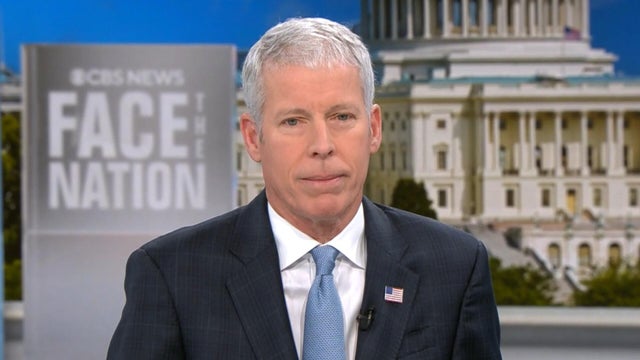
Energy Secretary Chris Wright told "Face the Nation with Margaret Brennan" that President Trump was "well aware of the risks to energy flows" before launching the Iran war, but he said the president said "I simply cannot. The world cannot sustain a nuclear-armed Iran, and I'm not going to do it."
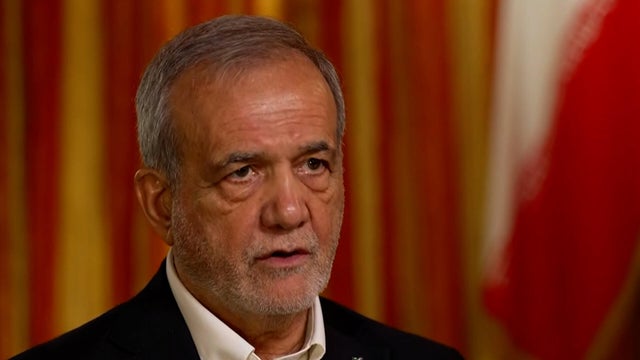
Iranian President Masoud Pezeshkian speaks with Face the Nation's Margaret Brennan about the war with the U.S., his country's latest offer to open the Strait of Hormuz, the supreme leader's condition and more.

President Trump has repeatedly claimed Iran's military capabilities have been destroyed. CBS News national security analyst Aaron MacLean joins to talk about the president's claims.

President Trump addressed the war with Iran and the country's nuclear weapons program while taking questions from reporters on Wednesday at the NATO summit in Turkey. Mr. Trump claimed Iran's nuclear material is so far underground that no country besides the U.S. would be able to harvest it, and also spoke about trade relationships and rising prices in America.
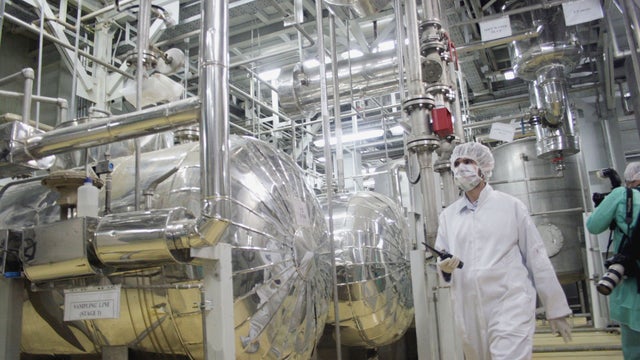
Iran insists there are no plans for inspections of its bombed nuclear sites, but Trump says Tehran "fully and completely" agreed to let inspectors return.

The future of Iran's nuclear program remains unclear amid recent peace talks, despite President Trump's claims that the country "completely agreed" to nuclear inspections. CBS News' Courtney Kealy has more.
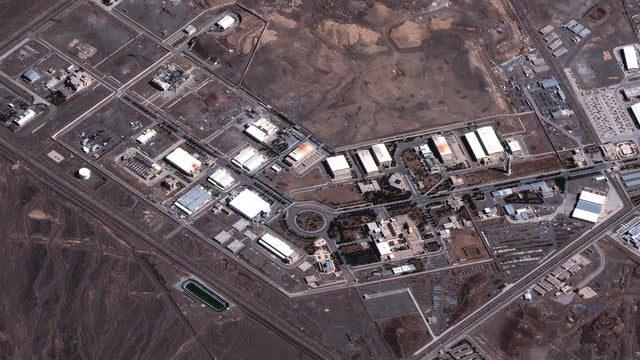
Military planners have discussed contingencies that would involve U.S. forces helping secure Iran's nuclear materials if a deal is reached, according to U.S. officials familiar with knowledge of the ongoing planning.

CBS News contributor H.R. McMaster joins CBS News 24/7 to discuss progress in talks between the U.S. and Iran as negotiators work toward a peace deal.

Iran has agreed to a deal in principle to dispose of its highly-enriched uranium, a senior Trump administration official said Sunday. CBS News' James LaPorta has more.

Weeks after the U.S.-Israeli war with Iran began, the conflict appears to be at an impasse. Free Press columnist Sir Niall Ferguson joins to discuss. Paramount Skydance owns The Free Press and CBS News.

President Trump said Sunday that Iran's response to the latest peace proposal is "totally unacceptable." Meanwhile, Israeli Prime Minister Benjamin Netanyahu told 60 Minutes that the war is "not over" until Iran's highly enriched uranium stockpile is destroyed. CBS News' Holly Williams has more.

Iran and the U.S. are still at odds on a deal to end the war. CBS News' Ramy Inocencio breaks down the latest on talks.

The fate of the Iran war centers on highly enriched uranium, an essential ingredient for nuclear weapons. A post-Soviet-era operation that could inform a U.S. recovery mission in Iran.
The fate of the Iran war centers on highly enriched uranium, an essential ingredient for nuclear weapons. A post-Soviet-era operation that could inform a U.S. recovery mission in Iran.

President Trump posted more criticisms of Pope Leo XIV on social media late Tuesday night as his feud with the first American pontiff continues. CBS News' Chris Livesay has the latest.

U.S. and Iranian officials met Saturday in Pakistan for direct negotiations, but the talks ended without an agreement. Vice President JD Vance, who was at the meeting, said the major sticking point is Iran's refusal to give up its nuclear ambitions. CBS News' Weijia Jiang has more.

While President Trump threatens to bomb Iran "back to the stone ages" if they do not agree to a deal to end the war, some experts tell CBS News that the continuing war will likely make the regime in Tehran more determined to build a nuclear weapon.

President Trump said Monday on social media that he's told the Defense Department to suspend military strikes against Iranian power plants after "good and productive talks," virtually extending his imposed deadline to reopen the Strait of Hormuz. The Iranian foreign ministry says it's unaware of any talks. CBS News' Chris Livesay has more.

In the Iran war, President Trump postponed his threat to strike Iran's civilian power plants if the Strait of Hormuz isn't reopened. Charlie D'Agata has the latest on the war, including new attacks from Israel and Iran continuing to strike back.
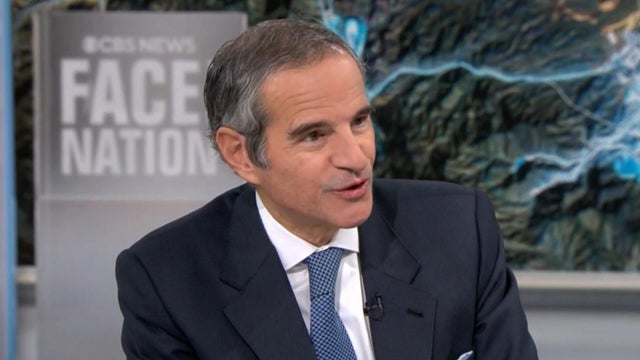
Rafael Grossi, the International Atomic Energy Agency director, told "Face the Nation with Margaret Brennan" that he doesn't think "any war" would destroy Iran's nuclear ambitions "unless it was nuclear war, and you go for destruction in an unfathomable way, which we hope, of course, will never be the case."

President Trump has threatened to bomb Iran's nuclear plants and civilian energy infrastructure. U.S. Ambassador to the U.N. Mike Waltz told "Face the Nation with Margaret Brennan" that all options remain possible and he would "never take anything off the table for this president."

As the war with Iran enters its fourth week, much of its stockpile of enriched uranium is believed to lie buried deep inside the Isfahan Mountain complex. CBS News national security correspondent David Martin talks with physicist David Albright, president of the Institute for Science and International Security, about the risks of seizing that near-weapon grade material.
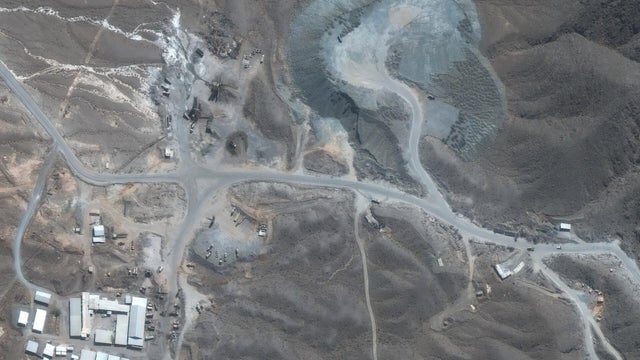
Iran's Natanz nuclear enrichment facility was hit by an airstrike, the Iranian news agency Mizan reported on Saturday. The war is entering its fourth week.

The United Nations' top nuclear watchdog, IAEA Director-General Rafael Grossi, told CBS News that Iran still has the technical ability to restart its nuclear program, even though U.S. military strikes dented the program.