Seniors are spending more time on their phones, AARP says. Why that's a mixed blessing.

You may be familiar with the term "screenagers," which is a reference to teens who spend a lot of time on their phones.
New research shows the roles may be reversing, however, as senior citizens spend more time on their phones. Adult children are now telling their parents to put the phones down.
The number of older adults using smartphones soared from 55% in 2016 to 90% now, according to the AARP. That makes senior citizens one of the fastest growing groups using digital devices.
"I love my phone"
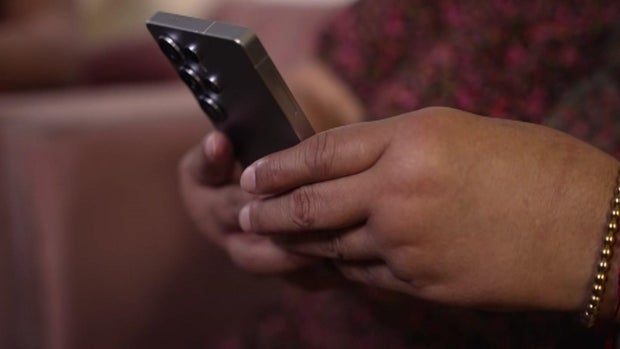
Aida Orellana, a 61-year-old grandmother from Harlem, is part of that statistic.
"I love my phone," she said.
She uses it as her planner, news source, GPS and photo album. Sometimes, it's even her closest companion.
"Between the pandemic and me becoming my mom's caregiver, my social life dwindled. So my phone became my best friend," Orellana said.
She says staying plugged in helps her stay sharp.
"It makes me think. It makes me get curious," she said.
Orellana says she uses it for her cognitive health, too.
"My mom passed away from Alzheimer's, so I think that's another reason why I think I go a little extra hard. Because I want to make sure I'm doing my best. I want to make sure that I'm not idle," she said.
Even as technology opens doors, it can quietly close moments happening right in front of us. Orellana says she spends 4-5 hours a day on Instagram and Facebook.
She's not alone.
According to the national nonprofit Older Adults Technology Services, or OATS, older adults use an average of 10 apps on their smartphones. Nearly 90% use social media.
"A whole new series of tools and opportunities"
OATS runs a free tech training program called Senior Planet. In 2025, they helped more than 850,000 older adults across the U.S., including 200,000 in and around New York City.
"Technology has brought a whole new series of tools and opportunities but also some problems that a lot of older people are grappling with," OATS founder Tom Kamber said.
Kamber said technology can be a powerful tool for healthy aging.
"They're using it for rideshare, and transportation comes up a lot, GPS for driving, getting around where you're going. They use it for purchasing consumer products. The Amazons and those sorts of things," Kamber said.
"You have to get up off of the couch"
Research also shows technology has brain benefits, and helps reduce isolation.
"Technology for older people tends to overcome some of that isolation and bring them together with others. Whereas for kids, it tends to create couch potato vegetables," Kamber said.
Kamber highlighted connections like Facetiming grandchildren, keeping up with friends on social media and joining online communities.
However, he says, balance matters because what may begin as a connection can become a distraction.
"You have to get up off of the couch," Kamber said. "And if you're not getting up, you're going to be physically declining quickly."
Research also shows digital technology, if used moderately, can help delay cognitive decline and slow down the development of dementia.
Perhaps the lesson is while technology keeps us connected, sometimes the most important notification is the one right in front of you.