Brooklyn man dies trying to save dogs from flooded basement apartment, neighbors say


Two people died in flooded basements during Thursday's intense rain and flash flooding in New York City.
A 39-year-old man was killed in Crown Heights, Brooklyn, and a 43-year-old man, identified as Juan Carlos Montoya Hernandez, was found dead inside a boiler room in Washington Heights in Upper Manhattan.
Brooklyn flooding victim died trying to save his dogs, neighbors say
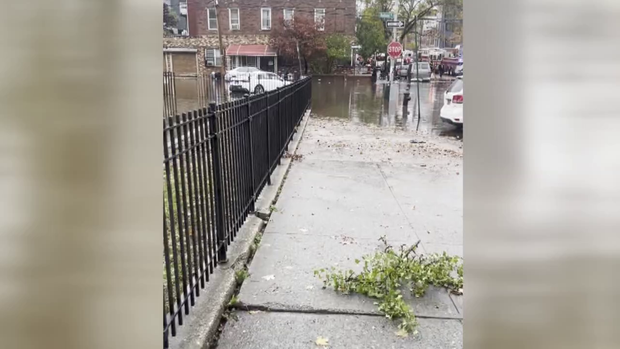
The city has issued a vacate order to the Brooklyn building where a man died during Thursday's storm.
City inspectors toured the building Friday where an FDNY SCUBA team pulled the 39-year-old man's body from the flooded basement the night before.
Neighbors on Kingston Avenue in Crown Heights say the man was named Aaron and he was killed scrambling to save his dogs. He rescued one and went back inside for another, but never resurfaced.
"He went for one dog, brought one up. He went down for the next dog, and he never came back alive," neighbor Kenneth Oates said.
"Happy-go-lucky guy, loved his dogs, always came out and talked to everybody around here," said neighbor Richard Hegel.
Flash flooding inundated the area where the man died with waist-deep water.
"The water came up to the door, and when you opened the door, the water went in," one neighbor said.
The Buildings Department says one of the basement doors was unusable, and even though it is not an apartment, inspectors found two camping tents set up with personal belongings inside.
Neighbors say they had to clear storm drains themselves
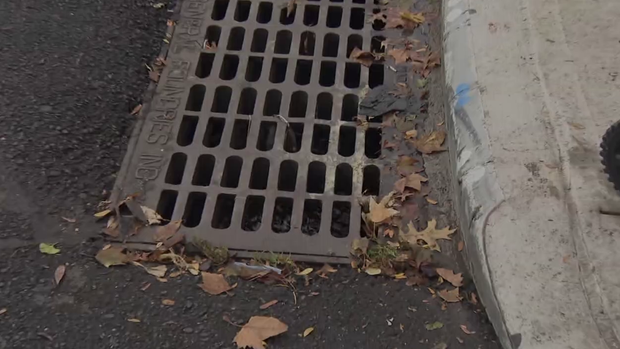
Officials sent out warning notifications about potential flooding Thursday, but residents say the city never dispatched crews to clear out their clogged storm drains.
Neighbors stood in the rain for hours, sweeping away leaves, dirt and debris themselves, but it wasn't enough.
"They know when it's going to rain or whatever, clean the drain. This is dangerous business, and somebody actually died," neighbor Sylvia Elcock-Als said.
"It looked catastrophic. You could see the dirt. There were guys up to mid-thigh at every sewer raking, raking, raking. There were three cars here bucketing their water out," said Hegel.
Department of Environmental Protection Commissioner Rohit Aggarwall told CBS News New York the department works to clear the city's 150,000 catch basins ahead of each storm and it had 38 crews ready to respond to reports of flooding. He said the city's sewer system was overwhelmed by the record rainfall, and there was no way to respond to the 800 calls that came in within a short period of time.
He also said heavy rain can sweep leaves into catch basins that have already been cleaned, and that crews found up to a foot of leaves blocking some drains in Brooklyn. At this point, it's unclear if the DEP had crews in this particular neighborhood in Crown Heights.
Rate of rainfall overwhelmed the sewer system
"We shouldn't have a situation where infrastructure fails so poorly that the basement of any house should be flooded to a position or to a point where someone can die inside," Brooklyn Borough President Antonio Reynoso said.
On Thursday, much of New York City, including the neighborhood where the Brooklyn man died, got one inch of rain in just 10 minutes. That rate is three times the amount that the city's century-old sewage system is designed to handle.
"There is not a sewer system on the planet that can handle that much rainwater at once," City Councilman Justin Brannan said.
New York City has seen more flash flooding in recent year. Brannan is imploring the city to invest more money in its aging infrastructure.
"It's incredibly expensive, and really not sexy. Politicians don't get together to cut a new ribbon for a sewer system, but they probably should, because it's really damn important," Brannan said.
Residents with chronic flooding issues should call 311, Brannan said.


