Lady Deborah Moody, "America's 1st woman town planner," paved the way for NYC's street grid in the 1640s

Long before Manhattan's iconic street grid took shape, an English widow laid the groundwork for a settlement in Brooklyn, arranging a small village in what would become the United States into one of the first grid patterns.
In the 1640s, Lady Deborah Moody founded the neighborhood eventually known as Gravesend, one of the earliest planned communities in the New World.
Her design still leaves its imprint on the borough today.
"She's kind of a mysterious figure"
The straight lines of the modern city grid cut through Brooklyn's McDonald Avenue with a steady flow of traffic. But centuries earlier, the community took shape under Moody's direction.
"She's kind of a mysterious figure in New York and in American history. But we know enough to get a sense of her significance. I like to describe her as America's first woman town planner," said Thomas Campanella, author and professor at Cornell University.
Little visual evidence of Moody exists. There are no known illustrations of her.
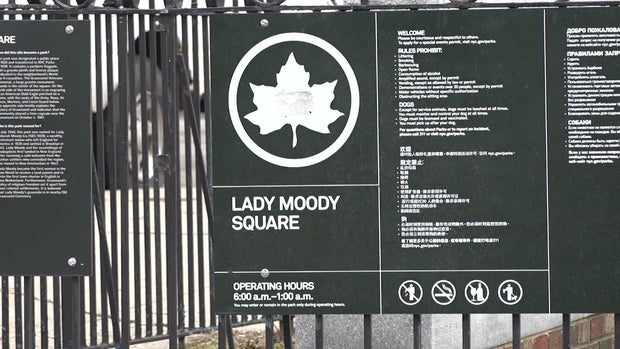
Still, traces of her legacy remain: a small park and a Brooklyn school bearing her name are reminders of the woman who helped shape southern Brooklyn.
"Not only modern day Gravesend, but also modern day Coney Island, Brighton Beach, Bensonhurst, Sheepshead Bay," said Jaclyn Anglis, a historical editor and writer.
Pursuit of religious freedom
Born in England in the 1580s, Moody arrived in the Massachusetts Bay Colony as a widow in her 50s seeking religious freedom.
"After her husband died, she found a lot of comfort in the Anabaptist community," Anglia explained. "The Anabaptists were considered very radical because they did not believe in infant baptism. They thought that only adults should be baptized."
Facing persecution for her religious beliefs, Moody left Massachusetts and relocated to what would eventually become Brooklyn.
"She gets a land grant, a patent from the colonial government, and she's allowed to set up what becomes a small city and fortifications," said architectural historian Melanie Macchio.
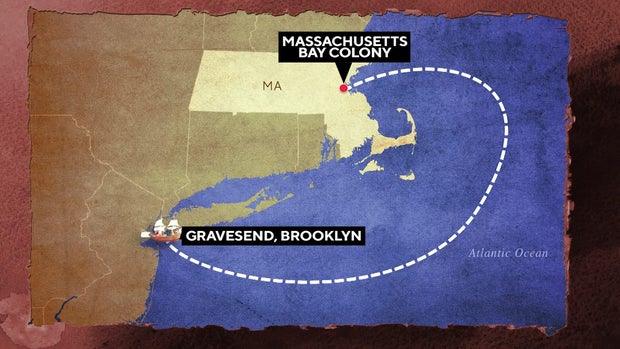
She named her English village Gravesend, and it became one of the first planned communities in North America.
"She is the first person to establish a rational city plan in North America. She utilizes a grid plan, which becomes the first of many we are so familiar with. It ends up being the pattern that's used to establish New York over 150 years later," Macchio said.
A deliberate and refined design
Campanella, who authored a history book about Southern Brooklyn, described the design as deliberate and refined.
"It's an exquisite little diagram with a sort of North-South, East-West cross axis running through it. And the houses are arranged in each of the four quadrants around an internal open space," he said.
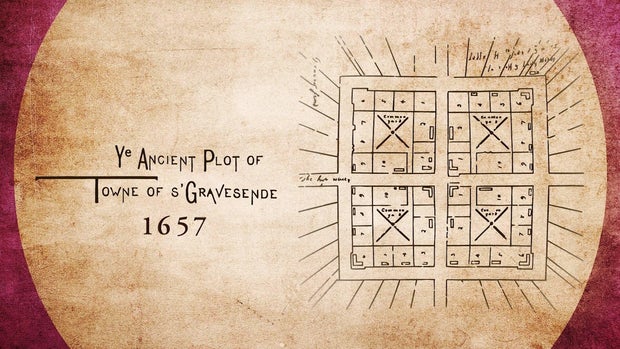
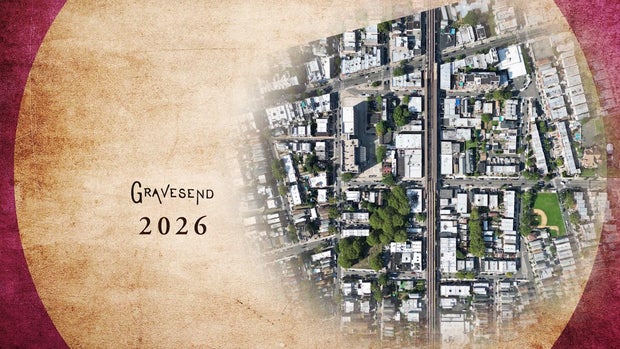
The town's layout extended outward, with triangular plots of farmland fanning in every direction. Over time, the surrounding city grew, but Moody's original design remained embedded in the landscape.
"I compare it to an insect, a fossilized insect trapped in amber," Campanella said.
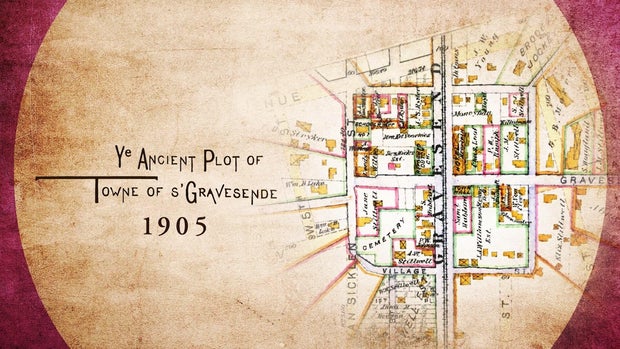
"Fantastically enough the original four squares from 1645 still exist. You can still walk those squares," added Macchio, who operates walking tours in the neighborhood.
Gravesend's unusual angles
Gravesend's unusual angles still reveal that history today.
The area's original layout was slightly misaligned with the city grid that came later, leaving behind distinct shapes, including a triangular park called Lady Moody Square. That site is where, in 1987, community members buried a time capsule documenting the neighborhood's past.
Other remnants endure, including an 18th-century home known as the Lady Moody House, though Moody herself never lived there.
"It does stand on land that was once her property," Anglis said.
Nearby lies Gravesend's original cemetery, one of the oldest city-owned burial sites. Somewhere within it, in an unmarked grave, Moody is believed to be buried.
Nearly 400 years later, her legacy remains etched into the streets and spaces of Brooklyn, a lasting imprint of the town she built in pursuit of religious freedom.
Have a story idea or tip in Brooklyn? Email Hannah by CLICKING HERE.