HealthWatch: Compartment Syndrome
NEW YORK (CBS 2) -- It's a condition that can strike you or your kids when you exercise. You'll feel your legs start to hurt, go numb and tingle until you stop. Dr. Max Gomez reports it's a little-known and fairly common problem called "compartment syndrome."
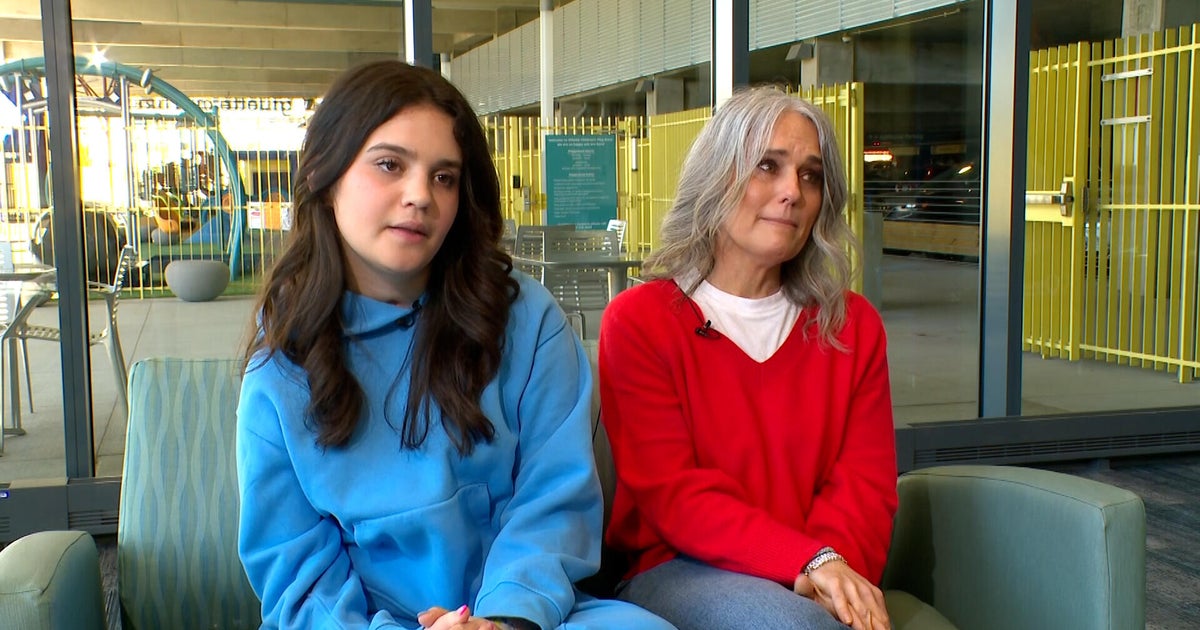
Meredith Esswein is one active teenager. She plays on her high school soccer team and a travel team. She also runs track for her school and is a competitive snowboarder. But a few months ago, she started developing pain whenever she exercised her legs for more than a few minutes.
"It feels like a charlie horse but it doesn't just last for 10 seconds. It becomes like a sharp pain from my calves to my ankles and eventually my feet become numb," she said.
Unlike a sports injury, this pain went away completely when she stopped exercising. Even Meredith's mother, a fitness trainer, was puzzled. "I thought she was dehydrated or maybe she wasn't stretching. I had no idea what was going on," said Tina Esswein.
Meredith actually had compartment syndrome, something sports medicine doctors are seeing more and more, especially in young athletes. It happens because exercise increases blood flow to the muscles.
"With certain athletes we see the blood goes into the muscles but it doesn't come out fast enough, and the muscles expand. There's not enough room for them to expand so there's high pressure and it causes a lot of pain," said Dr. Joe Bosco of the NYU Hospital for Joint Diseases.
It's called compartment syndrome because the muscles of the lower leg are separated by tough sheets of tissue called fascia, and for some reason these muscle compartments are too tight in some people.
Often the only solution is surgery.
"We cut the fascia, and that's the covering of the compartment, so letting the muscle swell, so it has more room to swell," Bosco said.
The surgery involves a pair of three-inch incisions on both legs. Dr. Bosco then slits open the fascia from just below the knee down to just above the ankle. The hope is, as Meredith said, "that I can continue playing sports and continue running and doing everything active that I want to do."
Dr. Bosco said that surgery is successful in about 90-percent of cases.
One month after her surgery, Meredith was able to exercise on a bike, walk and do physical therapy, but no running yet.
She's well on her way back to full activity.