18 New Yorkers have died during dangerous cold snap, says Mayor Mamdani




Eighteen people have died as of Monday during the brutally cold weather in New York City, Mayor Zohran Mamdani said.
The freezing temperatures have gripped the area since the major snowstorm. Mamdani said it was warmer in some parts of Antarctica compared to the Big Apple.
"Since Friday's press conference, one additional New Yorker lost their life on the streets of our city as a result of this cold snap. The total lives lost is now 18. Each life lost is a tragedy, and we will continue to hold their families in our thoughts," he said.
He continued to urge those experiencing homelessness to head to a shelter. Mamdani said 1,400 placements have been made into shelters and safe havens. Thirty-three New Yorkers have also been involuntarily transported for their safety.
He also said that across this past Friday and Saturday nights, 560 New Yorkers used Health + Hospitals warming centers, and nearly 300 New Yorkers used a Department of Social Services warming vehicle.
"Until temperatures warm up, I ask all of you in this room and outside of it to please continue to take additional precautions. Stay safe, stay indoors, and please, New York, let's keep looking out for one another," the mayor said.
He said some of the deaths also involved drugs, and the city is partnering with two overdose prevention centers to stay open and handle more cases.
Commissioner of NYC Department of Social Services resigns
Just hours after the announcement of the latest weather-related death, DSS Commissioner Molly Wasow Park announced her resignation.
It came the day before she was set to testify at the City Council's Committee on General Welfare and Public Safety about the mayoral administration's efforts to keep New Yorkers safe during the ongoing Code Blue emergency.
According to the New York Times, her resignation is not related to the recent wave of cold-related deaths.
DSS said a new commissioner will be named in the coming weeks, and released a statement, which says, in part, "New York City has a bed available for anyone in need. We have relaxed intake processes to expedite placement during this extreme weather emergency. None in need of shelter will be denied."
Michael Robinson, a homeless man on the West Side, said while he's braving the dangerous cold, he's well aware of the resources available.
"I have been able to get my hands on various paper material that tells me where the warming centers are," Robinson said. "I am pleased to tell you that I think that [Mamdani] is doing a good job."
New Yorkers are trying to stay warm
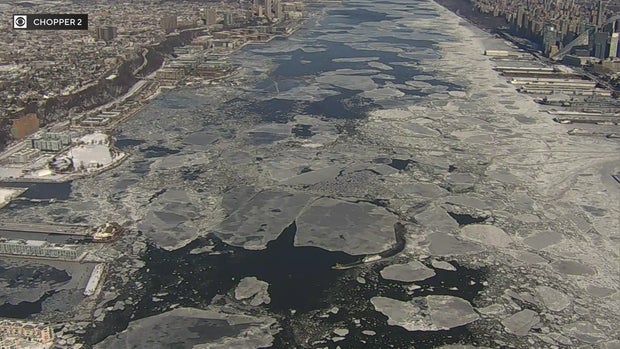
The National Weather Service said the temperatures are running 10 to 15 degrees below average.
The area was under a cold alert Monday morning, and workers are doing what they can to protect themselves from the brutal weather.
A coffee cart operator, who was bundled head-to-toe, said it's unbelievable out.
"My hands are frozen. It's not possible to work," he said.
Another woman said she wore multiple layers to brave the cold.
"I have triple layers on, and I'm just like, it's hard for me to talk because my eyes are watering," she said.
Ice continued to slow or freeze ferry commuters. NYC Ferry service was suspended. New York Waterway suspended service to Edgewater and Haverstraw.
Mayor Mamdani expands warming resources
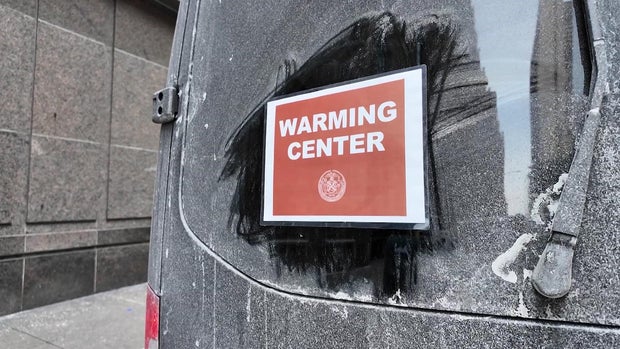
The mayor said an additional 60 hotel shelter units are being used to help people stay out of the bitter cold. There are also now 12 school-based warming centers and 33 warming buses throughout the five boroughs.
At least 150 more outreach workers were deployed, along with 50 school nurses. Officials said 311 wait times were also cut in half to help New Yorkers who didn't have a warm place to stay.
"What we're doing at this time is doubling down on all of our efforts to connect any New Yorker who's outside with shelter, with warmth, and with safety," Mamdani said Saturday.
How to stay safe during cold weather
Doctors say it's important to wear proper clothing because frostbite and hypothermia could develop in a number of minutes. Gloves, scarves, hats and heavy jackets are among the essentials.
Those with diabetes or nerve damage are especially at risk of not noticing the symptoms.
If you have to travel, keep a blanket and emergency supplies in your car. Check the tire pressure as it can drop in extreme cold, and don't let the gas tank drop below a quarter tank.