9/11 had a profound impact on the mental health of tens of thousands of first responders, doctors say

The enormity of what happened on Sept. 11, 2001, and the aftermath, has had a profound impact not only on the physical health of so many, but their mental health as well.
First responders who were affected were not only police and firefighters, but iron, construction, and sanitation workers, as well as those who worked for Verizon.
One of those workers recently shared his mental health journey with CBS News New York.
Douglas La Tourette's story
In 2001, Douglas La Tourette was employed by Verizon, his building just a block north of the World Trade Center towers. He was off on 9/11, but stepped in as they mobilized in the aftermath.
"I never knew that it was going to affect me the way it did. Never knew that," La Tourette said. "Sixteen-hour shifts, seven days a week. We worked right through the end of 2001."
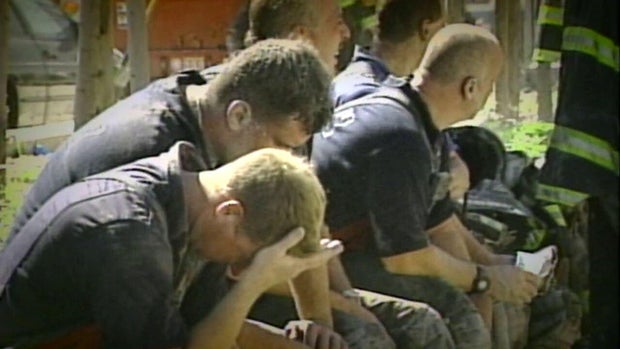
And he saw firsthand the horror that has now become all too familiar.
"Everybody had the same look on their face. The faces were showing utter desperation," La Tourette said.
He said the following years proved to be surprisingly difficult, with his mental health impacted by what he had been through.
"I realized that I had my first panic attack," La Tourette said. "Just getting up in the morning and tying my shoes would exhaust me."
La Tourette said he felt like an imposter, adding he just wanted to get through the day.
"I wasn't a pleasant person to live with, so my ex, my wife at the time, asked me for a divorce," La Tourette said. "And then I started seeking treatment."
Mount Sinai treating 25,000 9/11 first responders
La Tourette worked with Dr. Sandra Lowe, the medical director of the World Trade Center Health Program at Mount Sinai.
"It's not just the nightmares that we hear about and the depression and the avoidance symptoms and the panics. It's also estrangement, PTSD," Lowe said. "I have had so many patients who, after providing them with some understanding, that they go, 'So this is PTSD?' And there's some relief."
Lowe said Mount Sinai is currently treating about 25,000 first responders and others who are still or even newly struggling with the emotional effects from 9/11.
"They had to run away from this massive toxic dust cloud, and I've heard so many tell me that as they were engulfed by it, they were sure they were dead. And their thoughts were, I'm never going to see my children again," Lowe said.
Dr. Craig Katz helped create Mount Sinai's mental health response program. But even with the foresight of what would be needed, the depth of sorrow and suffering was still too much to be imagined.
"9/11, all of its terribleness, at least helped bring mental health up, I think, on the radar," Katz said. "We sent psychiatrists down to Ground Zero. I was down there too, just sort of going around talking with folks as they were working. It wasn't anything we ever trained for in psychiatry residency. It was like you felt like you were in some kind of nightmare."
Katz said many first responders, as well as others, were often hesitant to reach out and ask for help.
"It's just amazing to me how long people can wait, either for the emergence of their symptoms or, I would say, how much suffering people will put up with in their lives, until they get help," Katz said. "What I tell people is, just go get an opinion. Just go for one appointment."
Today, La Tourette is retired, working as an artist, and grateful for the help that set him on a more positive course.
"Everything's changed so dramatically for me. I'm experiencing very long moments of happiness now, which I haven't for many years," he said.


