Report: Fargo Should Expect 1 Of Its Worst Floods
Residents along the Red River in Fargo and neighboring Moorhead, Minn., should prepare for one of the top five floods in their history, the National Weather Service said Thursday.
Watch CBS News
Residents along the Red River in Fargo and neighboring Moorhead, Minn., should prepare for one of the top five floods in their history, the National Weather Service said Thursday.

With its ominously titled slideshow, "Get ready for a big one," the National Weather Service told flood-weary residents in the Fargo area Thursday to prepare for one of the Red River's five largest crests this summer, an outlook that prompted city and county officials to plead for permanent flood protection.

Heavy snow and strong winds are creating hazardous travel conditions in west central Minnesota.

Parts of southeastern Minnesota have received as much as a foot of snow, causing dozens of school districts to close and prompting others to delay their starts.

Falling temperatures have turned a rainy weekend into a snowy start to the work week.
Recent snowfall has increased the risk of flooding to normal on parts of the Upper Minnesota and Mississippi River basins.

The National Weather Service has slightly increased the expected spring flood levels at the Red River in Fargo, but city officials say they're prepared for the worst-case scenario.

Thousands of Minnesota students had the day off, dozens of flights were canceled and the cleanup is far from over after the Twin Cities got hit with about a foot of snow over the past two days, culminating with Tuesday's heavy downfall.

Another round of heavy snow is moving into Minnesota and creating hazardous travel conditions. The National Weather Service has issued a winter storm warning for much of the region.

The National Weather Service says that the melding winter snowpack is not expected to do enough to alleviate dry soil conditions around Minnesota.

The National Weather Service says a tornado warning issued Monday was meant to be a test.

A snowstorm moving across the nation's midsection is making roads slippery in southeastern Wisconsin.

After a few days of above-average temperatures, North Dakotans have been slapped back into a deep freeze — and they'll be stuck there the rest of the week.

January is often the snowiest month in Minnesota, but not this year.

Schools throughout southeastern Minnesota are either closed or opening two hours late because of dense fog and icy roads.

Many in the Twin Cities were enjoying the spring-like weather Friday. Some even opted for the sidewalks versus the Skyway.
With 12 days left in the year, we could be looking at a climate record. This year in Minnesota is wrapping up as one of the warmest years on record, according to Assistant State Climatologist Pete Boulay.

The Twin Cities is preparing for a messy weekend as another winter storm is set to pass through Minnesota from Friday night through midday Sunday.

Officially, the weekend snowfall total was just more than 10 inches, according to instruments at the Minneapolis-St. Paul International Airport.

Residents across parts of Minnesota and Wisconsin are bracing for a snowstorm that could dump as much as 10 inches of snow in some areas.
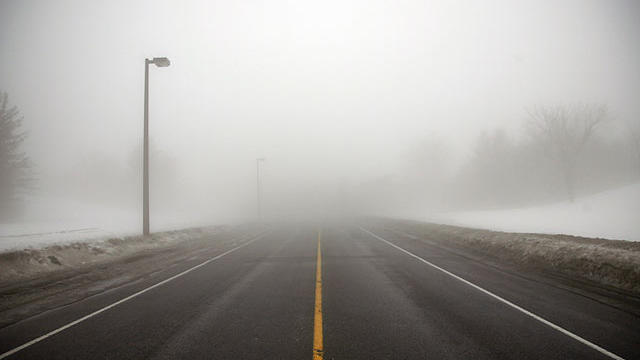
A freezing fog advisory has been issued for most of Minnesota from late Saturday night through Sunday morning, reports the National Weather Service (NOAA).

With no recorded tornadoes in Minnesota history in the months of December, January and February, according to the Minnesota Climatology Working Group, you might say that Friday (Nov. 30) marks an unofficial end of tornado season in Minnesota.

Western South Dakota is recovering from winds that overturned semitrailers, downed power lines, fed fires and even left a trampoline hanging from a power pole in Box Elder.

The Department of Natural Resources is asking Minnesotans to be extra careful Monday and Tuesday as extremely dry conditions across the state have the potential to start fires.

Minnesotans know a bit about tornadoes. We average 27 a year, but in 2011 we had 113. As Hurricane Isaac bears down on New Orleans, we wondered. Which is worse: a hurricane or a tornado?