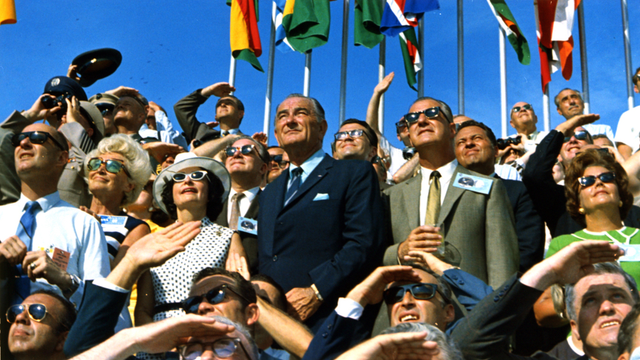
Apollo 11: 'The Eagle Has Landed'
Watch CBS News
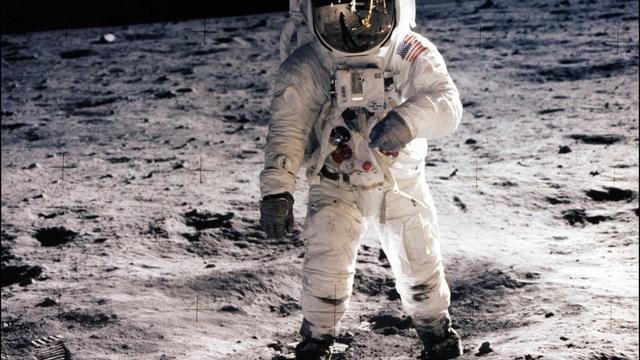
The Apollo 11 mission culminated on July 20, 1969 when astronauts Neil Armstrong and Buzz Aldrin became lunar pioneers.
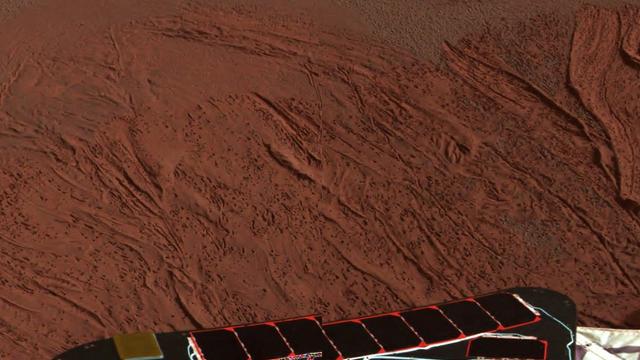
NASA's longest-running rover on Mars, Opportunity, has been pronounced dead, 15 years after it landed on the red planet.
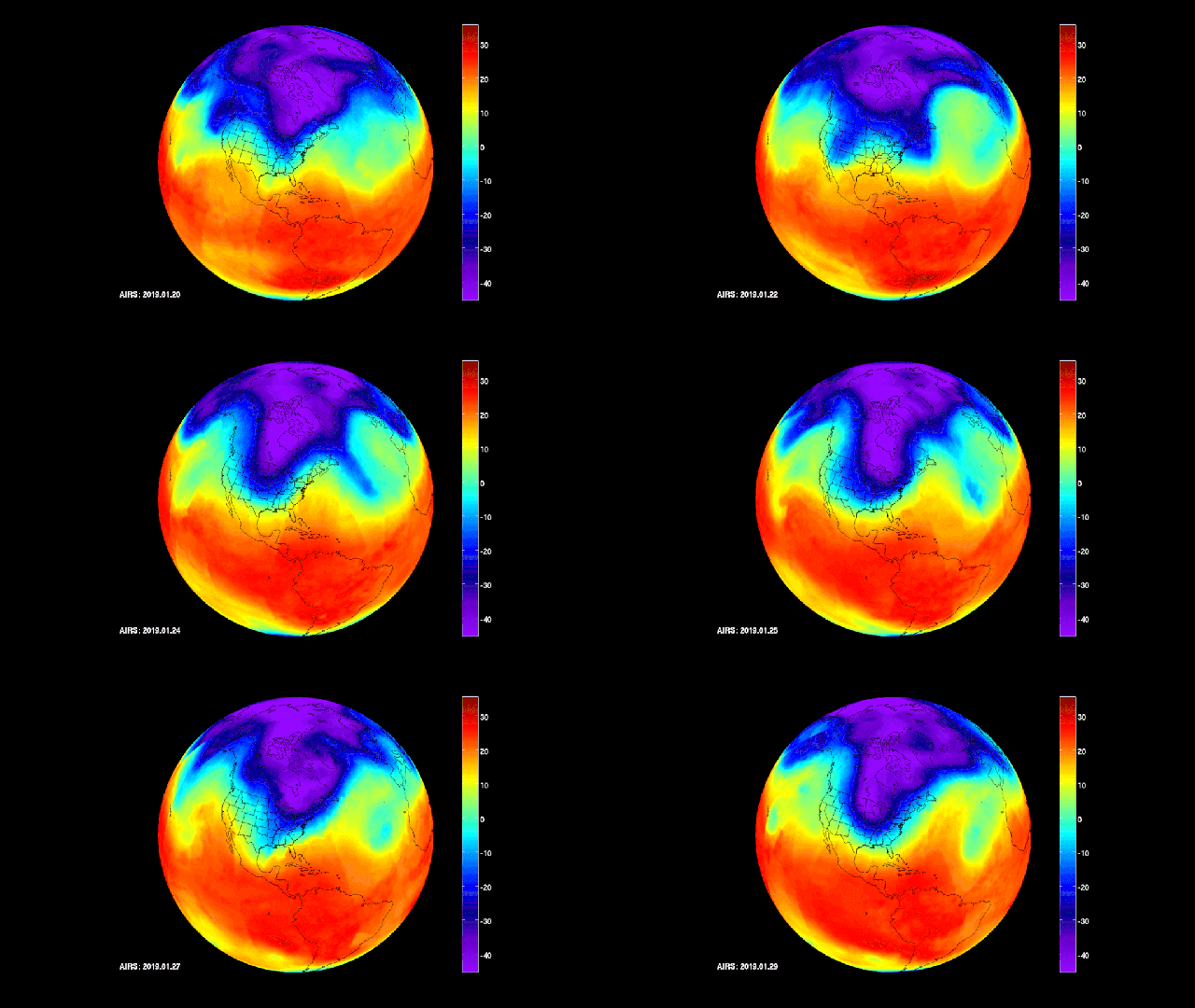
NASA released an infrared animation Thursday of the polar vortex that put Minnesota and much of the upper Midwest in a historic deep freeze this week -- and it looks as insidious as it felt.
The center in Huntsville has nearly 6,000 civil service and contract employees and an annual budget of about $2.8 billion.
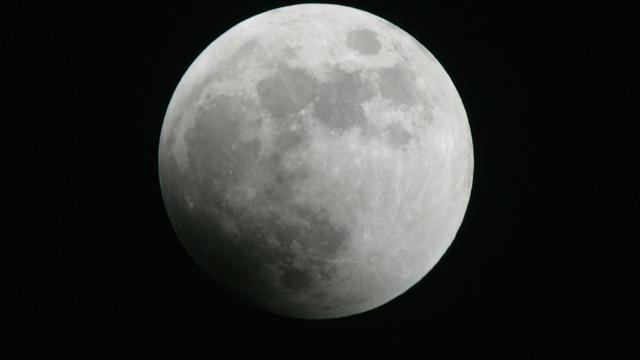
Scientists have long believed that water ice could exist in the ever-dark recesses at the moon's poles and that belief has finally been confirmed in a paper published in the Proceedings of the National Academy of Sciences on Aug. 20.
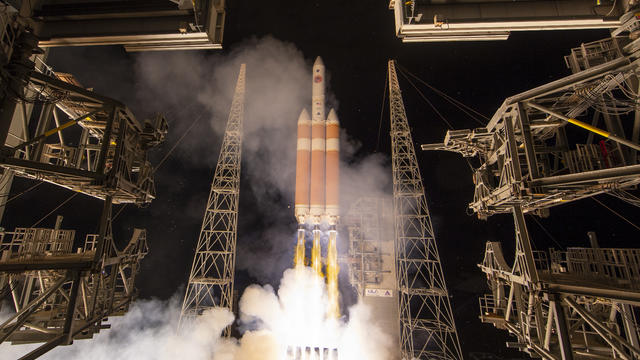
A NASA spacecraft zoomed toward the sun Sunday on an unprecedented quest to get closer to our star than anything ever sent before.

NASA's Parker Solar Probe will be the first spacecraft to "touch" the sun, hurtling through the sizzling solar atmosphere and coming within just 3.8 million miles (6 million kilometers) of the surface.
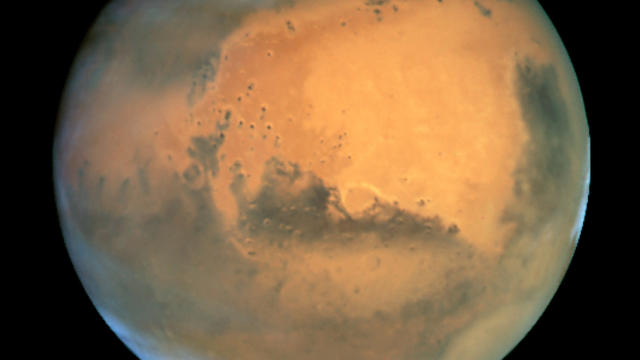
Controllers expect it will be several more days before there's enough sunlight to recharge Opportunity's battery through its solar panels.

A woman is suing NASA over a gift she claims was given to her by the first man to walk on the moon, Neil Armstrong.
New Mars discoveries are advancing the case for possible life on the red planet, past or even present.

When NASA astronaut Joseph Acaba was out doing a spacewalk during a recent trip to the International Space Station, he held on tight. That's because Acaba is afraid of heights.

It likely won't get any easier for the seventh planet in our solar system as a new report has confirmed that Uranus does actually stink like bad gas.

An asteroid came alarmingly close to striking the Earth on April 15, just hours after the large space rock was spotted flying through the solar system.

On Thursday, the country's newest high-definition weather satellite, GOES-S, launched from the Kennedy Space Center.

NASA's Cassini spacecraft disintegrated in the skies above Saturn early Friday in a final, fateful blaze of cosmic glory, following a remarkable journey of 20 years.
After a 20-year voyage, NASA's Cassini spacecraft is poised to dive into Saturn this week to become forever one with the exquisite planet.
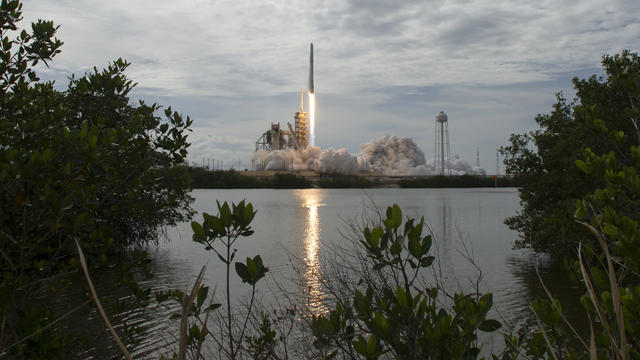
For the first time since the retirement of the space shuttle in 2011, NASA says it may soon have the capability to send astronauts to the International Space Station from U.S. soil.

It's being called "The Great American Eclipse" because, for the first time in 99 years, a total eclipse will be visible from coast-to-coast.

Called GOES-R at launch, and now named GOES-16, it has cutting-edge sensors that will eventually replace the 1970s technology we currently use.

A NASA spacecraft will aim straight for the sun next year and bear the name of the astrophysicist who predicted the existence of the solar wind nearly 60 years ago.

ASA's Cassini spacecraft has ventured into the never-before-explored region between Saturn and its rings.
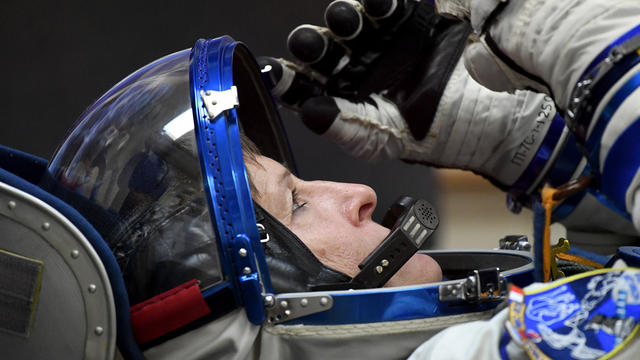
Astronaut Peggy Whitson broke the U.S. record Monday for most time in space and talked up Mars during a congratulatory call from President Donald Trump.

If you just can't get enough of all things space, NASA has you covered.

The most advanced weather satellite ever built rocketed into space Saturday night, part of an $11 billion effort to revolutionize forecasting and save lives.