Minnesota's spongy moth mitigation plan canceled due to lack of federal funding, ag officials say

Minnesota's plan to combat an invasive pest is canceled after federal funding fell through, the state said.
The Minnesota Department of Agriculture planned to apply an insecticide called Btk to 12 areas throughout the state to fight the spongy moth, whose voracious appetite is devastating to forests. But the department said it did not receive the necessary federal funds in time.
"Having to cancel Btk aerial management operations in these areas jeopardizes the future success of this program," Commissioner Thom Peterson said. "Spongy moth populations in these areas will likely increase and advance quicker into neighboring areas, making future years of management more complicated and costly."
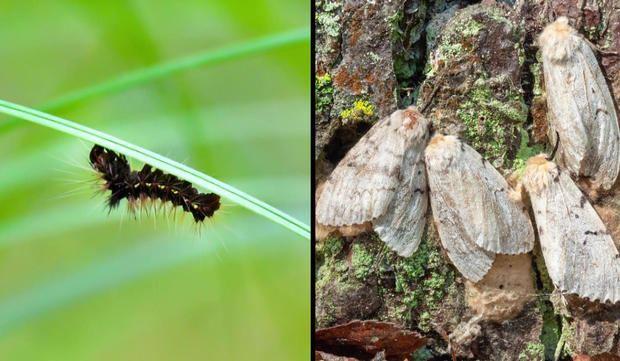
Affected counties include Anoka, Carlton, St. Louis and Winona. Temporary quarantines may be put in place to stop the pests from spreading outside these areas.
The Minnesota Department of Agriculture has reduced the spread of the moth by more than 60% in the state. They have been doing so with a natural pesticide.
"We can treat the larvae, with biological insecticide its bacteria that's called bacillus thuringiensis," Mark Abrahamson, the plant protection division director of the Minnesota Department of Agriculture, said.
The Minnesota Department of Agriculture says it hopes this was just a setback in the process this year, or else the problem will just continue to get worse.
"It is coming to a point where it will move into Minnesota pretty quickly and become apparent to people pretty quickly, it makes a big mess when it is defoliating trees and it's hard to miss," Abrahamson said.
Agriculture officials said they will plan to use other methods to manage the pests, including a pheromone to stop them from reproducing. A yearly survey of the pests will also occur. Both of those operations also rely on "uncertain" federal funding, according to the department.
"A threat to Minnesota's forest is a threat to many Minnesotans' livelihoods and our state's economy," the department said. "The MDA will continue to work within its state program to monitor spongy moth populations and to advocate for the best possible management strategies in the future."
The department says three cities may see the effects most.
"We have three cities effected Winona, Coon Rapids and Grand Rapids in those places it is possible that people may notice more spongey moths this year," Abrahamson said.
It could also make a negative impact on years to come, if they can't survey where the populations are occurring now.
"We need to prioritize doing the survey and having the data on the populations so next year we understand how we can treat and manage that population growth," Abrahamson said.
According to the U.S. Department of Agriculture, the spongy moth "poses a danger to North America's forests" and has "dramatically changed the landscape" of parts of the country. It eats more than 300 species of trees and shrubs.