More Minnesota farmers seeking help to navigate mental health challenges

The past couple years have been challenging for Minnesota farmers, prompting many to seek help navigating their mental health.
When Denise Reeser isn't surrounded by horses at her New Prague farm, she's surrounded by numbers and finances. That's because so much of what she does these days involves helping farmers with cash flow problems.
"There are a lot of things that are beyond farmers' control with expenses going up such as repairs," said Reeser. "Parts and fuel recently went up."
Reeser is a farm management instructor at South Central College, but spends much of her time visiting families who simply need help. Her goal is to help them create a financial plan and figure out ways to cut costs. It's all free of charge.
"We don't give up and then we go back and try it again. I've had some farms that have had to refinance an operating note. It's taken five to six visits to get that to work," said Reeser.
Financial stress can also impact a farmer's mental health, and the Minnesota Department of Agriculture says they are getting twice as many calls to their farm stress network as they did two years ago.
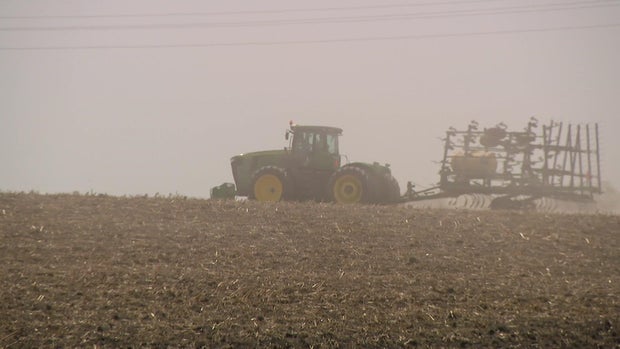
"We've already lost multiple farmers this year to suicide and we don't want to lose another one," said Tracie Rutherford Self, an agricultural mental health specialist.
Like Reeser, Rutherford Self's help is free and confidential, and she has also been making trips to various farms across southern Minnesota.
"Just kind of talking through, 'Hey, what kind of stressors are we having? And what are some of the things we can put in place to help lessen and reduce that load?'" said Rutherford Self.
She'll visit some farmers just once. Others require multiple visits depending on how they're feeling. Rutherford Self said the recent increase in calls can be viewed two ways.
"So the positive about that is people are calling us, right? They are stressed and we are getting phone calls. The downside is there seems to be a much greater need, but there's also more acceptability," said Rutherford Self. "So often people talk about the stigma farmers might have around mental health, and I'm actually seeing much less of that than people anticipate. They seem more willing to reach out and have a conversation."
If you or someone you know is in emotional distress, get help from the Suicide and Crisis Lifeline by calling or texting 988. Trained crisis counselors are available 24 hours a day to talk about anything.
In addition, help is available from the National Alliance on Mental Illness, or NAMI. Call the NAMI Helpline at 800-950-6264 or text "HelpLine" to 62640. There are more than 600 local NAMI organizations and affiliates across the country, many of which offer free support and education programs.