Activists calling for closure of trash-burning plant in Minneapolis start hunger strike

In an attempt to force action on what protesters say is a dire health emergency in north Minneapolis, a group of four people have begun a hunger strike.
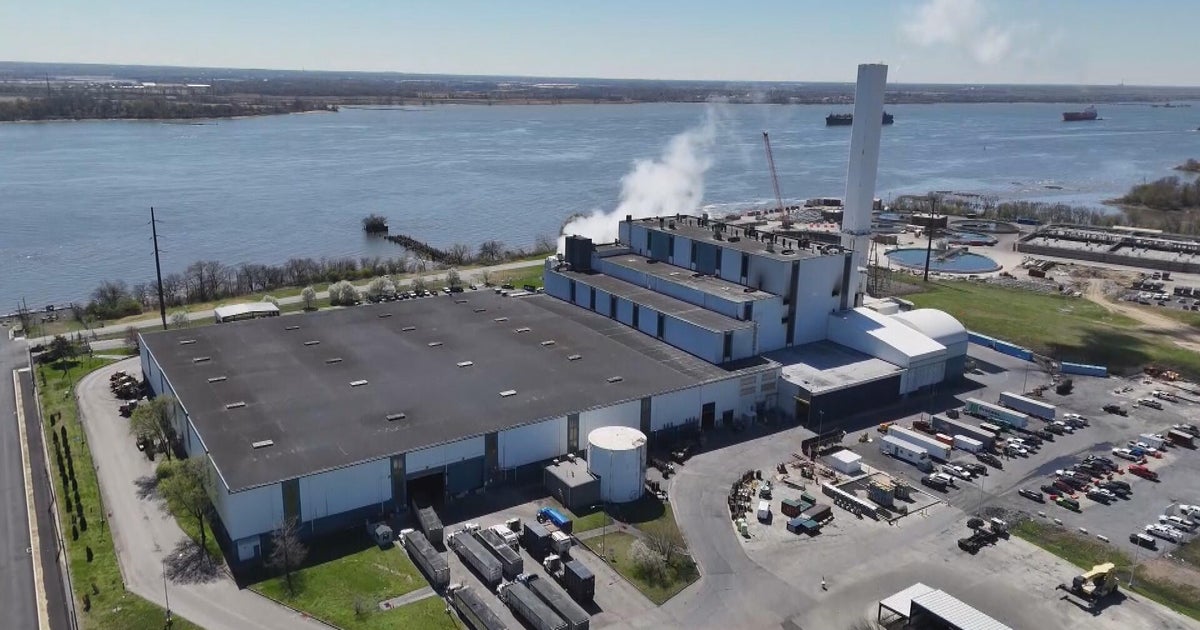
The strike is being organized by the Zero Burn Coalition, a group dedicated to shutting down the Hennepin Energy Recovery Center, also known as HERC. First built in 1989, the waste-to-energy facility burns garbage and produces enough energy to power about 25,000 homes, according to Hennepin County.
Protesters, however, say that HERC, which neighbors Target Field near the North Loop neighborhood, is responsible for essentially poisoning people who live nearby. Joshua Lewis, one of the people who is participating in the strike that started Friday, explained that the issue is personal to him, losing both of his parents to cancer, which he believes was caused by environmental pollution.
"Our lungs are not collateral. Our lives are not negotiable," Lewis said.
The hunger strikers joined dozens of others who entered the Hennepin County Government building in downtown Minneapolis on Friday morning with a demand for county commissioners: Hold a public vote to close HERC by Dec. 31, 2027.
Natasha Villanueva, who lives in the Jordan neighborhood of Minneapolis, just north of the HERC facility, said that the hunger strike is a necessary step to get commissioners to listen.
"What is moral does not always correlate to how systems in our society operate," Villanueva said.
Reaching the top floor of the county office building where commissioners' offices are, Villanueva and others in the group sang "hit the road, HERC" to the tune of Ray Charles' "Hit the Road Jack" and attempted to get in touch directly with them.
No one was in the office on Friday, but a spokesperson for the county said that commissioners have met "frequently" with hunger strike organizers, stating that officials are open to continued conversations. Hunger strike organizers said prior discussions felt "disingenuous."
In 2023, Hennepin County approved a resolution that would close HERC sometime between 2028 and 2040. Protesters argue that the measure was misleading without an exact date set; the spokesperson pointed WCCO to several initiatives that the county is working through to repurpose HERC while staying within the bounds of waste management regulations.
In February, commissioners passed a resolution that states, in part, "The county's position is to accelerate the closure and repurposing of HERC by aggressively pursuing zero-waste policies, programming, and infrastructure because the county's climate and equity commitments mean we cannot depend on landfills to manage our trash so we must reinvent the solid waste system."
Part of the problem at hand is that closing HERC outright would essentially double the burden on landfills, according to county and state officials.
Leadership with the Minnesota Pollution Control Agency took questions from state senators on the topic on Tuesday, explaining that all waste from Hennepin County is split just about evenly between waste-to-energy facilities like HERC and landfills.
Kirk Koudelka, assistant commissioner for the MPCA, said that closing HERC could have unintended health impacts by shifting pressure to landfills. He said that garbage and unprocessed recycling waste that ends up in landfills would linger for decades or longer, posing a threat to waterways and local residents.
"What would happen if a waste energy facility were to close is all that waste would go like that to a landfill," Koudelka said.
Hennepin County conducted a study on HERC's air emissions in 2021 with Barr Engineering. The county concluded at the time that the cancer and noncancer risks associated with HERC emissions were "well below" risk thresholds established by the Minnesota Department of Health. The county also stated that "shutting down HERC will not result in observable health outcome improvements" for people living in the area, arguing that its closure could create further air pollution by way of additional trucks making trips to landfills.
Nazir Khan, a coleader with the Minnesota Environmental Justice Table, said that the data points are misleading. He and others in the group demanding HERC's closure said that neither the state agency nor the county was taking into account long-term impacts on people living close to the trash burner over an extended period of time.
Tom Johnson, the government relations director for the MPCA, told state senators this week that while the agency always uses risk markers that are consistent with the Environmental Protection Agency and others, cumulative impacts have not traditionally been part of the metrics they track.
"Those health benchmarks do not necessarily take into account the cumulative effect of various sources of pollution on an individual," Johnson said, "so that is a new approach that we are currently in the process of rule-making for."
Lewis and his fellow hunger strikers believe that their concerns are ultimately being ignored.
"This is not just a policy issue; this is a life and death issue," Lewis said.
As of Friday afternoon, most commissioners have not responded to WCCO's request for comment. District 1 Commissioner Jeffrey Lunde sent an email to WCCO stating that he is not in favor of shutting down HERC "until we have plans for sorting facilities throughout Hennepin."
"Stuffing more trash into two landfills (Elk River and Burnsville) is short-sighted and spreads the impact of trash over decades as landfills are not a solution," Lunde said.
District 6 Commissioner Heather Edelson reissued a statement she provided to WCCO on March 31:
"I care about the people behind this movement, and I am genuinely concerned for their health and safety. A hunger strike is a serious and risky step, and I hope we can continue this conversation in a way that keeps everyone safe," Edelson said in part, stating that HERC should close but must be done 'responsibly.'"