Live Updates: Iran threatens to "teach a lesson" if U.S. attacks, Trump says ceasefire is "on life support"
What to know about the Iran war today:
- After President Trump rejected Iran's response to the latest U.S. peace proposal and said the ceasefire is "on life support," the speaker of Iran's parliament said the Islamic Republic's military is ready to "teach a lesson" to any aggressor.
- U.S. Ambassador to Israel Mike Huckabee said Tuesday that Israel sent anti-missile batteries and personnel to the UAE to help protect the country from Iranian attacks, underlying a growing defense relationship between the two Middle Eastern countries bolstered by the Iran war.
- Israeli strikes killed six people in southern Lebanon, state media reported, as the leader of Iranian-backed Hezbollah vowed to turn the battlefield "into hell for Israel." The strikes come as Israel and Lebanon are set to hold a third round of talks later this week in Washington.
Kuwait says Iran-linked "infiltrators who attempted to enter the country by sea" arrested after clashes
Kuwaiti authorities have arrested four alleged Iran-linked "infiltrators who attempted to enter the country by sea," according to the small Persian Gulf nation's ministry of defense. Two other suspects escaped after clashing with security forces, the ministry said in a statement carried by the Kuna state news agency.
The four confessed during interrogation to "their affiliation to the Iranian Revolutionary Guard Corps," the ministry was quoted as saying, adding that the group had also admitted to attempting to infiltrate Kuwait's Bubiyan Island "aboard a fishing boat rented specifically to carry out hostile acts."
Kuwait, along with its Persian Gulf neighbors, came under repeated Iranian missile and drone attack from Feb. 28, when the U.S. and Israel launched their joint war with Iran, until the tenuous ceasefire between Washington and Tehran took effect on April 8.
Ties with China give Iran "strategic diplomatic depth" to relay positions during Trump-Xi summit, Iranian ambassador says
Iran's relationship with China gives Tehran "strategic diplomatic depth," Iran's ambassador to China said Tuesday, adding that Beijing could help to "echo" the Islamic Republic regime's position on the war during the upcoming summit in the Chinese capital between President Trump and his counterpart Xi Jinping.
"Long-term cooperation with China provides Iran with a kind of strategic diplomatic depth" as it seeks an end to the war "in the face of American pressure," Ambassador Abdulreza Rahmani Fazli told Iranian state news agency IRNA on Tuesday.
He said China had "paved the way" for the previous round of direct U.S.-Iran peace talks in Islamabad, Pakistan, and he predicted that Beijing could emerge as a key player in ongoing diplomacy.
Iran's Foreign Minister Abbas Araghchi visited Beijing last week, and Mr. Trump is due to land in Beijing Tuesday evening, with the Iran war widely expected to be on the agenda as he meets with Xi.
"Iran's message is clear: a permanent cessation of hostilities, a lasting ceasefire, lifting of the [U.S.] blockade, and respect for Iran's legitimate rights. China can echo this message at the major power level," said Fazli.
Hegseth says it's a "very dynamic situation," but the ceasefire with Iran "is in effect"
Pressed by Democratic Rep. Pete Aguilar of California on the ceasefire with Iran, Defense Secretary Hegseth insisted Tuesday that the truce remains "in effect."
"As you know, for the most part a ceasefire means the fire is ceasing, and we know that has occurred while negotiations occur, and there are lots of different discussions with our negotiating team that are happening," Hegseth said at a congressional hearing. "So, it's a very dynamic situation, where a negotiated settlement could be the outcome here where Iran does not have nuclear capabilities."
On the brief Project Freedom operation, which, for a day, saw U.S. warships and planes guide a couple commercial vessels through the Strait of Hormuz, Hegseth said "it was paused and it's an option we could always recommence, should the commander in chief want us to."
"The theory of the entire case is to prevent Iran from having a nuclear weapon, and if that has to be done kinetically and militarily, the Department of War is locked and loaded and ready to do that," he said.
Hegseth also pushed back on the suggestion that U.S. munitions are depleted, saying "that's not true."
"Ultimately we have all the munitions needed to execute what we need to execute, and we're going to ensure that we supercharge that going into the future," he said.
Joint Chiefs Chairman Gen. Dan Caine, who was also testifying before the committee Tuesday, said the U.S. has "sufficient munitions for what we're tasked to do right now."
But he added that he "will always want more."
Supertanker turns back off Omani coast after transiting Strait of Hormuz in "coordination" with Iran
A tanker loaded with Iraqi crude oil turned around and headed back toward the Persian Gulf on Monday off the southern coast of Oman, a day after Iran said the ship had transited the Strait of Hormuz in coordination with Iranian authorities.
Tracking data from the MarineTraffic website shows the Malta-flagged crude oil tanker Agios Fanourios I made a sharp turn off Ras Al Hadd in the Gulf of Oman Monday afternoon, and was slowly moving back westward, back into the strait, on Tuesday afternoon.
Iran said Monday that the ship had coordinated with its authorities for safe passage through the Strait of Hormuz. The Sepah news channel, run by Iran's Islamic Revolutionary Guard Corps, claimed in a social media post that the ship had been turned back by the ongoing U.S. naval blockade, but the U.S. military did not immediately comment.
The tanker last called at Iraq's Basra port in late April, and was broadcasting its ultimate destination as Vietnam.
The Pentagon says the U.S. blockade is of Iranian ports and vessels belonging to or linked to Iran, but that other ships are permitted to pass. Iran, however, has warned it will attack any ship transiting the strait without its permission.
Given those dueling de-facto blockades, overall shipping traffic through the vital shipping lanes of the Strait of Hormuz has dropped a staggering 90% since the U.S. and Israel launched their joint war with Iran.
Hegseth: "We have a plan to escalate if necessary, we have a plan to retrograde if necessary"
Defense Secretary Pete Hegseth said Tuesday that the Pentagon has a plan for a number of scenarios when asked at a congressional hearing about the possible directions the war with Iran could take.
Democratic Rep. Betty McCollum of Minnesota questioned Hegseth about continued military operations in Iran, following a dispute over a 60-day timeline for the administration to withdraw American forces from a conflict in the absence of congressional authorization. McCollum said if Congress doesn't authorize continued military operations, "you're going to have to have a plan put in place to draw down our troops, to reset the region and protect our assets."
"We have a plan for all of that," Hegseth said. "We have a plan to escalate if necessary, we have a plan to retrograde if necessary, we have a plan to shift assets."
Hegseth said he wouldn't reveal any next steps in a public setting, "considering the gravity of the mission that the president is undertaking to ensure that Iran never has a nuclear bomb."
The defense secretary is testifying to a House appropriations subcommittee about the Pentagon's budget proposal.
Hegseth said the $1.5 trillion budget request, "reflects the urgency of the moment" and would address both the "deferment of longstanding problems as well as position our forces for the current and future fight."
Iran's government promises to drop internet restrictions "once normal conditions return"
An Iranian government spokeswoman promised the country's roughly 93 million people on Monday that the severe restrictions on internet access would be lifted, but not until "normal conditions return."
"The government's view is that everyone should have fair access to all infrastructure, including the internet," Fatemah Mohajerani said in a statement delivered on Iranian state TV.
"The restrictions that have been imposed over the years, especially in 1404 [2025–2026], when their frequency was naturally higher due to very difficult, severe, and painful events that occurred that year, mean that we have passed through a year with frequent internet disruptions," Mohajerani said. "After the disruptions and once normal conditions return — that is, a return to normal circumstances — this situation will also return to normal, God willing."
Restrictions, which at times have amounted to a virtual shutdown of internet access, have been in place since the beginning of the year, when Iran was rocked by widespread anti-government protests.
Trump says Iran went back on allowing U.S. to remove highly enriched uranium
President Trump said Monday that Iran had informed his administration it would allow the U.S. to come in and help extract its highly enriched uranium, but that Tehran retracted that offer in its latest ceasefire proposal.
"They changed their mind, because they didn't put it in the paper," Mr. Trump told reporters in the Oval Office.
He said that, in addition to taking control of the uranium, the U.S. wants Iran to "guarantee no nuclear weapons for a very long period of time and a couple of other minor things, but they just can't get there. So they agree with us and then they take it back."
Iran has not publicly agreed to give up its enriched uranium, and the regime insists its nuclear program has always been peaceful — for energy, medical and research purposes — and that it is a legitimate national right.
Mr. Trump on Sunday dismissed Iran's response to the latest U.S. peace deal offer as "totally unacceptable."
Qatar's state-backed Al-Jazeera news outlet said Iranian negotiators had proposed transferring the country's enriched uranium to Russia, but that Washington rejected that idea and instead requested it be moved to a third country, which Iran refused.
Hezbollah chief says group's weapons not on table in Lebanon-Israel negotiations
Hezbollah chief Naim Qassem said Tuesday that his Iran-backed group's weapons stockpiles were not part of upcoming negotiations between Lebanon and Israel, and he vowed that Hezbollah fighters would turn the battlefield into "hell" for Israeli forces.
"Nobody outside Lebanon has anything to do with the weapons, the resistance ... this is an internal Lebanese matter and not part of negotiations with the enemy," Qassem said in a written statement ahead of a third round of talks in Washington between Lebanese and Israeli representatives this Thursday and Friday.
Hezbollah has condemned direct talks between Lebanon and Israel as "appeasement."
"We face an Israeli-American aggression seeking to subjugate our country Lebanon and make it part of Greater Israel," Qassem said.
"We will not surrender and we will continue to defend Lebanon and its people, however long it takes and however great the sacrifices... we will not abandon the battlefield and we will turn it into hell for Israel," he added in the statement, which was addressed to the group's fighters and broadcast on its Al-Manar television channel, as fighting continues in Lebanon despite a ceasefire.
CBS/AFP
U.S. ambassador to Israel says Israel sent Iron Dome batteries and personnel to UAE
Israel sent Iron Dome anti-missile batteries and personnel to operate them to the United Arab Emirates to defend the country during the Iran war, the U.S. ambassador to the country said Tuesday.
Mike Huckabee made the comment on stage at an event in Tel Aviv, Israel.
"I'd like to say a word of appreciation for United Arab Emirates, the first Abraham accord member," Huckabee said at the Tel Aviv Conference. "Just look at the benefits. Israel just sent them Iron Dome batteries and personnel to help operate them."
The United Arab Emirates, a federation of seven sheikhdoms on the Arabian Peninsula, diplomatically recognized Israel in 2020.
The UAE didn't immediately respond to a request for comment over the acknowledgment by Huckabee, though it underlined the growing defense relationship between the countries long suspicious of Iran.
Israeli strikes kill 6 in southern Lebanon, state media say
Israeli strikes on a town in southern Lebanon killed six people and wounded seven others, state media said Tuesday, as fighting continued despite a ceasefire agreement.
Lebanon's state-run National News Agency (NNA) reported that Israeli strikes Monday night hit a house in Kfar Dounine, a town about 59 miles from Beirut.
The NNA reported the wounded were transported to hospitals in the coastal city of Tyre.
Israel has intensified its attacks in south Lebanon as it trades fire with Iran-backed Hezbollah despite an April 17 ceasefire between Israel and the Lebanon government that aimed to halt the fighting.
More than 2,800 people have been killed in Lebanon since the country was dragged into the Middle East war on March 2, according to health authorities.
Lebanese leaders recently urged the U.S. ambassador to Beirut to pressure Israel to halt its attacks during the truce, though Israel has also reported coming under fire.
Israel's military said over the weekend that one of its soldiers was killed in fighting near the border with Lebanon, bringing its losses to 18 troops and a civilian contractor since the war began.
The NNA on Tuesday reported strikes near other southern Lebanese towns, and the Israeli military ordered an evacuation of multiple Lebanese towns.
Hezbollah chief Naim Qassem said Tuesday that his Iran-backed group's weapons were not part of upcoming negotiations between Lebanon and Israel, and vowed his fighters would turn the battlefield into "hell" for Israeli forces.
Iran ready to "teach a lesson" if attacked, parliament speaker says
The speaker of Iran's parliament said his country's military stood ready to "teach a lesson" to any aggressor on Monday, after President Trump warned the ceasefire in the Middle East was hanging by a thread.
"Our armed forces are ready to respond and to teach a lesson for any aggression," Mohammad Bagher Ghalibaf said on social media. "A bad strategy and bad decisions always lead to bad results — the world already understands this."
Mediator Pakistan allowed Iran to park military aircraft on its airfields
As Pakistan positioned itself as a diplomatic conduit between Tehran and Washington, it quietly allowed Iranian military aircraft to park on its airfields, potentially shielding them from American airstrikes, according to U.S. officials with knowledge of the matter.
Iran also sent civilian aircraft to park in neighboring Afghanistan. It was not clear if military aircraft were among those flights, two of the officials told CBS News.
Together, the movements reflected an apparent effort to insulate some of Iran's remaining military and aviation assets from the expanding conflict, even as officials publicly served as brokers for de-escalation.
Pakistan's Foreign Ministry told CBS News the reporting was "misleading and sensationalized."
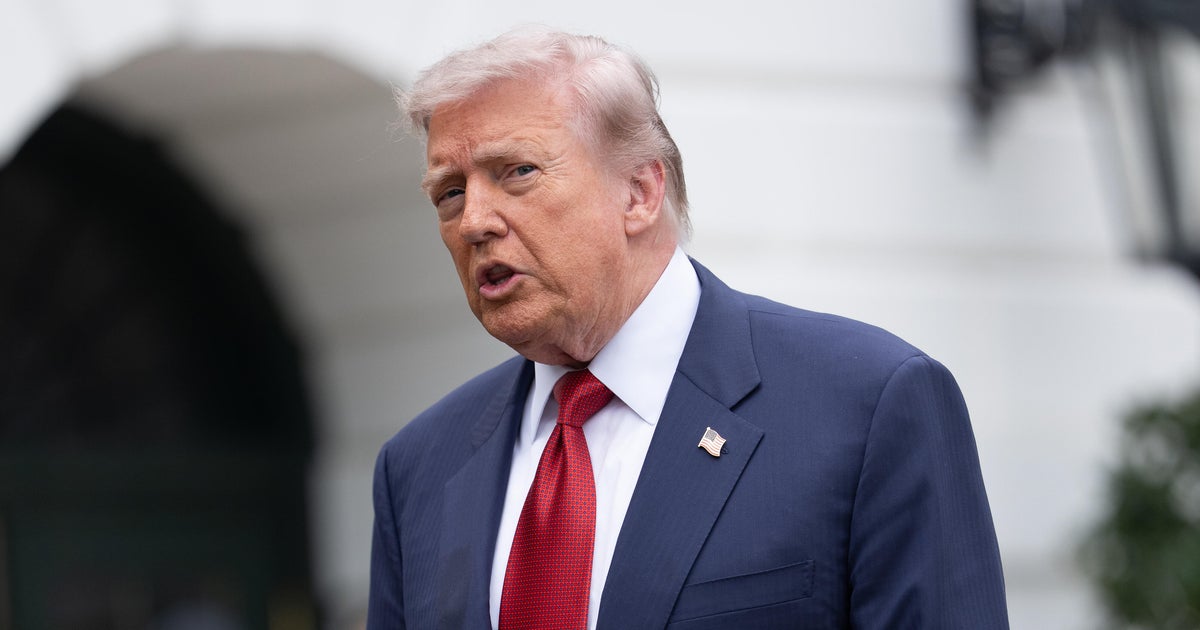
Trump says ceasefire is "on life support" after "garbage" Iranian response
Speaking to reporters in the Oval Office, President Trump said Monday that the Iran ceasefire is "on life support" after the "garbage" response Iran sent the U.S.
"It's unbelievably weak, I would say," the president responded when asked if the ceasefire remains in place.
"I would call it the weakest, right now, after reading that piece of garbage they sent us. I didn't even finish reading it. I said, they're going to waste my time reading it. I would say it's one of the weakest, right now, it's on life support."