Army to detonate unstable lead explosives at Iowa munitions plant despite community concerns
The U.S. Army is set to detonate a stockpile of degrading explosives at a munitions plant in Iowa on Wednesday morning, following community outcry and a legal fight that delayed the operation by several days.
Five tons of unstable explosive material, containing the highly sensitive compound lead azide, will be blown up in a controlled detonation at the Iowa Army Ammunition Plant in Middletown at 9 a.m. local time. Middletown is a small community of about 350 people, located four hours west of Chicago by car.
The plant houses about 68 barrels or roughly 10,000 pounds of lead azide, which has been used in ammunition since World War I. According to the Environmental Protection Agency, the explosives degraded over about 20 years in storage, giving way to a process called recrystallization that made the material more susceptible to accidental detonation from friction or other movement.
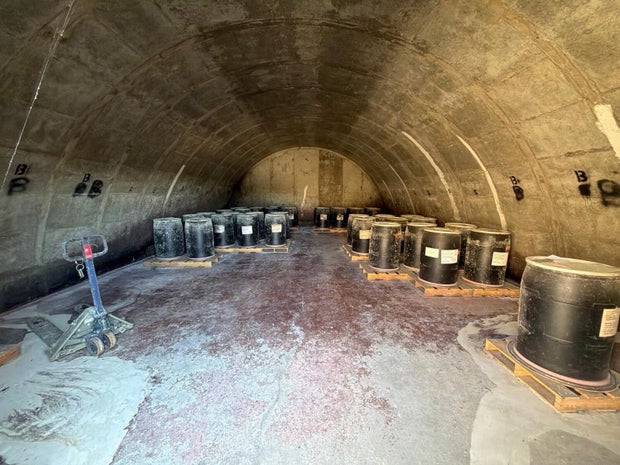
The Army has pushed to carry out the controlled detonation because of the public safety risks associated with the cache possibly blowing up on its own. But environmental groups and local residents attempted to block its plans, fearing the health and agricultural consequences of a toxic plume of lead dust that could disperse across the region after the blast.
The plume was expected to spread over parts of southeastern Iowa and northeastern Missouri, potentially threatening homes, playgrounds, farmlands and other spaces. Maps released Tuesday by the Army noted that the dust cloud could travel as far as 100 miles, but the most potent effects would likely be felt within 30 square miles of the munitions plant.
Legal challenge questioned detonation
The detonation was postponed last week after environmental groups filed a lawsuit challenging the emergency permit the EPA had granted the Army to authorize it. The groups argued the agency had not provided residents of the area with adequate notice of its plans or evidence showing the detonation was the best course of action from a health and safety perspective.
But the 8th Circuit Court of Appeals' initial ruling blocking the detonation was lifted Monday. The court acknowledged "the very real risks presented by the Army's planned detonation," but ultimately found the risk of an uncontrolled explosion more harmful.
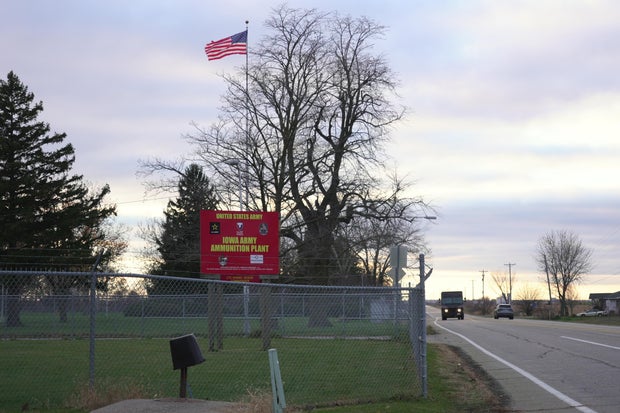
Acting Secretary of the Army Adam Telle said at a Tuesday news conference that plans would move forward as falling temperatures caused the explosives to become more and more volatile, increasing the chances of a spontaneous explosion. Telle said the weather forecast Wednesday is "ideal to protect public health and safety across the region."
"Inaction is no longer an option," Army Maj. Gen. Eric Shirley, the commander of the operation, said Tuesday. "It would be irresponsible for us to not take the determined, consensus-based course of action moving forward."
President Trump had said earlier this week that the Army would not move ahead with the detonation without the court's affirmative ruling and the approval of Iowa Gov.-elect Rob Sand. However, Sand was not required to weigh in and hasn't officially taken office.


