Advocacy groups drove 20,000 masks 200 miles over Iowa lead detonation threat: "We're talking about a neurotoxin"
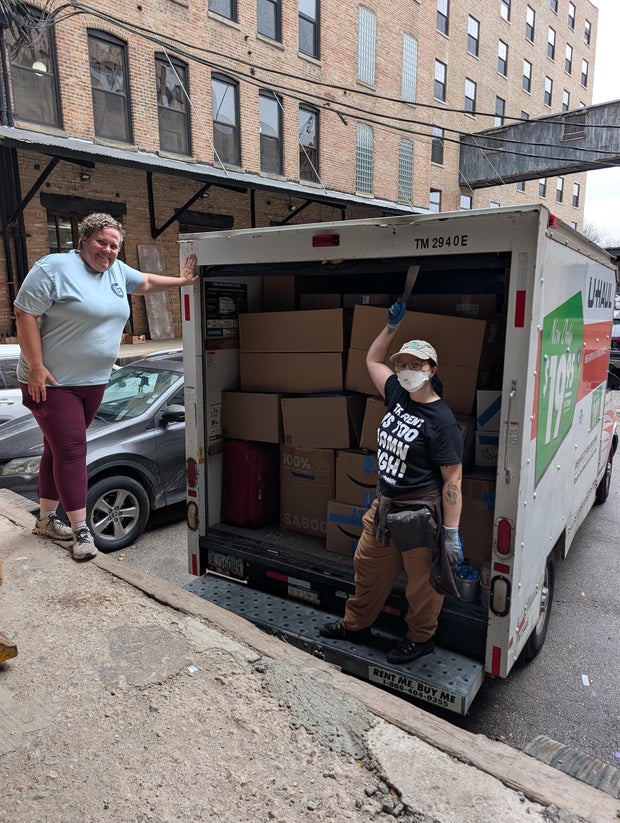
ACT UP Chicago, an activist group refounded this year, says it drove a box truck more than 200 miles through the night to deliver nearly 20,000 N95 masks to small Iowa towns near an Army ammunition plant, where the Army had planned to detonate thousands of pounds of lead azide.
"We're not talking about some inconvenience; we are talking about a neurotoxin that affects everyone's health," J Saxon of ACT UP Chicago said.
The Army had planned to detonate about 5 tons of degraded, unstable lead azide at the Iowa Army Ammunition Plant in Middletown, a community of fewer than 400 people where some homes are next to the plant. The Army had said it would proceed despite a federal appeals court order pausing the detonation indefinitely.
President Trump has since ordered the military to hold off until the 8th Circuit agrees the operation can go forward and Iowa Gov.-elect Rob Sand agrees to it. The president wrote that he thinks detonating the material is the proper course. It's not clear whether or when the detonation will now happen. Depending on the wind, the airborne neurotoxins can spread up to 100 miles, across the Mississippi River, and into parts of northwest Illinois
ACT UP is a direct-action AIDS activism group that has historically confronted government inaction and institutional neglect during health crises. Now, their focus has expanded, including their reach.
"As an organization that's Chicago-based, that focuses on clean air, respiratory health, among other things, we felt the duty to use the supplies that we had available," said Saxon.
ACT UP Chicago mobilized within 48 hours with the Chicago Clean Air Resilience Network, known as ChiCARN, and Windy City ToolBank, where the supplies were stored. ChiCARN and its partner, the Public Health Action Network, had received 95,000 donated respirators from Safe'N'Clear a day earlier.
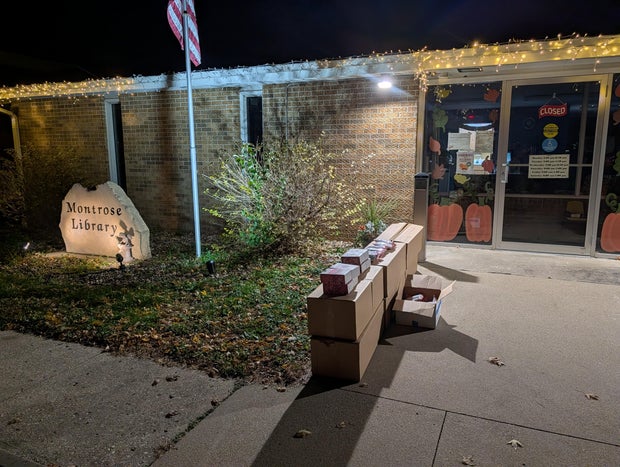
The group delivered nearly 20,000 of those N95 masks, including sizes for small children, along with gloves and Tyvek suits, the white protective coveralls that block fine particles. Residents of Middletown, Montrose, Mediapolis and Burlington now have access to the free supplies, which the group left in boxes at post offices, libraries and other government buildings. Saxon said the group also knocked on doors, and stopped at a church in the center of one town after seeing its lights on. It took nearly a half hour just to drive between towns, he said.
"Once people knew that there were supplies available for them, they were eager to access them," Saxon said after getting home from Iowa at 4:30 a.m.
Saxon said residents he met had been left without information. "People were scared. People were confused," he said. "We knocked on some doors in Middletown, and folks just had no support, no communication."
There is no known safe level of lead exposure, and it can harm nearly every system in the body, according to the American Lung Association. The association has called on the Army to coordinate with state and local health departments and tell residents the expected level of exposure and how to protect themselves.
Saxon said he felt that wasn't happening, and that people didn't understand the severity of the situation, how long the danger would last or what steps they could take. It "should not fall on private citizens to be doing the work of major governments," he said. He said he hopes the group's "gesture of goodwill can draw a lightning rod" toward the officials responsible, including the governors of Iowa and Illinois.
The groups say disposable N95 masks are not a "complete solution." Jessica Pohto of Windy City ToolBank said the question she keeps coming back to is whether communities are being prepared for the event "or simply telling people how to protect themselves and assuming everyone has the means to do it." She cited people who work outside, such as farmers and construction workers, as well as people without homes and those in old homes with poor ventilation.
Pohto said the masks can help reduce inhalation of lead-containing particles but don't protect against chemical gases or vapors, unlike P100 filters. Since Friday, Pohto has been in contact with the Illinois Department of Public Health, asking for help to provide masks to community members and more "clear, specific, actionable instructions" on what to do before, during, and after a potential release, especially for children and animals.
Since then, IDPH has posted more detailed information on their social media channels.
ACT UP hopes to return to Iowa again soon to distribute more resources.
"We are dealing with an unprecedented public health crisis that will affect more than just the immediate residents. We should all do what we can to help each other," Saxon said.