Colorado ranchers sell cattle as drought worsens and creeks and reservoirs reach historic lows

The Colorado Climate Center says 2026 is the hottest start to a year on record and one of the driest, with more than 4 inches less precipitation than the historical average. 97% of the state is in a drought and 80% is experiencing severe or exceptional drought. The extreme conditions are forcing some farmers and ranchers to make difficult decisions.
A third-generation Coloradan, Doug Bruchez barely recognizes Grand County where he's farmed and ranched for decades.
"Normally this reservoir is full until the first of August. I've never seen it this low," Bruchez said.
Record-high heat has scorched the land and record-low snowpack starved creeks and reservoirs. Across the state, stream flows are the second lowest on record.
Bruchez says his ranch in Kremmling received less than an inch of rain in June.
"Before that, I cannot remember the last time it rained or snowed," he said.
Grand County is among the areas hardest hit by the drought, as evidenced by Williams Fork Reservoir, which is less than half its capacity.
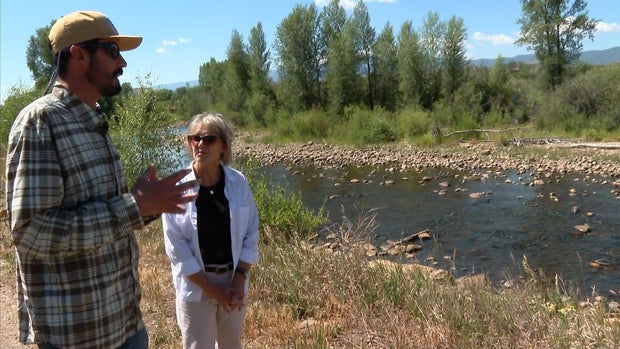
"The point of reservoirs like Williams Fork is they're really like our Plan B for really bad drought situations," said Bruchez. "And we are full-scale Plan B right now and there is no Plan C."
And it's only July. Bruchez worries he'll soon run out of water and feed for his 350 cows and calves. The U.S. Cattle Report ranks Colorado's pasture conditions the worst in the country right now. Bruchez and his neighbors have been experimenting with crops that use less water, but those plants are struggling, too.
He planted 80% less hay this year due to the lack of water. The price of hay is double what it was last year.
Bruchez says he may have to ship his calves to a feedlot in Iowa.
"As we assess our grass situation coming into the fall, if we need less mouths that's the easiest thing to do is put cattle on a semi and send them somewhere where there is grass."
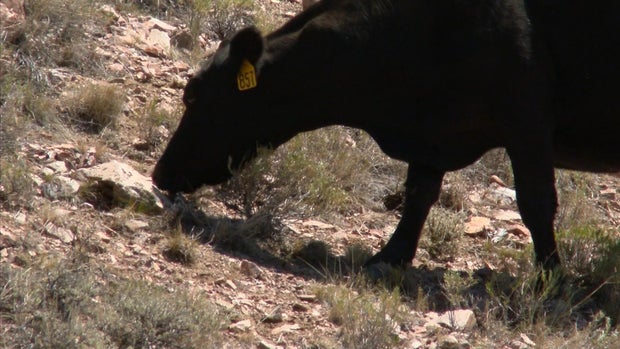
Other ranchers are selling off parts of their herd including breeding cows, which has long-term implications. Beef is the state's biggest ag export and beef herds are the smallest they've been in 75 years.
Jerry Gunderson, a fourth-generation rancher in Fruita, had 230 cows. He's now down to 60.
"There's realities. There's, you know, your ledgers and everything. You got to do it, right. Sometimes you have to let go of something to maintain the overall operation," Gunderson said.
He admits it will take years to rebuild. He'd like the federal government to help with low interest loans. Instead, it's offering Colorado and other upper basin states $100 million to pay farmers to take land out of production. The Colorado Water Conservation Board needs to approve the program. Director Lauren Ris says participation would be voluntary.
"We're not talking about permanently drying up fields or requiring people to forgo using their water rights through this type of a program," Ris said.
The Bureau of Reclamation says states would be able to bank any water farmers conserve in Lake Powell.
A lack of water already has many Colorado farmers growing less without being paid, which could impact not only the price of food but the state's economy. Ag is Colorado's second biggest economic driver.
Gunderson says $100 million split among four states is a drop in the bucket.
"It's a billion-dollar problem, it's not a $100 million problem," he said.
It's also a problem that impacts the entire state, and yet CBS Colorado has discovered dozens of Northern Colorado communities -- including most of Weld County and all of Larimer, Morgan, Sedgewick, and Washington counties -- have voluntary or no watering restrictions.
State Sen. Dylan Roberts plans to introduce a bill next year that ensures everyone conserves.
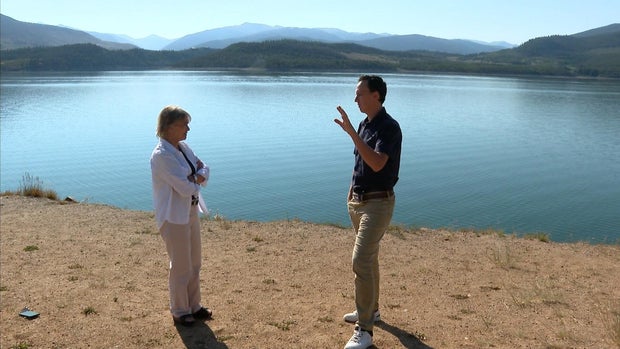
"We need to work on making sure that everyone is accountable and when we're in these drought crises that there are requirements that every part of the state needs to comply with, not just voluntary," Roberts said.
"Collectively, all of those savings do help and do make a difference. Even if it's 3%, 4% savings, we are so on the margin right now this summer, we need that 2%, we need that 3% to just keep rivers flowing.
The biggest reservoirs in the high country are now at or near historic lows and several of them generate hydroelectric power. If those power sources go down, electric bills could go up.
Green Mountain Reservoir, which supplies drinking water to 300 communities in Summit, Grand, Eagle, Garfield and Mesa Counties, is at just 21% of capacity and would have been even lower if not for some farmers near Grand Junction who donated some of their water. Kremmling also would have lost drinking water if a local rancher hadn't donated his water.
Bruchez says many West Slopers are making sacrifices for their neighbors, but he says they need more help from Coloradans on the other side of the Divide.
"It's not about East Slope versus West Slope or urban versus rural. We need all hands on deck to save as much water as we possibly can," Bruchez said.


