Farmers who grow some of Colorado's best-known crops deal with water and other woes

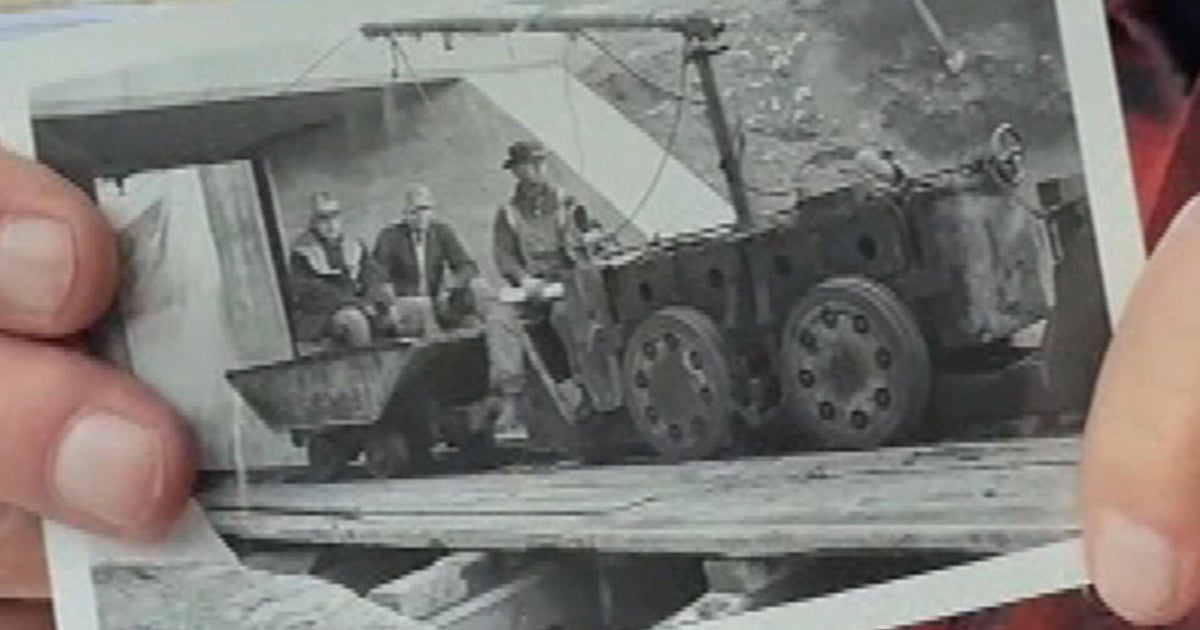
Water from the remarkable Gunnison Tunnel, the longest irrigation tunnel in America, flows to farms in the Uncompahgre Valley on Colorado's Western Slope. But this year, with the state's record-low snowpack, those flows have been cut by half. That means farmers are caught in the midst of a lot of challenges.
"Four generations on the farm," says farmer Mike Ahlberg. "My dad's still alive, he's 95... " he begins a list that goes all the way down to a grandson of 14. This year, though, is things are looking bleak.
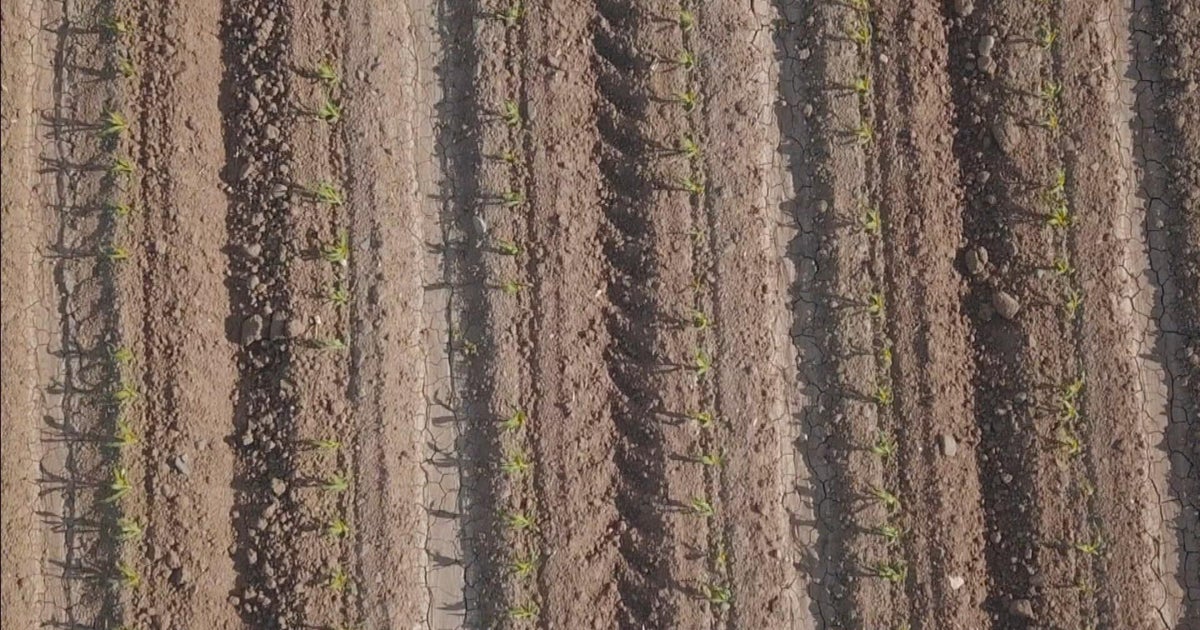
"Got two-tenths yesterday, but it ain't there," he says as he kicks the soil of a fallow field. The Ahlbergs own 927 acres in the vast Uncompahgre Valley. It's here where the famous Olathe corn is grown. The valley has been a great place to farm for generations.
"You know we've always grown good crops and grown a lot of things from lettuce to broccoli to cauliflower and now sweet corn," said farmer Brent Hines. "The sweet corn we was doing real good on. The onions we've done real good on. Used to be sugar beets, until the factories closed."
Farming is always a puzzle of planting and harvesting the right crops on the right year. They try to predict what markets might be better, try to stagger harvests and juggle labor, try to gauge moisture, when to water and when not. Those are only some of the components. There are pests to deal with like the corn earworm that aggressively chewed away at corn crops in recent years. Farmers have a lot to keep them up at night.
"I go lay in bed at night and try to go to sleep and I'm thinking well, do we need to leave this field out? Where do I need to move this water to where I can get water here?"
Water is the year's biggest problem.
The dismal snowpack situation has meant their main source of irrigation, water drawn from the Gunnison River through the nearly six mile Gunnison Tunnel, is in a desperate situation.
"The drought problem seems to be the one that's really kicked us in the butt," said Ahlberg.
It means leaving many of their fields fallow. There's not enough water in this arid valley that depends on it to make it worth planting and nurturing crops. It means calculating where to put water and when.
"So you'll take the water from here and here and here. It's all on the same canal system. And put it together to where you can get it across the field. Then you can shut it off and take it and move that water to the next field."
But it's not so simple.
"If we was trying to pick sweet corn and you was only watering 30 rows at a time, well then it's not going to be ready to spray all at the same time."
There hasn't been a water restriction like this in decades.
"It's just the climate change that's going on, or we're in a cycle or something's definitely different. This year was just the worst," said Hines.
If it isn't the water situation, there's a list of other things. The most recent of which is the consequences of the war with Iran.
"Diesel fuel's double and fertilizer's double," said Hines.
"When we're trying to get ground prepped, we're probably going through 500 gallons of diesel a day," said Ahlberg of his fields.
Some of the increases come in recent years. The State of Colorado began to require overtime at 48 hours on farms during the pandemic.
But farmers complained, noting Colorado is one of only four states with such a requirement and farms in states like Idaho which does not have it can produce crops for less. Asparagus can put on inches of growth in a single day and needs to be picked rapidly. There's little choice but to pay overtime. After objections from the agricultural community, a bill passed this legislative session will increase the number of hours before overtime is required to 56 in 2027.
Farmers often borrow money to get crops planted. It's a bet that the harvest will bring a return. The thin margins, however, make it harder to meet obligations.
"It's money that makes it rough when you have land payments and you have tractor payments," said Hines.
The mix of difficulties and rising land costs have some farming families looking at things differently.
"It's about impossible for somebody that don't have a family or grandpas or somebody that's been in the farming to get into business it's so expensive now," explained Hines. "The drought's been, you know, getting a little bit worse every year. So my one son decided he wasn't going to farm no more, so he's went and got a town job."
In spite of all of that, there is a love of the land and the work and the tangible result that shines through with farming.
"I enjoy farming. I enjoy growing the crops and sending a safe product to the consumers," Hines shared.
They believe they'll have good corn to sell when the time comes and hope Colorado consumers will buy local to support them.
"Hopefully El Nino's true and they know what they're talking about and we're going to get buried," said Hines about the summer ahead.
If there's not water, there could be a move to cut water off in September. Ahlberg says that's when he will water his corn for the last time. No water in that month would mean reduced yield or prices. It could be a brutal year.
But he's still proud when he's on his land looking at what he can do and laughs a little.
"Sitting there and I'm just smiling and everybody goes, 'How can you keep smiling?' And I sit there and go, what the hell's a frown going to do?"