Greeley secures federal funding for Colorado water pipeline project with help from Congressman Gabe Evans

Federal funding has been approved for a major water infrastructure project in Greeley aimed at protecting the city's drinking water supply from ongoing impacts tied to the Cameron Peak Fire in 2020.
The largest wildfire in Colorado history burned more than 200,000 acres, leaving behind scorched mountainsides that continue to create problems years later. Sediment from post-fire flooding can wash into the Big Thompson River, one of two primary sources of drinking water for Greeley.
"We have been working for a number of years, since the Cameron Peak Fire, to add infrastructure to make our system more resilient in the face of fire, particularly in post-fire flooding," said Sean Chambers, water resource manager for the City of Greeley.
To address the issue, the city plans to build the Gold Hill Pipeline, a large-capacity interconnection pipeline designed to connect Greeley's two major water systems.
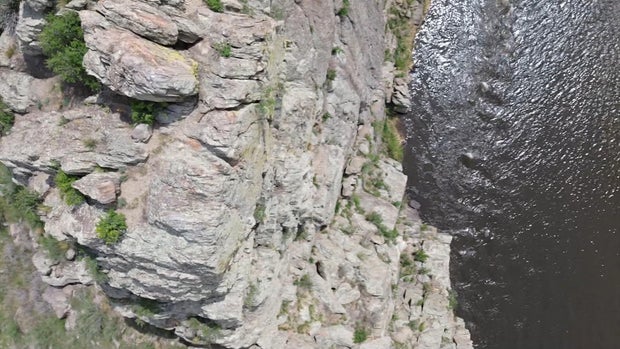
In Greeley, depending on the season, 59th Avenue roughly divides the city's water supply systems. Areas west of the avenue primarily receive water from the Big Thompson River, while areas to the east largely rely on the Poudre River. The proposed pipeline would allow the city to shift water between the two systems when sediment or flooding impacts one river source.
"We have been pursuing a very large-capacity interconnection water pipeline," Chambers said.
City officials said the project required federal support to move forward.
"Representative Evans' office really championed that for us," Chambers said.
Rep. Gabe Evans said securing the funding was critical for local communities that cannot independently afford large infrastructure projects.
"Being able to bring those federal tax dollars back to the community is critical," Evans said. "A lot of times local communities don't have the resources all on their own to fund these big pieces of infrastructure."
The funding was delayed for months while Congress debated appropriations tied to the Department of Homeland Security, placing the project amid broader political disputes over immigration enforcement.
The money has now been approved, and Evans said it represents the largest appropriation specifically designated for a single congressional district within the DHS funding bill.
"So much of what goes on in Washington, D.C. shouldn't be partisan," Evans said. "This is basic infrastructure, basic quality of life for folks."
Chambers said the city is now awaiting FEMA permit approvals but is otherwise prepared to begin construction immediately.
"We are tremendously grateful," Chambers said. "It is a really important project."


