Colorado Department of Corrections introduces high tech training for parole officers

The Colorado Department of Corrections says it is now the first and only department in the country to use virtual reality to train its parole officers.
The VR training puts officers through realistic, complex situations and ensures parole officers know how to use their words to de-escalate difficult situations or talk with someone in crisis.
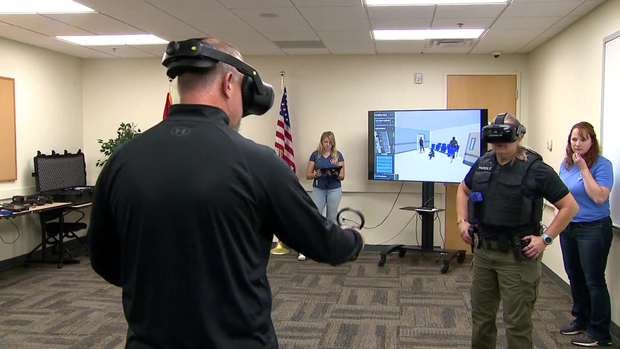
Jeff Genger, a community parole officer with the Colorado Department of Corrections, said their words and voice are among their most powerful tools in those situations.
"Can we really talk through the situation? Can we de-escalate the situation? Are they going through a mental crisis?" asked Genger. "We're trying to get to that point where we're de-escalating more, because that's really where law enforcement's starting to go, and it's trying not to have bad engagements or have a bad lethal situation."
The Colorado Department of Corrections supervises more than 9,000 people on parole. Genger said their job as community parole officers is to ensure people are following the conditions of their parole, making it to appointments, and helping meet the needs of people under supervision.
Genger added that parole officers go on many home visits, and sometimes a parolee is in crisis. Parolees also come into the office for check-ins, but are in crisis, too. With the virtual training, though, the goal is to prepare officers to de-escalate in these kinds of situations by using their voices and thinking on their feet.
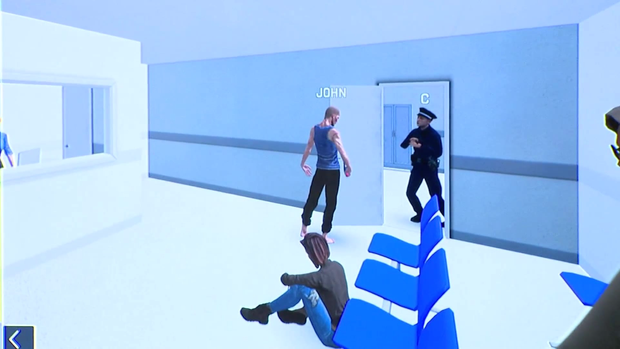
"So when they go into an actual setting, they feel confident, like, 'Okay, I've been here before, now we can work through this.' We can help the parolee, and really get them to that point that they'll either be safe for themselves or get them to the point of finishing their parole time," said Genger
In one scenario with the virtual reality training, a parole officer is at the office when a parolee comes in in crisis. The officer can calm down the parolee before taking them to crisis intervention.
In another scenario, parole officers work together on a home visit and welfare check on a woman who is in distress and has missed other check-ins and failed treatments.
Genger says not only is virtual reality training convenient, but it's also cost-effective, because they can set up these scenarios with fewer resources.
"It's packable, it's easy to move from one place to the next," said Genger. "We're also able to set up these scenarios, use it with a small amount of personnel, and be able to get a good training in over a good three to four hour basis, and not have to pay out money to have actors come in."
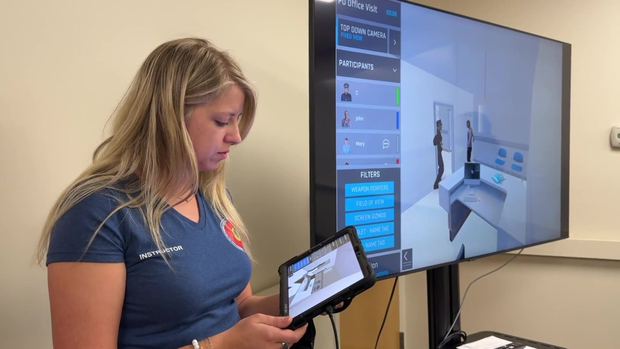
So far, the department has taught five classes to train parole officers across Colorado, so all officers can navigate complex situations and ensure the safety of everyone involved.
The virtual reality training is made possible thanks to an $800,000 grant awarded by the Bureau of Justice Assistance. The department is also partnering with the UCCS research team, which is evaluating the training's impact on officer safety and decision making.
"The nice thing about it is that we can look to the future to see if we want to add upon it," said Genger. "It's an exciting opportunity. I'm glad I'm part of it, and I see that this can really enhance experience level, and the Colorado Department of Corrections Adult Parole."


