Colorado state officials keep hundreds of children in juvenile detention for longer than law allows, lawsuit alleges
Children in juvenile detention facilities in Colorado are being held for weeks or months, in violation of their constitutional and other legal rights, according to a federal class-action lawsuit filed by multiple nonprofits.
The lawsuit names Colorado Gov. Jared Polis and Michelle Barnes, executive director of the Colorado Department of Human Services, as defendants, claiming that, for years, state officials have known that they're harming already vulnerable children by keeping them in detention, even after judges have said they should be released.
The plaintiffs in the case, 12-year-old Tony S. and 17-year-old Isaac N., are in the custody of the state and their last names are being withheld due to their age. Tony has been diagnosed with autism spectrum disorder and a medical condition causing cognitive impairments, behavioral issues, and developmental delays, and Isaac has been diagnosed with PTSD and ADHD. Being a class-action lawsuit, hundreds of "similarly situated" children are also represented, but not named.
"Youth with disabilities are among the most vulnerable in detention facilities and face some of the greatest harm when systems fail," said Emily Harvey, co-legal director at Disability Law Colorado, one of the organizations representing the plaintiffs. "This lawsuit underscores Colorado's failure to provide the community-based services these children need."
Neither the governor's office nor the Colorado Department of Human Services responded to a request for comment on the lawsuit or the claims contained in it. However, the lawsuit claims state officials have acknowledged inadequacies in the state's juvenile detention system and says that many of those children are still in detention "solely because they are waiting for the State to find them a foster placement."
In addition to Disability Law Colorado, the children are being represented by the ACLU of Colorado, Children's Rights, and the Ropes & Gray LLP law firm.
"Far too many children have languished pretrial in dangerous facilities for far too long. Now, we seek an end to this untenable status quo," said Emma McLean-Riggs, senior staff attorney at the ACLU of Colorado. "Jails and handcuffs are not acceptable substitutes for foster homes and therapeutic care."
Attorneys for the children say that the state's own data shows that in fiscal year 2024-2025, the state held 693 kids in secure detention facilities for at least one day after a court considered them releasable. Of those, over 140 were kept for over 30 days after a judge deemed them releasable.
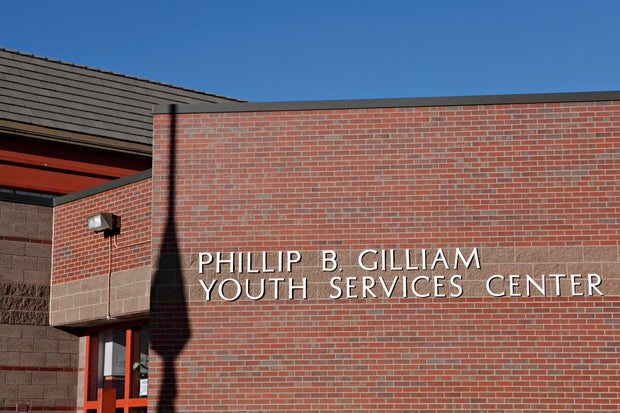
According to court documents, children in juvenile detention in Colorado are kept in one of the following eight facilities:
- Gilliam Youth Services Center in Denver;
- Grand Mesa Youth Services Center in Grand Junction;
- Marvin W. Foote Youth Services Center in Centennial;
- Rocky Mountain Youth Services Center in Lakewood;
- Platte Valley Youth Services Center in Greeley;
- Pueblo Youth Services Center in Pueblo;
- Prairie Vista Youth Services Center in Brighton;
- Zebulon Pike Youth Services Center in Colorado Springs.
The ACLU of Colorado and the Office of the State Public Defender have previously opposed adding more beds to juvenile detention centers in Colorado.
"Colorado is detaining abused and neglected children in jail rather than providing them with services outside of detention," Colorado Deputy Public Defender Nicole Duncan told CBS News Colorado in 2023. "The fact of the matter is that we are failing our children."
A report from Disability Law Colorado earlier this month found that the use of mechanical restraints and physical restraints increased by 54% and 60%, respectively, over the past four years. Interviews with children in detention concluded that one in three children either observed or were victims of violent restraints, such as "slamming or pinning them to the ground, pushing their head into the ground, choking them, hitting them in the face, or striking them with a knee to the stomach or head," the 56-page lawsuit shows.
Those documents go on to cite state data that shows a 39% increase in the use of restraints in two separate six-month periods in 2023 and 2024. The data also shows a disproportionate use of restraints against Black children.
The groups say detention for longer than is necessary and after judges deem them releasable often harms children physically, socially, and psychologically, with much of that harm often lasting through adulthood. The children's attorneys cite and agree with a state law that says that putting children in detention facilities "may make it more likely that the child or juvenile will reoffend."
"When the state locks up children after a court has said they may be released, it sends a devastating message that they are problems to be contained rather than young people deserving care, support, and a real chance to thrive," said Nancy Rosenbloom, senior litigation advisor at the ACLU's National Prison Project. "Instead of locking up releasable kids away from their families, teachers, and peers, the state must commit to programs and services that nurture young people and give every child the opportunity to succeed."


