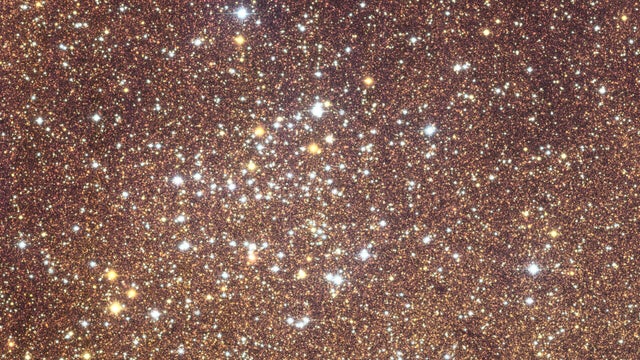
Telescope snaps most detailed photo yet of Milky Way's heart
Euclid is on a mission to chart one-third of the sky in the hopes of shedding light on the enduring mysteries of dark matter and dark energy.
Watch CBS News
Euclid is on a mission to chart one-third of the sky in the hopes of shedding light on the enduring mysteries of dark matter and dark energy.
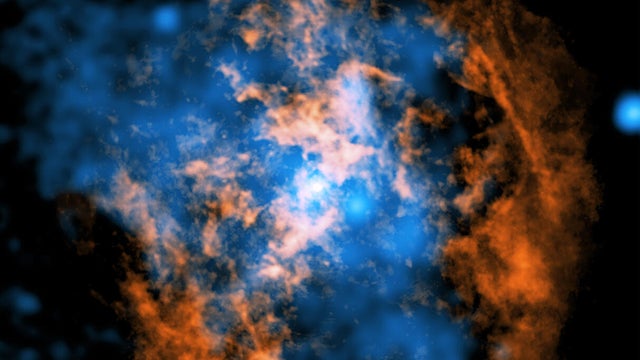
Scientists have understood for years that black holes should produce wind or streams of gas as they consume matter, but a search for such a wind around the central black hole of the Milky Way galaxy had been coming up fruitless for more than 50 years.
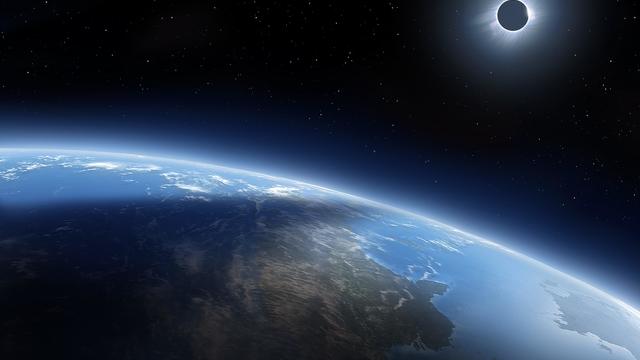
The asteroid was discovered in August and is set to become a mini-moon, spinning around Earth in a horseshoe shape for about two months.
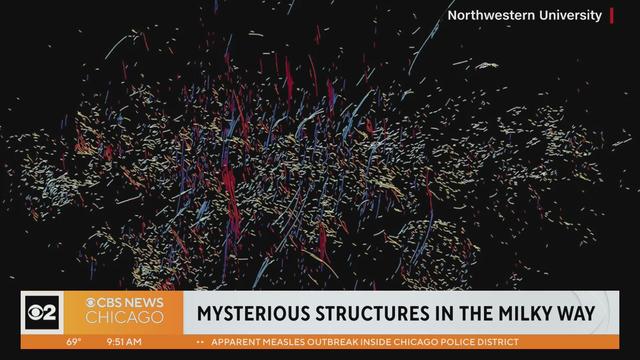
A team of scientists from Northwestern University made an out-of-this-world discovery in space.

The James Webb Space Telescope revealed galaxies from more than 13 billion years ago that seem to be as mature as the Milky Way is now: "Something so unexpected it actually creates problems for science."
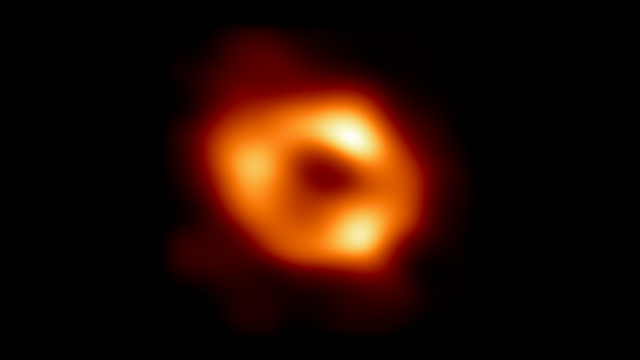
The image was produced by the Event Horizon Telescope Collaboration, using a network of radio telescopes around the world – including the University of Chicago-affiliated South Pole telescope.