Inside the "troubled teen" industry, when help sometimes does more harm

Taylor Kiesel says she hasn't slept through the night in three years.
"I wake up screaming, in a panic," the 20-year-old said. These days she surrounds herself with reptiles she's been collecting since childhood — Russian tortoises, geckos and snakes. Starting an animal rescue operation out of her home just outside Seattle has helped her turn what she calls "anger and sadness and passion" into something purposeful.
Getting to this point, she says, wasn't the result of the mental health treatment she received — it was despite it.
Taylor's struggles began early. Her father left when she was 5. In first grade, she was diagnosed with autism. By the time she was 6, she was expressing thoughts of self-harm.
"I remember driving in the car and she said, 'Mom, what would happen if I just jumped out of the car right now?'" recalled her mother, Rachelle. "It's not something that you would normally hear from a 6-year-old."
After years of therapy and multiple hospitalizations failed to keep Taylor safe, Rachelle says a consultant recommended a longer-term placement at a residential treatment center in Missouri called Change Academy Lake of the Ozarks, or CALO. She toured the facility, spent hours on the phone with staff and said she asked nearly a hundred questions before agreeing.
"The first thing you think of as a parent is, I'll do whatever it takes just to make sure that she's OK," she said. "I did a lot of homework."
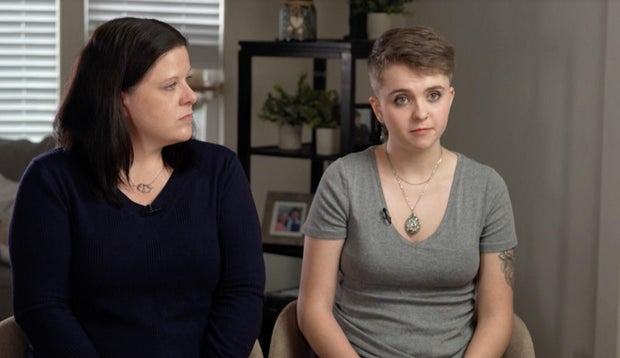
But once she arrived, Taylor says she felt right away that something was wrong.
"The way that other kids treated each other, how the staff would pit us against each other — that was not normal," she said.
Behind closed doors
Taylor and Rachelle Kiesel are now among 15 families suing CALO in civil court, with allegations ranging from negligent infliction of emotional distress to battery. CALO declined to sit down for an interview but told CBS News in a statement the lawsuits are "without merit," denying all allegations of abuse, neglect and battery.
CBS News spoke with dozens of CALO families, former residents and former staffers, many of whom described a violent, often out-of-control environment. Police records obtained by CBS News show more than 400 calls to the county sheriff's office linked to CALO's address over the past decade, including repeat and follow-up calls.
Hundreds of pages of incident reports paint a disturbing picture — a 12-year-old convulsing after apparently swallowing an unknown object, a 15-year-old cutting a large gash in her arm with pieces of a broken toilet, residents stabbing staffers with wooden shards from a broken bed frame.
CBS News also confirmed at least four former staffers have been convicted of crimes committed while employed at CALO, including sexually assaulting residents and possessing child pornography. In response, CALO said each individual passed state and federal background checks before being hired, that the incidents were immediately reported to the state, and that each employee was placed on leave and eventually terminated.
Caleb Cunningham served as the lead prosecutor in Camden County, Missouri, where CALO is located, from 2021 to 2023 and reviewed some of the records CBS News obtained.
"It's worse than I thought it was," he said. "It's heartbreaking."
"It's the perfect environment for these things to happen, and we see the same problems happening again and again and again, across the country," Cunningham said, adding, "there's very few problems in America where we just have ignored it entirely, like we have this industry."
Missouri's Department of Social Services told CBS News there have been five findings of physical abuse and five findings of sexual abuse involving CALO Programs over the last 20 years. The state's attorney general says CALO is not under any active investigation through her office.
Often taxpayer-funded, loosely regulated
Taylor's placement at CALO was funded, in part, through her Washington state school district under the terms of her Individualized Education Program, or IEP. Under federal law, the Individuals with Disabilities Education Act guarantees students with special needs a free education in the "least restrictive environment" possible. That law can, in some cases, enable children to cross state lines for private residential programs at public expense.
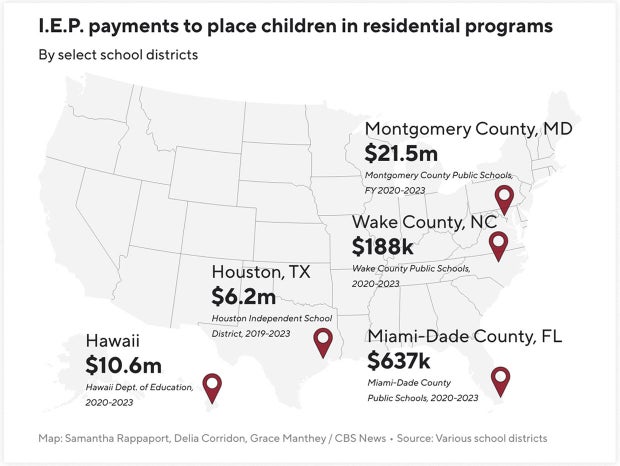
After Taylor was injured during a restraint by staff in 2022, Rachelle began pushing Washington state to remove CALO from its list of approved IEP placement options. She says the state told her CALO had been "responsive" to feedback and "has taken steps to address any past concerns." CALO remained on the list.
There is currently no federal law mandating a minimum standard of care for youth residential treatment programs and oversight is largely left to individual states. A 2024 Senate Finance Committee investigation found four major companies operating residential treatment programs had documented cases of providing substandard care while receiving what the report's authors say was billions in federal funds. CALO was not part of that report, and representatives for some of the companies named dispute the findings.
Sen. Jeff Merkley, a Democrat from Oregon, authored the Stop Institutional Child Abuse Act, which passed in 2024 with bipartisan support — helped along by the advocacy of Paris Hilton, herself a former youth treatment program resident. But the bill stopped short of mandating federal oversight, instead directing the Department of Health and Human Services to study the programs. That study is expected to be completed as early as mid-2027
"The argument for a number of my colleagues was, we're not sure how extensive the problem is," Merkley said. "We're reluctant to have regulation be a step taken before we understand it better."
The price of therapy
Not every family's story looks like Taylor's.
Luca, now 20, entered a wilderness therapy program in 2019 at age 12, followed by a therapeutic boarding school. His mother, Martha — who asked that CBS News use their first names only to protect their privacy — says the experience saved his life.
"Even though I would have bad days when I was super upset or super depressed, staff handled it really well," Luca said. "They weren't just regular staff. They really cared."
But the cost was staggering. Despite Luca having an approved IEP, Martha says the family depleted two savings accounts and two retirement accounts, and also took out a loan against other assets. The monthly bill, they say, ran around $12,000. Over two-plus years, they spent close to half a million dollars, with insurance and school district reimbursements covering only about a third of it.
"As a parent, you're doing everything you can to find something that's gonna work," Martha said.
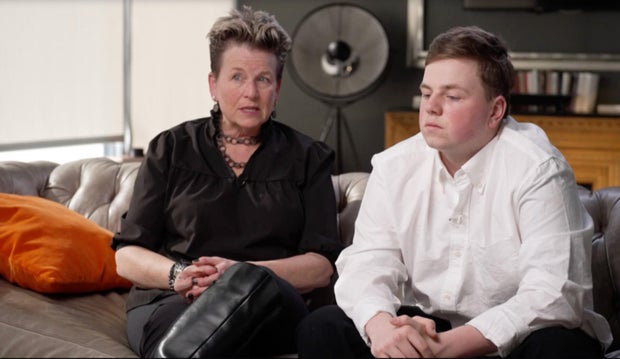
"It is very expensive, and I don't have a good solution for that," said Sen. Merkley.
A report by the Manhattan Institute think tank found that since 2010, the number of residential treatment centers has decreased by roughly 60%, as public scrutiny, funding shifts and other factors led some programs to close. This has left many families with fewer options, even as demand remains high.
Both families told CBS News they want the same things: a national database of programs that includes family reviews and complaints, standardized licensing requirements, a federal bill of rights for children in residential facilities, and requirements that programs retain security footage for longer periods following incidents.
"I would like to see stricter oversight," Rachelle Kiesel said, adding that she doesn't want to see anyone else go through what her family experienced.
Taylor, for her part, is focused on the future, which includes her reptile rescue and the animals she describes as "the unloved."
"I am taking that anger and that sadness and passion that I feel," she said. "I am turning it into something."
If you are struggling, help is available 24/7 — call or text the Suicide & Crisis Lifeline at 988.
For more resources
- The National Association of Therapeutic Schools and Programs
- Independent Educational Consultants Association
- The American Academy of Child and Adolescent Psychiatry
- Youth Law Center
- The National Disability Rights Network
Questions to ask
- Click here for a list of questions to ask prior to residential treatment, assembled by experts in the field.
Full statement from a CALO spokesperson:
"Calo Programs is a specialized residential treatment facility dedicated to serving families devastated by early childhood and systemic trauma. Our students arrive in crisis — many presenting with self-harm, suicidality, and aggression toward peers and caregivers — having already cycled through psychiatric hospitals, therapeutic boarding schools, residential treatment centers, and other settings without success. We exist to serve the students and families the broader system has given up on, and that mission brings families to us from across the country."
"That mission also demands a higher standard of accountability. Calo operates under rigorous, continuous external oversight spanning multiple funding sources — including Medicaid, commercial insurance, adoption subsidy, school district funding, and private pay — each of which requires multiple on-site visits annually, including unannounced overnight visits. Every staff member completes state and federal background checks on an annual basis and a 40-plus-hour orientation before working directly with students, with ongoing training reinforced weekly and through quarterly and annual specialized instruction."
"We maintain close partnerships with local law enforcement and a firm commitment to transparency with families, funding providers, and all oversight bodies. We operate in full compliance with Missouri's mandated reporter requirements, and when an allegation arises, we act immediately: gathering statements, preserving evidence, and notifying Out of Home Investigations, which conducts its inquiry in coordination with law enforcement."