Railroad Commissioner-Elect Jon Rosenthal looks to double the commission's budget, regulate wells
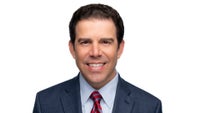
Railroad Commissioner-Elect Jon Rosenthal (D) defeated Republican Bo French during the midterm election. The last time a Democrat won a race for railroad commissioner was in 1990.
The Texas Railroad Commission does not deal with railroads but, among other things, regulates the state's oil and gas industry, which accounts for over 40% of the U.S. crude oil output. There are three commissioners in total; the other two are Republicans.
Rosenthal is currently a state representative from Houston and a former oil field engineer who worked in the industry for 25 years.
In previous one-on-one interviews with Eye On Politics reporter Jack Fink, Rosenthal shared some of his policy goals for the position prior to his election.
Rosenthal previously spoke regarding doubling the Railroad Commission's budget to about $1 billion. When asked if he had approached new Lt. Governor-elect Vikki Goodwin and Governor-elect Gina Hinojosa with the idea, he said: "We all have very good relationships."
"They were receptive to the conversation, but they wanted to put meat to the bones," said Rosenthal. "I mean, it's an aspirational goal, but before we say double the budget, before we make the actual appropriation request, we're going to have to show them exactly how we intend to use the extra resources."
Part of that is using the funds to increase and retain staffing in the office. Rosenthal said, "They don't have enough people to do the work. And they have relatively high turnover there. Part of that is going to be because we're not even approaching competitive wages, and so... I will continue to be an advocate, a cheerleader. I'm gonna crusade to get these people better pay."
Rosenthal argued that the Railroad Commission's 1,000 full-time employees are not enough to manage Texas's 250,000 active wells and the agency's other duties.
"We have a prolific problem in Texas with wells that have been abandoned or orphaned," he told Jack Fink. "You drill the well, you tap into a geologic formation, hopefully you have an opportunity to produce whatever it is, whether it's hydrocarbons, you know, oil or gas, or some mix of that. Over time, these wells become less productive as the formation plays out, and at the end of the life, it's no longer viable for production. It's not making any money. So there's thousands and thousands of these leaking pollutants into our air, land, and water. It threatens the safety of our communities, and in many cases, the ownership of these assets is not clearly defined, or nobody can be established as the responsible party, and the state has to plug those wells."
Rosenthal said that the state lacks effective enforcement mechanisms to pursue the partial owners or dissolved companies of the roughly 250,000 active wells plus 150,000 to 180,000 low-producing or inactive wells.
When asked about concerns surrounding whether the Texas oil and gas industry is vulnerable to potential cyber attacks or disruptions, Rosenthal said, "I think we all need to be concerned for not just oil and gas, but for every undertaking probably on the planet right now. All of us, everybody, including you and me, in this conversation right now, are relying on computers to do the work. To be tools for us, and so I think we've entered an age where, whether or not whatever you believe has caused all these recent outages, I think it does show that we've got some vulnerabilities that need to be shored up very quickly. And so I think there's going to be a heightened awareness around this for everybody, but for our government agencies, I would think, especially. And here in Texas, that had already been a topic of concern, and so I know that Texas state agencies have already actually, for years, been working on cybersecurity and advanced cybersecurity methods."
Regarding election night and his race, Rosenthal said he saw "the rumblings of a blue wave over a year ago."
"I just felt like there was a blue wave brewing," he said. "It felt similar to the environment that I first got elected in 2018, which was the first midterm of the first Trump administration, where a blue wave was brewing. So I felt like it was happening. I had no idea the magnitude of what we were gonna see on Election Day."
He also told Jack Fink that his opponent, Bo French, did not call him to concede on Election Night.
"He didn't call me, and to be fair, I didn't expect he would," Rosenthal said of French.