North Korea apparently tried to hack Pfizer for COVID vaccine info
A South Korean lawmaker told reporters about a briefing by his nation's spy agency.
Watch CBS News
A South Korean lawmaker told reporters about a briefing by his nation's spy agency.
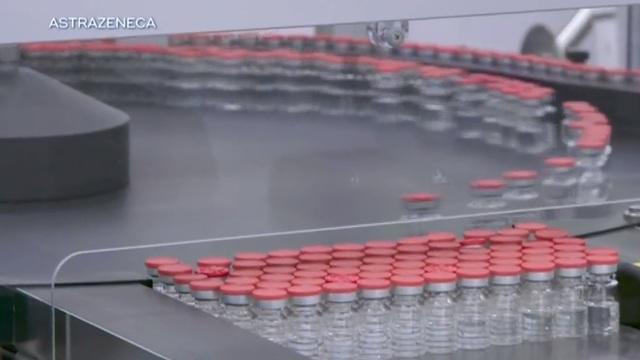
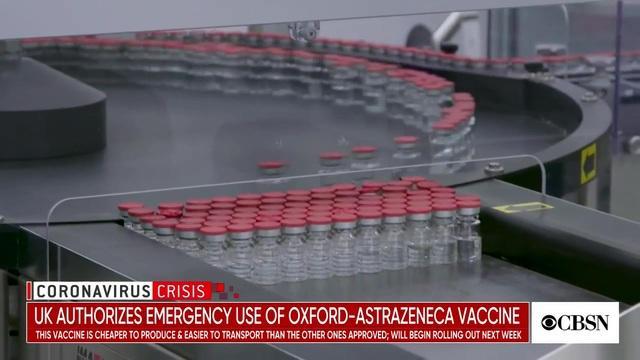
A new study from the United Kingdom says a single dose of the AstraZeneca COVID-19 vaccine can protect for months — and even more importantly, can slow transmission. Meg Oliver reports.
Pfizer announced it will supply 200 million doses of its COVID-19 vaccine for the U.S. by the end of May and is aiming to ship 2 billion doses globally this year. The vaccine is over 90% effective according to clinical trials conducted in 2020, but more testing needs to be done to see how well it protects against the new variants. Dr. Phil Dormitzer, who helped develop the vaccine as vice president and chief scientific officer of viral vaccines at Pfizer, joins CBSN to discuss.
More contagious COVID-19 variants are spreading rapidly in the U.S. and a new study by the CDC finds the strain first found in the U.K. will become dominant here by March. Dr. Ron Elfenbein joins CBSN to discuss that plus President Biden's recent comments on the pandemic made in an exclusive interview with CBS News' Norah O'Donnell.
Vaccination efforts around the world are picking up steam. Meanwhile, Pfizer announced it expects to cut production time for its COVID-19 vaccine by nearly 50%. CBS News senior foreign correspondent Elizabeth Palmer has an update on the worldwide effort, and David Montefiori, a professor and director of Duke University's Laboratory for AIDS Vaccine Research and Development, joins CBSN's Lana Zak to discuss.
Playing it safe: CBS New medical contributor Dr. David Agus joins "CBS This Morning: Saturday" to discuss if Super Bowl parties can be superspreader events and the latest with vaccines.
Israel is taking an aggressive approach to vaccinating its population against COVID-19. The preliminary results are offering researchers hope in the midst of the pandemic. Isabel Kershner, a correspondent in Jerusalem for The New York Times, reported on that story and joins CBSN to discuss what she learned about the Pfizer vaccine's efficacy.
Johnson and Johnson has reported promising results from its single-dose coronavirus vaccine and plans to apply for emergency use authorization in early February. Meanwhile, the virus variant first identified in South Africa has now been found in the United States. CBS News' Mola Lenghi reports, and Dr. Bob Lahita spoke with CBSN's Anne-Marie Green and Vladimir Duthiers about the highly contagious new strain and the work drugmakers are doing to fight variants that continue to appear.
The United Kingdom has become the first European country to surpass 100,000 coronavirus deaths as shortfalls from European vaccine manufacturers pits the country against the European Union for the supply. The E.U. is threatening to prevent companies like Pfizer and AstraZeneca from exporting any vaccine orders until its own citizens receive doses, which also creates issues for developing nations in dire need of vaccinations. CBS News' Charlie D'Agata joins CBSN AM to discuss.
President Joe Biden announced plans to buy 200 million more doses of COVID-19 vaccines and increase the distribution of shots to states across the country. "Help is on the way," he said. But he also warned the fight will take months and that people need to continue to wear masks. Watch his remarks.
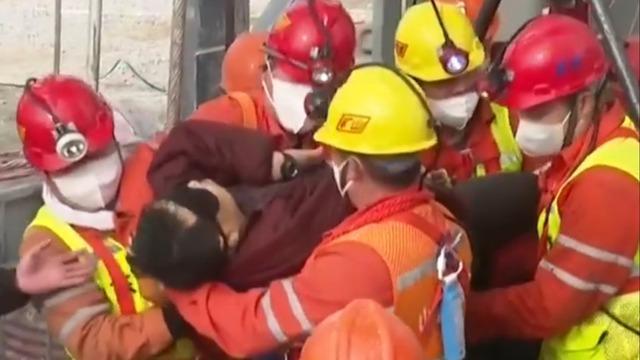
Rescue workers in China extracted 11 trapped miners but also found the bodies of nine who died. Also, more than 3,000 people in Russia were detained in anti-Putin demonstrations across the country, and police in the Netherlands used water cannons and tear gas to clear demonstrators angry over new coronavirus restrictions. Meanwhile, Australian officials approved the use of Pfizer's COVID-19 vaccine. CBS News foreign correspondent Ian Lee joined "CBSN AM" from London with those stories.
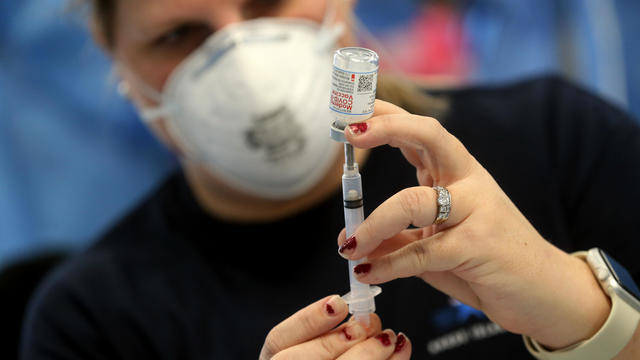
U.S. drugmaker says lab studies "reinforce our confidence" that vaccine will protect against new variants, but they're trialling 3rd dose on South Africa strain.
Doctors are urging Americans to get the coronavirus vaccine. Dr. Ruth Karron, the director of the Center for Immunization Research at Johns Hopkins University, joins CBSN's Lana Zak to answer questions about the COVID-19 vaccine and its efficacy. She also discusses the differences between the new strains overseas and how much of a concern they are.
A preliminary study found that the Pfizer vaccine appears to be effective against a more contagious U.K. strain of the coronavirus.
New research expands on earlier lab tests, providing further evidence that the widely used vaccine should prove effective against an infectious new strain.
The current pontiff is 84 and missing half of a lung, while Pope Emeritus Benedict is 93, so both are at high risk of serious coronavirus complications.
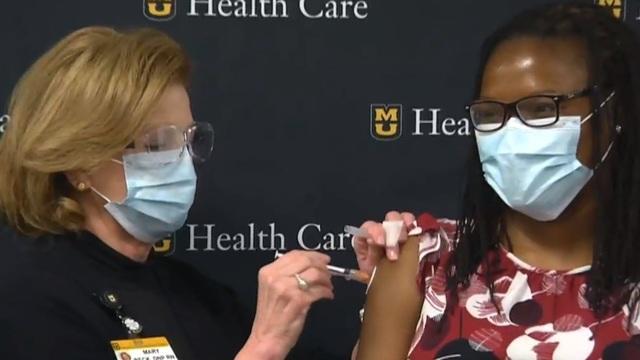
Yet even with the faster pace of inoculations, tens of millions of doses of vaccine sit unused.
The Trump administration is changing its recommendations to make COVID-19 vaccines more widely available for all Americans over the age of 65. According to the CDC, only about a third of the distributed vaccines have actually been administered so far, as virus cases and deaths continue to soar. Dr. Uché Blackstock joins CBSN to discuss the shift in strategy and the current state of the pandemic in the U.S.
The U.S. recorded more than 4,000 deaths from COVID-19 Thursday. That's the highest single-day death toll since the pandemic began. CBS News' Manuel Bojorquez reports on the latest developments, and Dr. Dara Kass, an ER doctor and medical contributor for Yahoo News, joined CBSN with more on what to expect in the coming weeks.
But while it's authorized for use, the United Kingdom didn't place any early orders of this American coronavirus vaccine, so it won't be available to Brits until the spring.
But company says it still has to test it against a new wrinkle in one of those emerging, highly contagious variants.
Facing a surge in infections, U.K. officials said the 2nd dose of the Pfizer vaccine can wait up to 12 weeks. The FDA says that decision is "not rooted solidly in the available evidence."
So far, more than 4.5 million COVID shots have been given out — a fraction of the 20 million initially expected by the end of 2020.
Across the U.S., nearly 3 million doses of coronavirus vaccines have been administered thus far — nowhere close to Operation Warp Speed’s goal of administering 20 million doses by the end of 2020. U.S. infections are now over 20 million cases with over 349,000 deaths. Tom Hanson reports.
The push to vaccinate people in the United States against COVID-19 is moving slower than expected as hospitals across the country fill up. Justin Gill, a nurse practitioner and health policy lecturer at University of Washington Bothell, spoke to CBSN's Omar Villafranca about what's complicating the process.