NASA continues to work with Russia on space station
Despite internet rumors, NASA says astronaut Mark Vande Hei will come home as planned aboard a Soyuz spacecraft.
Watch CBS News
Despite internet rumors, NASA says astronaut Mark Vande Hei will come home as planned aboard a Soyuz spacecraft.

Retired NASA astronaut Scott Kelly hit a nerve with Russian space chief Dmitry Rogozin in wake of Ukraine invasion.

The director of the Russian space program severs commercial ties with the West; space station operations continue normally for now.

A United Launch Alliance Atlas 5 rocket boosted an advanced GOES weather satellite into orbit to monitor conditions across the Pacific Ocean, Alaska, Hawaii and the western United States. Watch how the launch unfolded.

The third of four upgraded GOES satellites will help monitor weather affecting the entire United States.

Despite the Ukraine crisis, U.S. and Russian space station engineers continue working together.

The researchers captured 3,500 hours of observations — enough data to fill 20,000 laptops.

President Biden says new sanctions will degrade Russia's aerospace industry, "including their space program."

NACHOS is a pint-sized powerhouse dedicated to observing trace gases that can be harbingers of volcanic activity.

A NASA engineer is taking a creative approach to help students with STEM education. Dajae Williams joins CBS News to discuss her teaching techniques.

The forecasted increase over the next 30 years could amount to the same rise seen over the last 100 years.

The cargo run is the second this year for the space station after a Russian flight earlier this week.

CBS News space analyst Bill Harwood joins Major to talk about NASA's planned mission to return to the moon, private space tourism and the future of colonization of Mars on this week's episode of "The Takeout with Major Garrett."
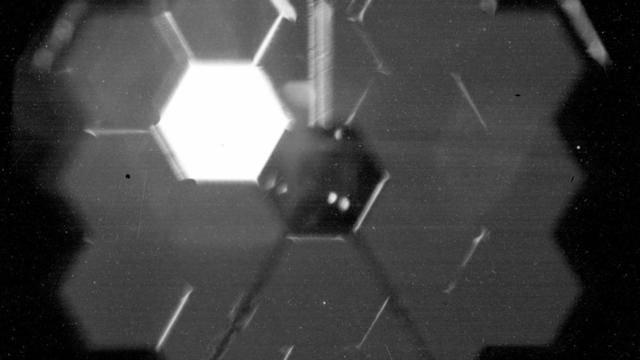
While the blurry, misaligned pictures might disappoint the uninitiated, they are almost exactly what engineers were expecting at this point in the observatory's complex commissioning.

NASA said an "in-flight anomaly" prevented the rocket's payload of research satellites from being delivered to orbit.

Scientists are launching efforts to recycle space debris, many of which are worth thousands of dollars per pound. Barry Petersen has more.

NASA plans to bring the International Space Station down into an uninhabited part of the Pacific Ocean called Point Nemo when its decades in orbit are done.

NASA says engineers need more time to complete preparations before "wet dress rehearsal" at the launch pad.

While it may be technically possible, saving Earth from a "planet killer" asteroid or comet would require very quick action by world leaders.

"Somehow it's converting magnetic energy to radio waves much more effectively than anything we've seen before," team leader Dr. Hurley-Walker said.
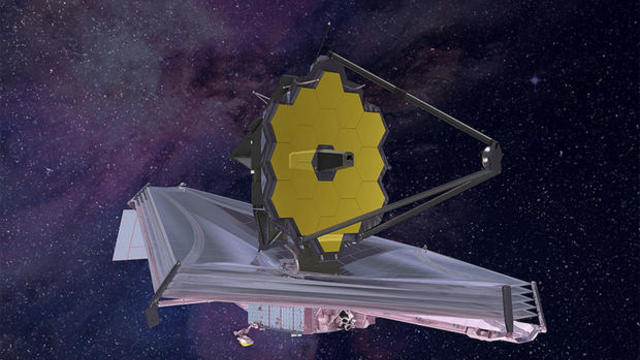
With Webb on station, engineers will focus on aligning the telescope's optical system.
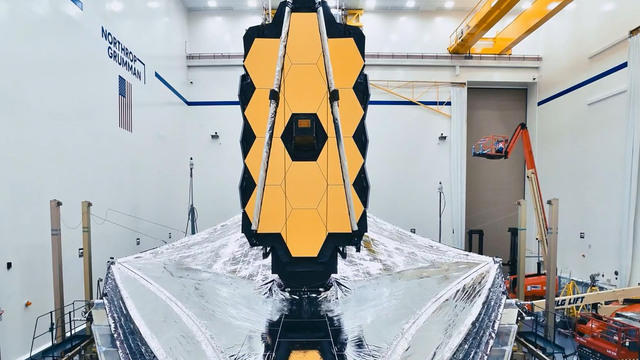
NASA's James Webb Space Telescope slipped into orbit around a point in space nearly a million miles from Earth on Monday. It's on a mission to capture light from the first stars and galaxies to form in the aftermath of the Big Bang. CBS News' Lana Zak has details.
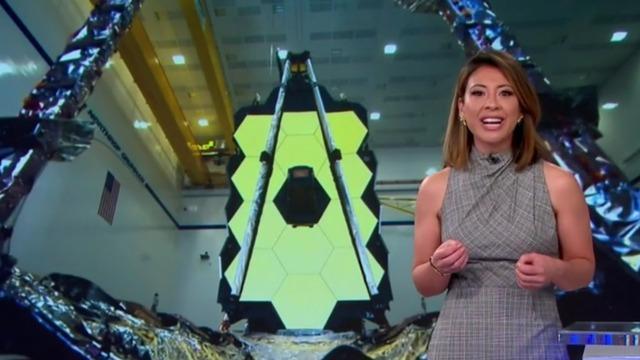
Thirty days after launch, NASA's James Webb Space Telescope is going into orbit nearly 1 million miles from Earth. After a series of adjustments and calibrations it will be ready to begin exploring the most distant stars and galaxies in the universe. CBS News' Lana Zak has details.
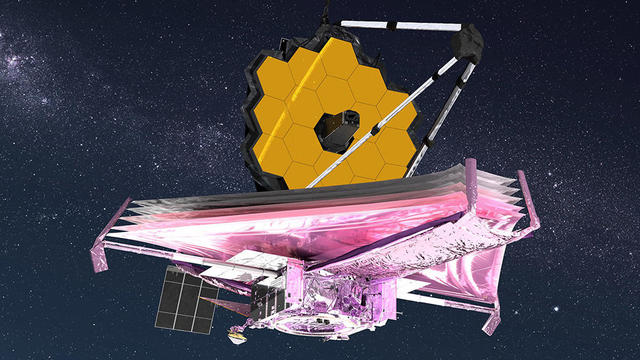
If all goes well, Webb will be 100 times more powerful than Hubble — so sensitive to infrared light that it could detect the faint heat of a bumble bee as far away as the moon.
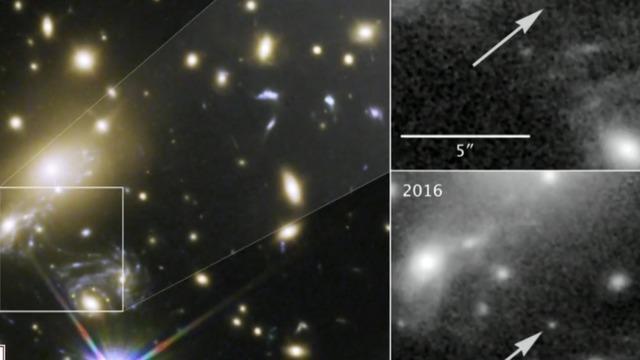
Astronomers over the years have picked up dozens of "fast radio bursts" (FRBs) -- mysterious radio signals detected from an unknown part of the cosmos. But for only the second time, they have now found one that repeats itself, making it more likely that we might find out where they come from.