Trump impeachment witness sues Pompeo, U.S. over $1.8 million in legal fees
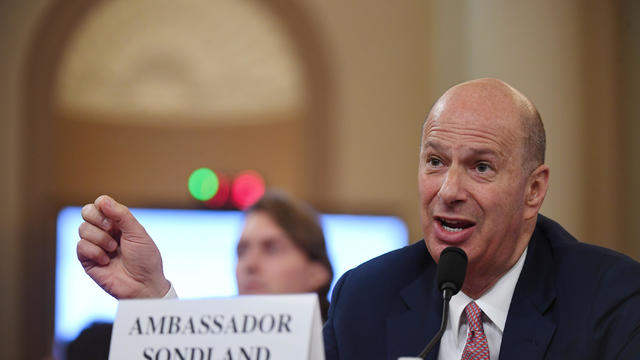
Sondland argues he was forced to hire his own lawyers during the 2019 impeachment probe because government lawyers were not available to represent him.
Watch CBS News
Sondland argues he was forced to hire his own lawyers during the 2019 impeachment probe because government lawyers were not available to represent him.
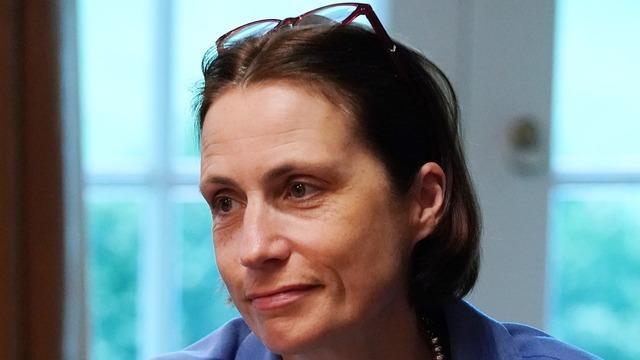
A former top U.S. adviser on Russia is expected to testify before lawmakers in relation to the impeachment inquiry into President Trump. Fiona Hill is the first in a series of witnesses set to speak to Congress this week. CBS News chief congressional correspondent Nancy Cordes joined "CBSN AM" to discuss.
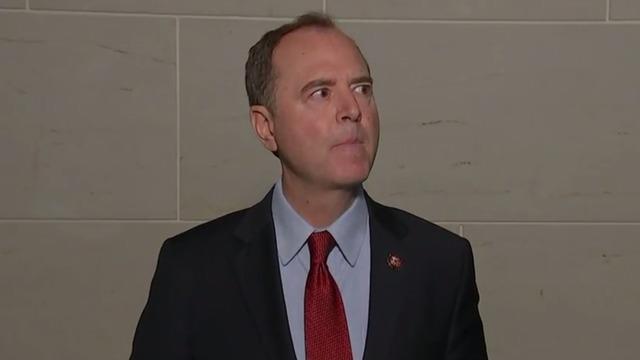
House Intelligence Committee Chairman Adam Schiff admonished the Trump administration for preventing Ambassador Gordon Sondland, a key witness in the Ukraine dealings, from testifying behind closed doors before Congress. Watch Schiff's remarks.
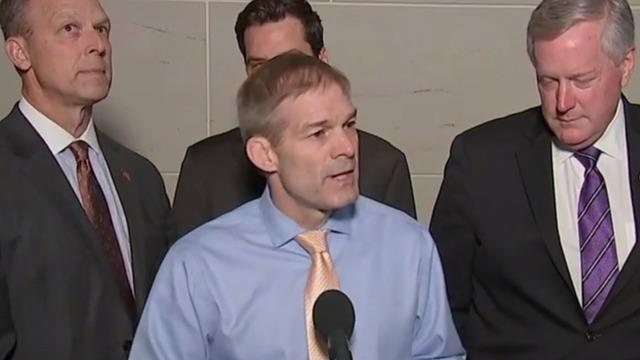
Ohio GOP Congressman Jim Jordan criticized House Intelligence Committee Chairman Adam Schiff and the probe of President Trump's Ukraine contacts as Democrats pursue an impeachment inquiry. Jordan said Republican members understand why Ambassador Sondland is not appearing before Congress.
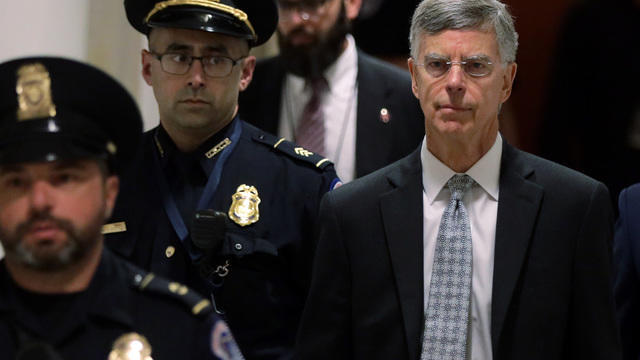
House Democrats have called testimony from a top U.S. diplomat "damning" and "disturbing." Behind closed doors Tuesday, Bill Taylor detailed how President Trump held up military aid to Ukraine as he pushed for investigations into Democrats. CBS News chief congressional correspondent Nancy Cordes joins CBSN AM with more on what this means for the impeachment inquiry.
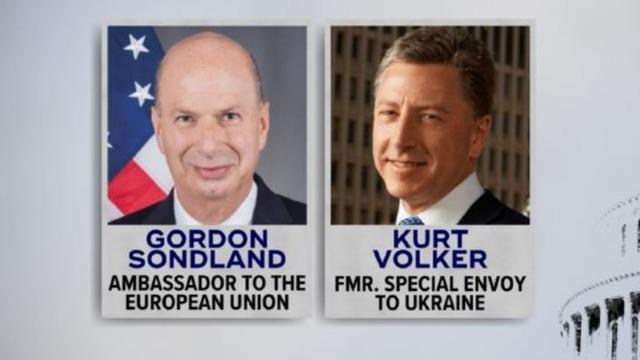
House Democrats are expected to release new transcripts from two key figures in their investigation. Ambassador to the EU Gordon Sondland and former special envoy to Ukraine Kurt Volker are both considered crucial witnesses. CBS News chief congressional correspondent Nancy Cordes and CBS News White House correspondent Ben Tracy join CBSN to break down the latest developments.
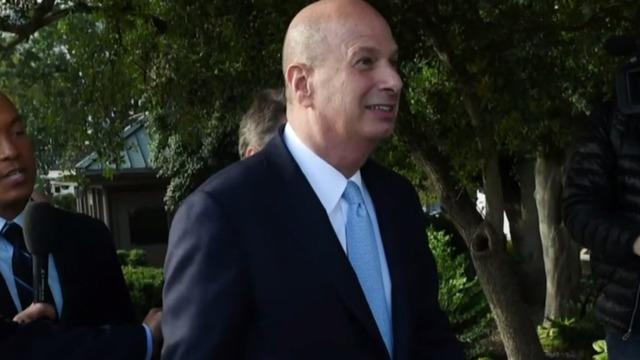
House Democrats have released two more transcripts from closed-door testimonies, the depositions from Kurt Volker and Gordon Sondland. CBSN political contributor Zeke Miller and CBS News intelligence and national security reporter Olivia Gazis join CBSN to discuss the latest.
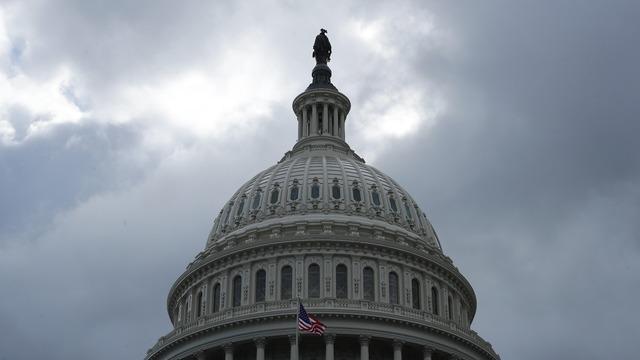
The House Intelligence Committee has announced more open hearings in their impeachment inquiry against President Trump. They are scheduled to take place next Tuesday, Wednesday and Thursday -- and will feature a total of eight witnesses including Gordon Sondland and Kurt Volker.
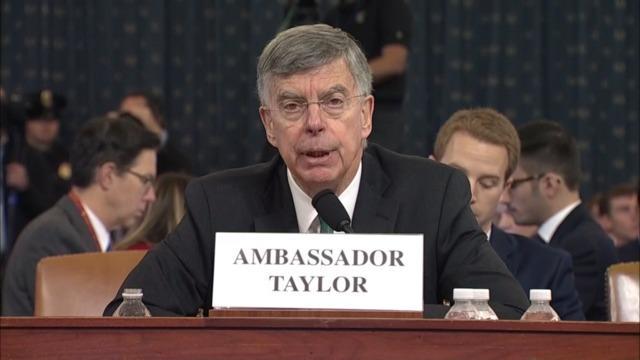
William Taylor, the top U.S. diplomat in Ukraine, revealed new details Wednesday about the events immediately following President Trump's July 25 call with the president of Ukraine. Taylor said a member of his staff told him last week about a phone call he overheard between the U.S. Ambassador to the E.U., Gordon Sondland, and Mr. Trump. Watch what Taylor said in his opening statement in the first public impeachment hearing.
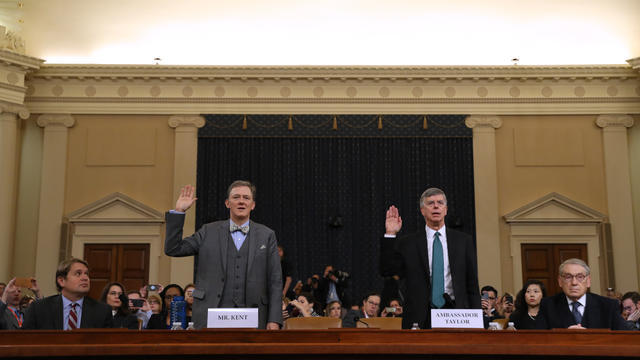
The second week of public hearings in the impeachment inquiry has eight witnesses scheduled to testify. Three of the four witnesses set to testify Tuesday were on the Ukraine phone call in July that sparked the inquiry. CBS News chief congressional correspondent Nancy Cordes joins CBSN to discuss the latest.
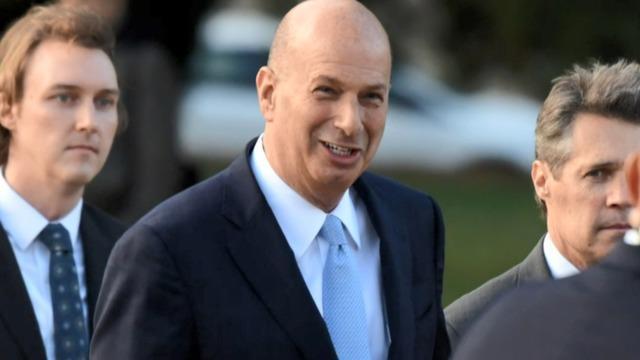
Nine witnesses are expected to testify during three days of impeachment hearings this week. Keir Dougall, CBSN legal contributor and former assistant U.S. attorney in New York's Eastern District, joins CBSN to discuss the legal implications of the upcoming hearings.
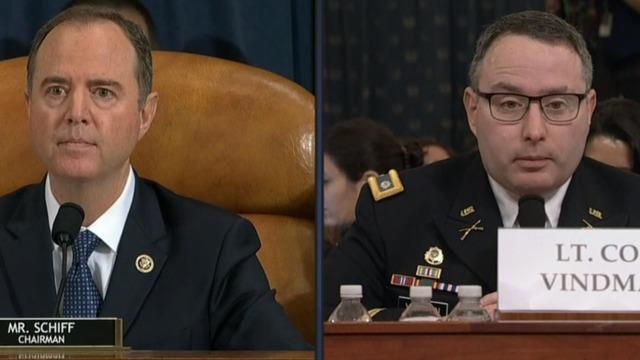
Army Lieutenant Colonel Alexander Vindman, the top expert on Ukraine on the National Security Council, said U.S. Ambassador to the EU Gordon Sondland said the Ukrainians would have to provide a "deliverable" in order to get a White House meeting, "which is investigations, specific investigations."
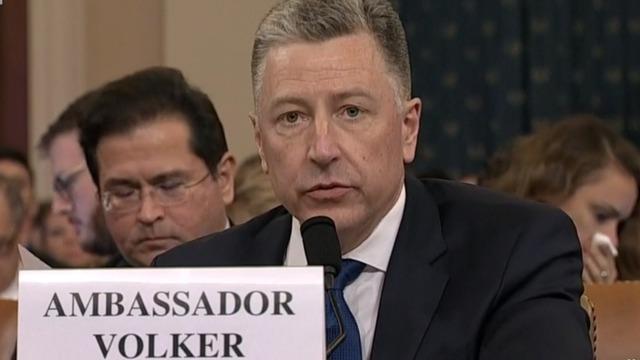
Kurt Volker, the former special envoy to Ukraine, strongly defended himself in his prepared opening statement, denying that he along with U.S. Ambassador to the EU Gordon Sondland and Energy Secretary Rick Perry formed a separate "irregular" channel informing Ukraine policy - an effort for which they became known as the "three amigos."
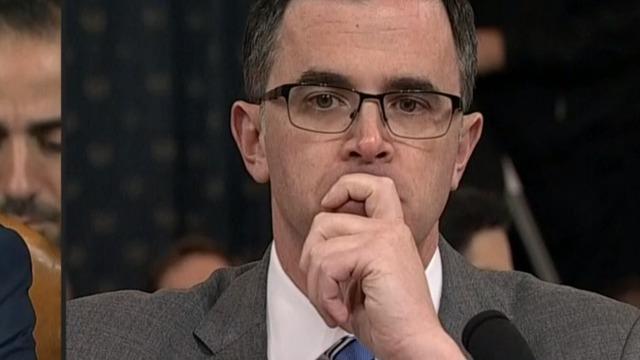
Tim Morrison, the outgoing senior director of European and Russian affairs at the National Security Council, testified that he didn't always follow through on suggestions from EU Ambassador Gordon Sondland. He said his predecessor, Fiona Hill, had described Sondland's role the "Gordon problem."
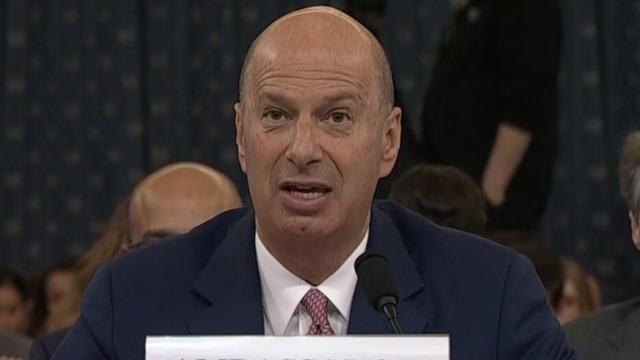
U.S. Ambassador to the EU Gordon Sondland testified Wednesday, "The suggestion that we were engaged in some irregular or rogue diplomacy is absolutely false."
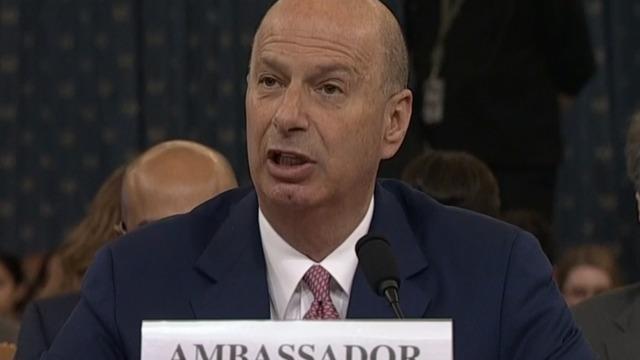
U.S. Ambassador to the EU Gordon Sondland said Wednesday that he and other U.S. officials did not want to work with Rudy Giuliani on issues related to Ukraine, but were ordered to do so by the president. "Simply put, we were playing the hand we were dealt," Sondland said.
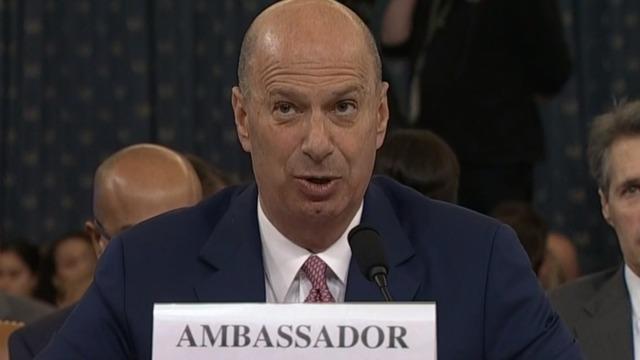
U.S. Ambassador to the EU Gordon Sondland said Wednesday that Rudy Giuliani demanded Ukraine make a public statement announcing investigations of the 2016 election, DNC server and Burisma. He said Giuliani "was expressing the desires of the president of the United States, and we knew these investigations were important to the president."
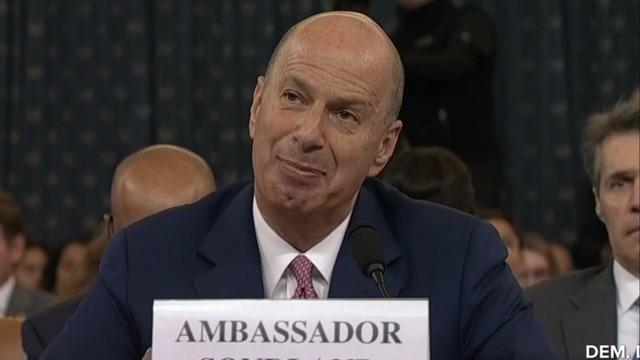
U.S. Ambassador to the EU Gordon Sondland said Wednesday he was first informed that the White House was withholding security aid to Ukraine on July 18 and that he was "never able to obtain a clear answer regarding the specific reason for the hold -- whether it was bureaucratic in nature ... or reflected some other concern." He said he concluded that the aid "was jeopardized."
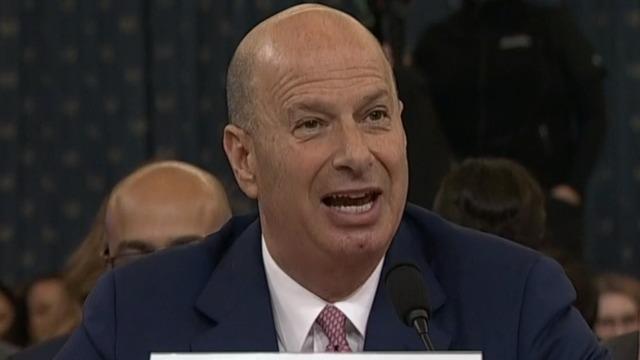
U.S. Ambassador to the EU Gordon Sondland confirmed he spoke with President Trump on the phone the day after Mr. Trump's July 25 call with the president of Ukraine. "I have no reason to doubt that this conversation included the subject of investigations," he said.
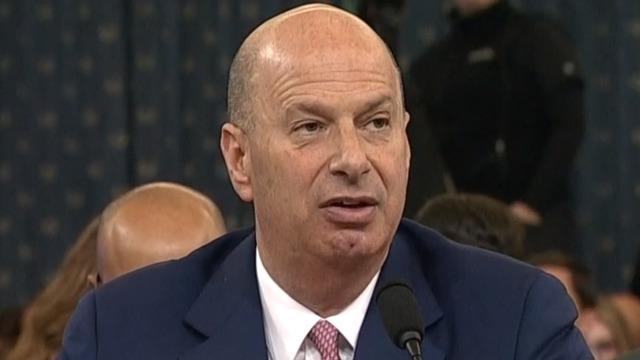
Gordon Sondland, U.S. ambassador to the EU, said Wednesday that he mentioned to Vice President Mike Pence his concerns that the delay in aid to Ukraine was tied to the issue of investigations.
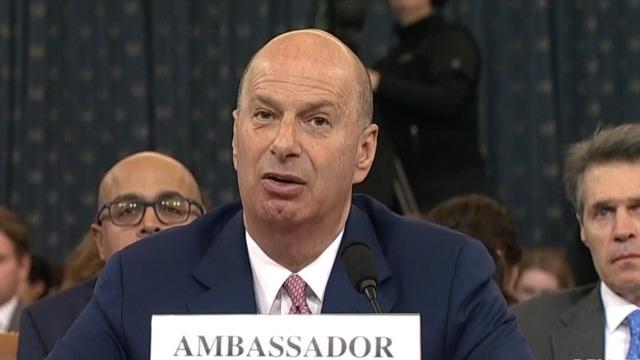
Gordon Sondland, U.S. ambassador to the EU, said he and his colleagues "kept State Department leadership and others apprised of what we were doing" for months, and that the "State Department was fully supportive of our engagement in Ukraine efforts and was aware that a commitment to investigations was among the issues we were pursuing."
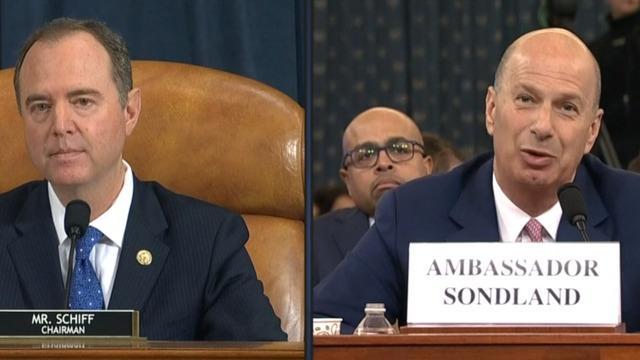
"In your opening statement, you confirm that there was a quid pro quo between the White House meeting and the investigations into Burisma and the 2016 election that Giuliani was publicly promoting. Is that right?" House Intelligence Committee Chairman Adam Schiff asked U.S. Ambassador to the EU Gordon Sondland on Wednesday. "Correct," Sondland replied.
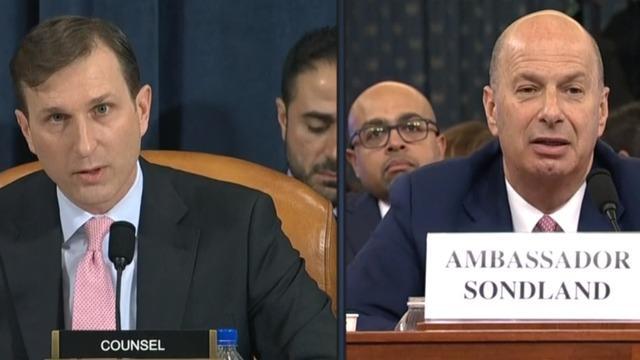
U.S. Ambassador to the EU Gordon Sondland said it became "common knowledge that everything might be tied together" toward the end of August, meaning the release of military aid for Ukraine was tied to an announcement by Ukraine about opening investigations.
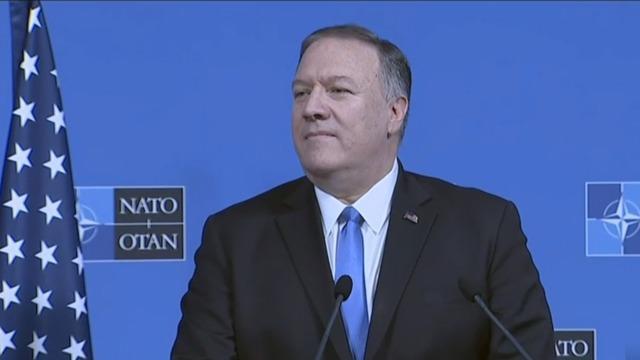
U.S. Secretary of State Mike Pompeo spoke to the press Wednesday after a NATO foreign ministers' meeting in Brussels. He was asked about testimony from U.S. Ambassador to the EU Gordon Sondland, who earlier in the day implicated Pompeo in a "quid pro quo" scheme to pressure Ukraine to investigate President Trump's political rival. Watch his response.
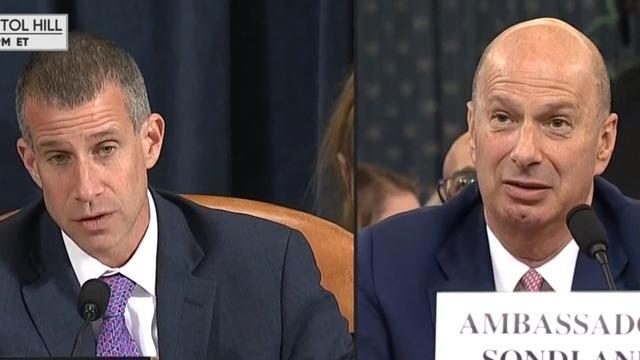
Steve Castor, senior investigative counsel for Republicans, asked U.S. Ambassador to the EU Gordon Sondland Wednesday why he didn't include a "vignette" about a call he had with President Trump in his opening statement at the impeachment hearing. "It was in my previous testimony and I assumed if people had questions they would bring it up," Sondland said.