Trump's tariffs draw vows of retaliation from Canada, China and Mexico
As Canada and Mexico make plans for reciprocal tariffs on U.S. goods, Canadian Prime Minister Justin Trudeau calls President Trump's move "a very dumb thing to do."
Watch CBS News
As Canada and Mexico make plans for reciprocal tariffs on U.S. goods, Canadian Prime Minister Justin Trudeau calls President Trump's move "a very dumb thing to do."
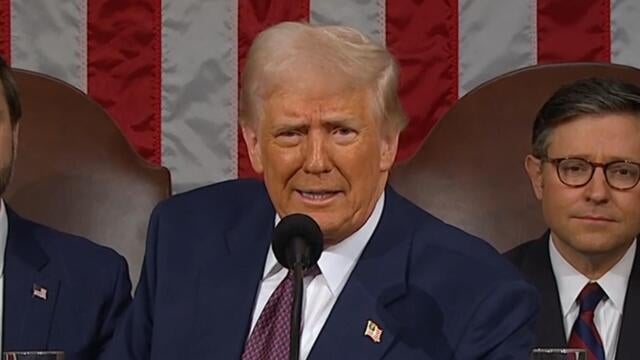
In his address to Congress on Tuesday night, President Trump outlined his vision for reducing inflation and boosting the American economy. The president made his case for tariffs on U.S. allies, expanding oil drilling, shrinking the federal workforce and more.
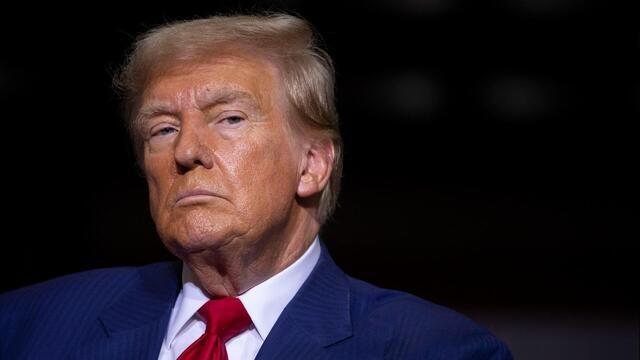
Canada slapped a 25% retaliatory tariff on $155 billion worth of American goods on Tuesday after the Trump administration implemented its own 25% tariffs on nearly all imports from Mexico and Canada. CBS News MoneyWatch correspondent Kelly O'Grady breaks down the impact.
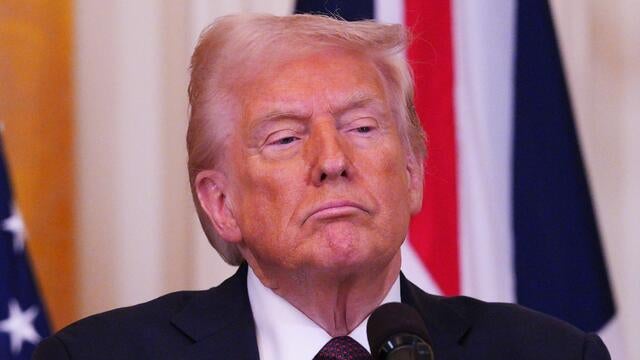
Six weeks into his second term, President Trump will address a joint session of Congress on Tuesday. From tariffs to DOGE cuts to an immigration crackdown, the president's agenda is already making waves at home and overseas. Sen. Elissa Slotkin is slated to deliver the Democratic response. CBS News' Nancy Cordes and Nikole Killion report on what to expect.
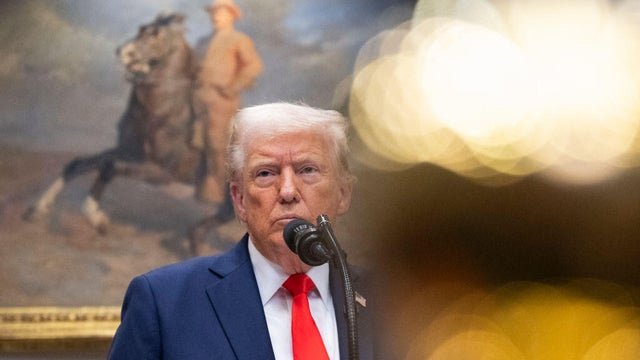
Canada, Mexico and China are hitting back with retaliatory tariffs. The moves raised fears of higher prices for U.S. consumers and a trade war.
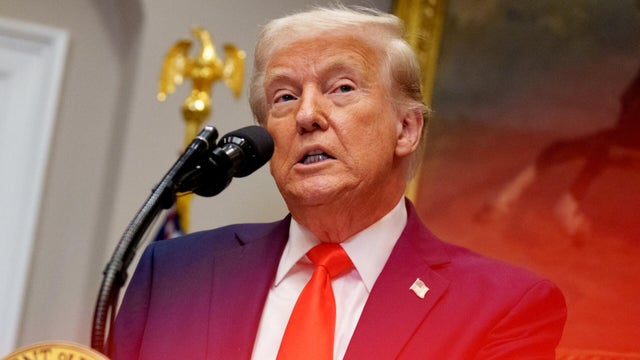
President Trump's tariffs on goods from Canada, Mexico and China are bound to increase prices for Americans. CBS News' Weijia Jiang reports as Mr. Trump prepares to address both chambers of Congress.
China has announced retaliatory tariffs against U.S. food imports in response to President Trump's increased levies on Chinese goods. CBS News foreign correspondent Anna Coren has more.
President Trump has followed through on his threat to place tariffs on goods from Canada and Mexico and he's increased the tariffs already in place against China. CBS News business analyst Jill Schlesinger reports on how the tariffs work.
New U.S. tariffs against Mexico and Canada, threatened by President Trump since his return to the White House, went into effect at 12:01 a.m. Tuesday. Existing levies against China were also raised. CBS News' Ed O'Keefe, Jill Schlesinger and Lana Zak have a full breakdown of what the tariffs mean.
President Trump's threat of tariffs against Mexico and Canada has been realized with the U.S. imposing a 25% tariff on nearly all goods imported from those two countries. An additional 10% tariff has also been added to the existing measures against China, bringing the tariffs against Beijing up to 20%. CBS News foreign correspondent Ramy Inocencio has more on how the world is reacting and the immediate impact of the measures.
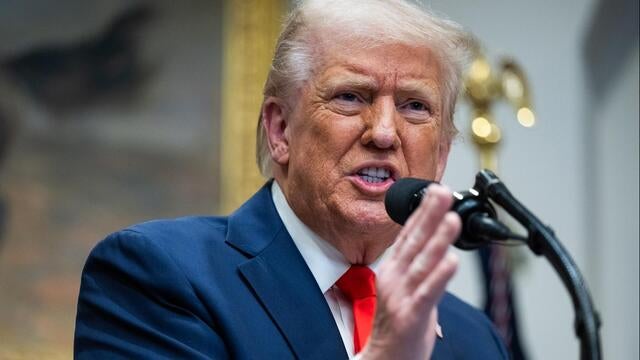
President Trump will address a joint session of Congress Tuesday night after his long-anticipated tariffs against Canada, Mexico and China went into effect Tuesday morning. Mr. Trump has also put a pause on nearly $4 billion worth of U.S. arms that had been approved by Congress to go to Ukraine. CBS News' Natalie Brand and Anna Coren have the latest.
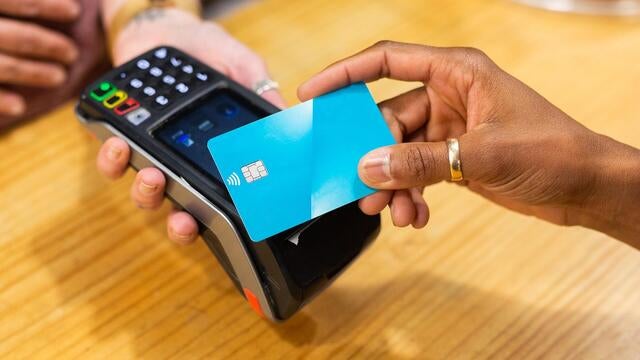
President Trump's plan to impose 25% tariffs on nearly all goods imported from Canada and Mexico is set to take effect Tuesday. The president also plans to impose an additional 10% tariff on Chinese imports. CBS News MoneyWatch correspondent Kelly O'Grady has the details.

As Trump's trade war with China brings reciprocal tariffs, many Chinese firms are investing in operations elsewhere to avoid the burden.
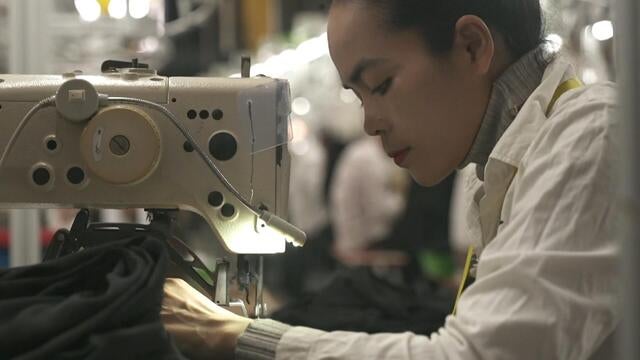
As Trump's trade war with China brings reciprocal tariffs, many Chinese firms are investing in operations elsewhere to avoid the burden. Anna Coren reports from Cambodia.
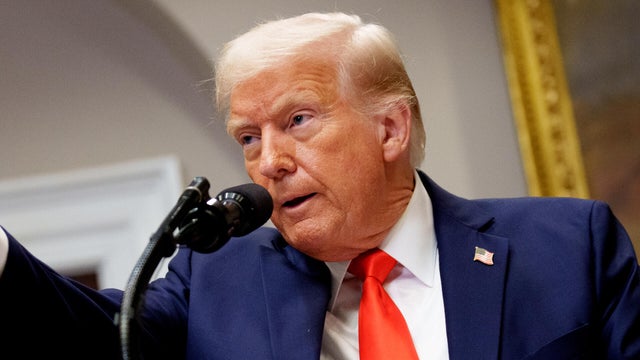
The U.S. will impose 25% tariffs on imports from Canada and Mexico starting Tuesday. Tariffs on goods from China will increase from 10% to 20%. Kelly O'Grady, CBS News MoneyWatch correspondent, and Sarah McGregor, managing editor for Bloomberg News' national desk, join "America Decides" with analysis.
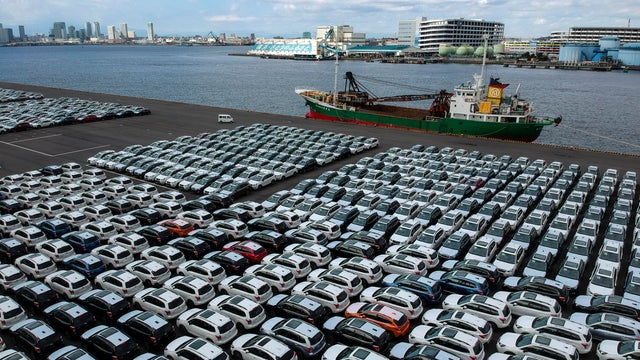
Here's how new tariffs on Canada, Mexico and China could impact car prices for consumers, according to a new analysis.
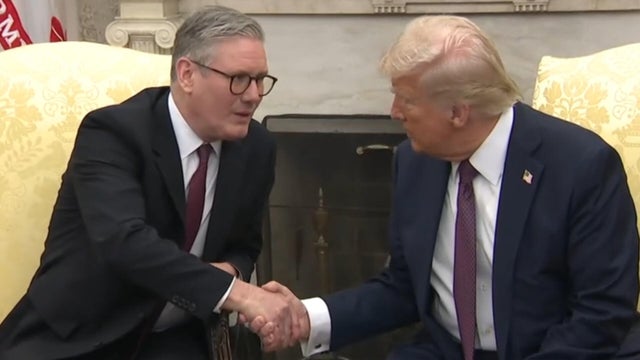
President Trump welcomed British Prime Minister Keir Starmer to the White House on Thursday and they addressed Ukraine in a joint news conference. CBS News White House reporter Aaron Navarro reports.
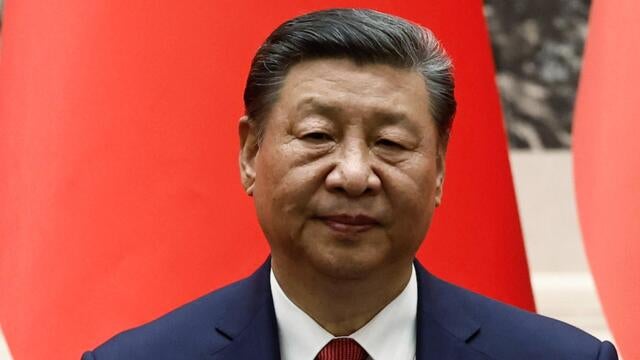
Additional tariffs on China are expected to take place in March as President Trump insists on businesses making products in the U.S. CBS MoneyWatch correspondent Kelly O'Grady reports.
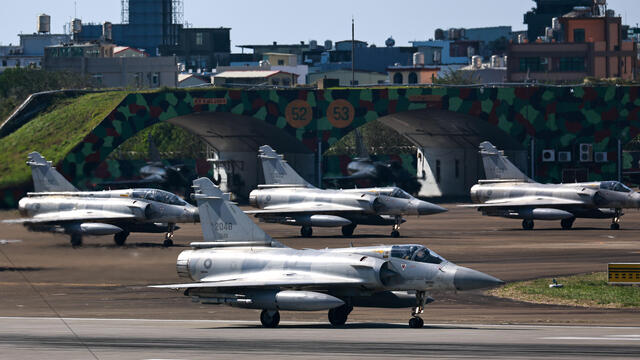
Taiwan says China violated norms and caused a "high degree of danger" by announcing "live-fire exercises without prior warning" just off its coast.
Apple has committed to investing $500 billion in the U.S. over the next four years. CEO Tim Cook says the investment will include the creation of a 250,000-square-foot artificial intelligence server manufacturing factory near Houston. CBS News MoneyWatch correspondent Kelly O'Grady reports.
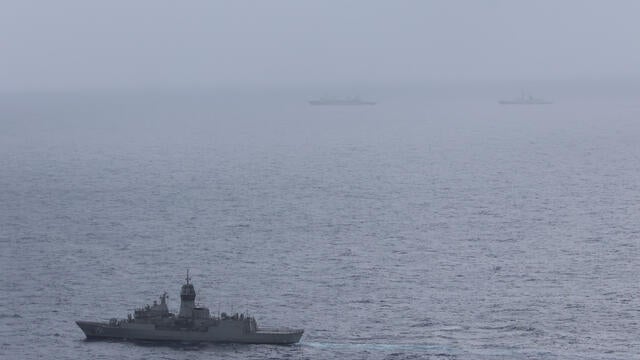
Australia's defense forces, joined by New Zealand, have been monitoring Chinese navy vessels since they were spotted last week.
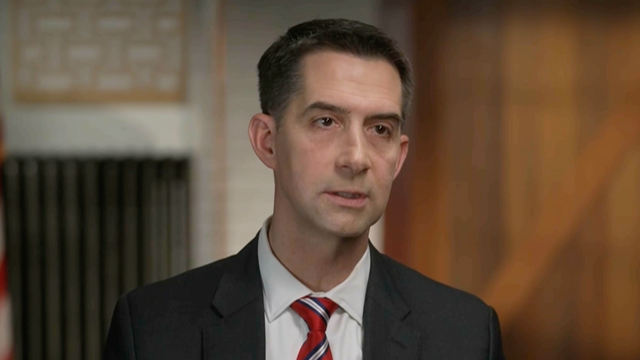
In a wide-ranging interview, Sen. Tom Cotton, the chair of the Senate Intelligence Committee, told "CBS Mornings" co-host Tony Dokoupil about the military, political and economic threats posed by China, and why he believes Taiwan is "the most dangerous flash point in the world." The Republican senator from Arkansas has written a new book, "Seven Things You Can't Say About China." He talked about why he believes America needs "a clean break between TikTok and communist China" and how he feels about the social media app still operating in the U.S. despite a new law. Dokoupil also asked about recent drone sightings over U.S. military installations and the Trump administration's crackdown on diversity initiatives.
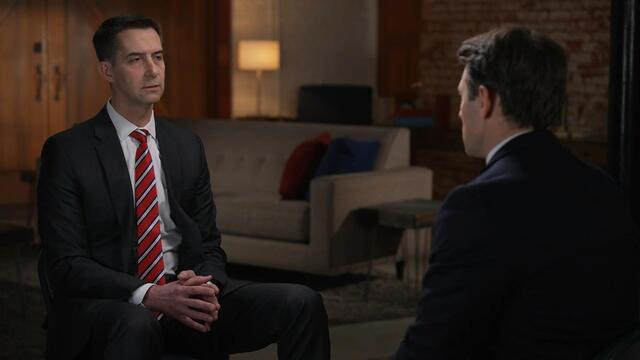
Republican Sen. Tom Cotton talks with Tony Tony Dokoupil about his new book, "Seven Things You Can't Say About China," warning of threats ranging from TikTok's influence on children to what he sees as China's military ambitions against the U.S.
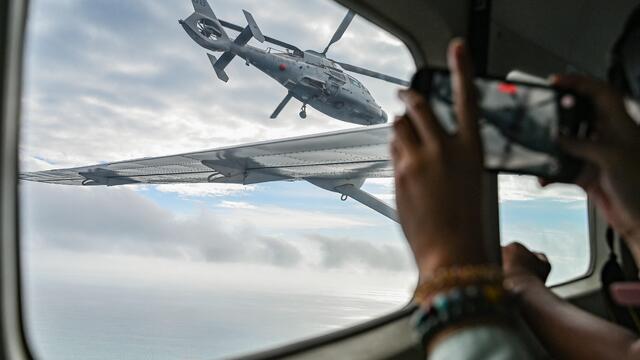
A Philippine plane warned a Chinese military helicopter over the South China Sea that it was "flying too close," as tension between the U.S. ally and Beijing soars.
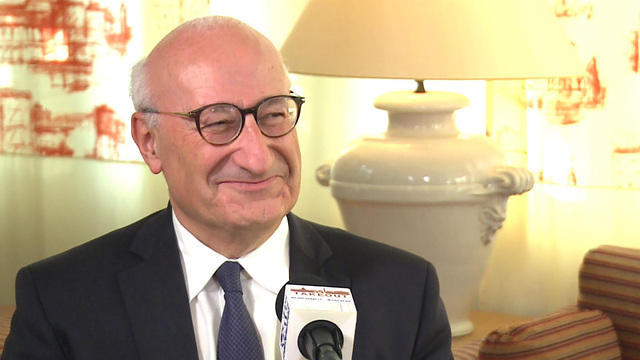
French Ambassador Philippe Etienne joins Major Garrett on this week's edition of "The Takeout" to discuss the recent hit to U.S.-French diplomacy, and how the two countries can ease the strained relationship. Then, they discuss what Western allies need to do as China's influence rises in the Indo-Pacific region. Plus, a look the rich history between France and the U.S. and how a "good chef" can make or break a diplomatic negotiation.