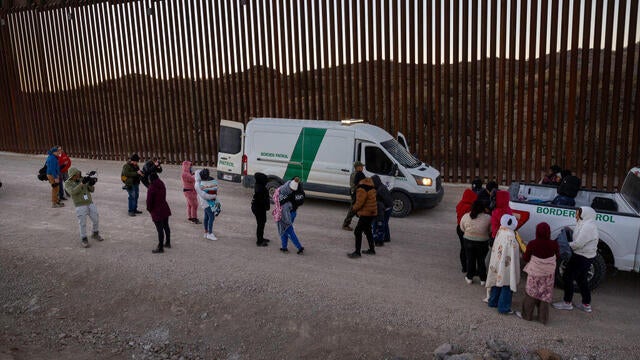
Trump officials prepare plans to revive Title 42 policy to expel migrants
The Trump administration has prepared plans to implement a policy that would allow U.S. officials to swiftly expel migrants on the grounds that they could spread diseases.
Watch CBS News
The Trump administration has prepared plans to implement a policy that would allow U.S. officials to swiftly expel migrants on the grounds that they could spread diseases.

New York City is one of several U.S. cities which are preparing for thousands of migrant arrivals in the wake of the expiration of Title 42. New York City already has about 37,000 migrants housed in shelters. Michael George has the details.
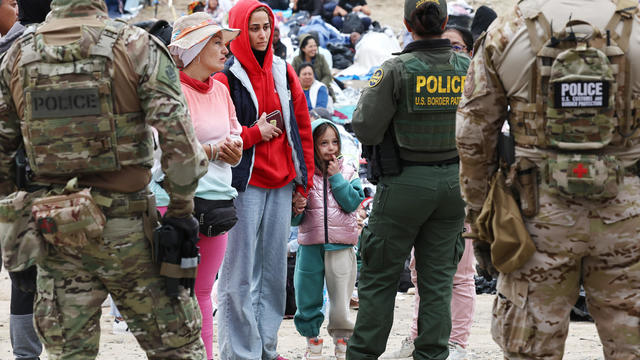
On Friday, the first day since March 2020 in which the U.S. could no longer cite Title 42 to expel migrants, Border Patrol apprehended 6,300 migrants, a sharp drop from earlier in the week.

Leaving behind an unstable and violent situation, a Colombian woman with her husband and baby crossed the U.S. - Mexico border after a long and arduous journey. José Martínez reports. (5-12-23)
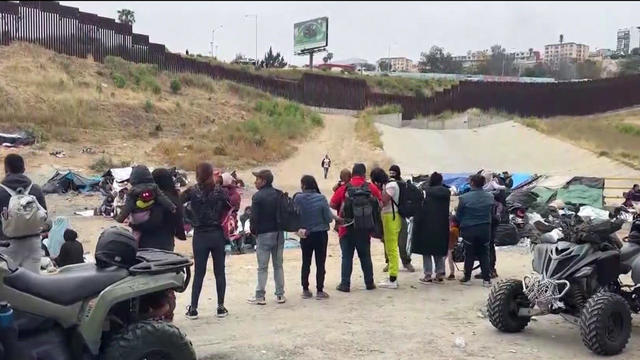
The day after Title 42 expired the border was crowded and chaotic but not so much as had been feared. Nicole Sganga and Michele Gile report. (5-12-23)
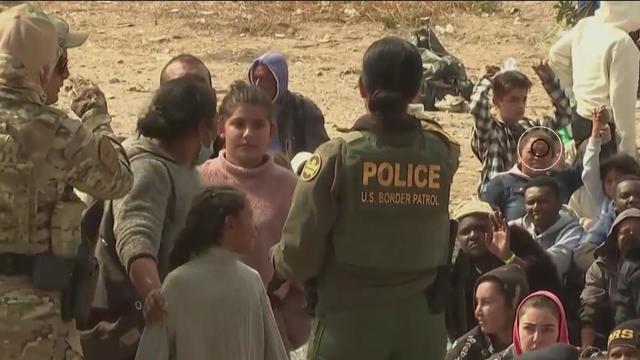
Jarred Hill reports on the potential humanitarian crisis developing along the southern border of the U.S. after expiration of Title 42.

The city of San Jose is preparing to welcome a significant influx of immigrant families in the coming weeks as Title 42 expires, creating a surge in immigration along the United States' southern border.

Reed Cowan talks to immigration law specialist and USF Professor Bill Ong Hing about what the end of Title 42 means and how it will impact the Bay Area (5-11-2023)
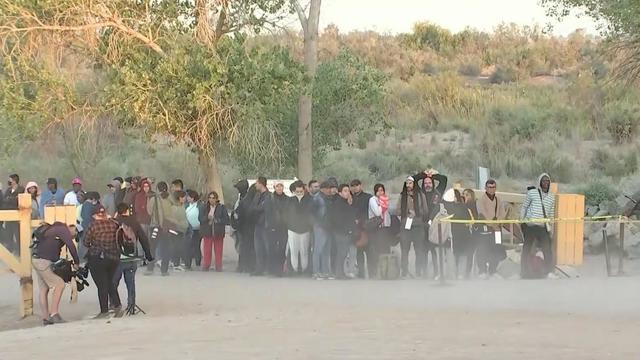
Team coverage of the new immigration rules set to take effect ahead of the midnight expiration of Title 42 (5-11-2023)

The U.S. is expected to see an influx of migrants with the pandemic-era policy known as Title 42 set to expire on Thursday. However, the Biden administration announced a policy Wednesday that would ban asylum-seekers from receiving U.S. protection if they fail to request refugee status in another country first.