Drought Sucking California's $5 Billion Rice Harvest Dry
California's deepening drought is shrinking its rice harvest, and that's bad news for farmers, migratory birds and sushi lovers.
Watch CBS News
California's deepening drought is shrinking its rice harvest, and that's bad news for farmers, migratory birds and sushi lovers.

The California Department of Food and Agriculture detected the first incidence in the Bay Area of the Asian citrus psyllid (ACP) Oct. 6. The pest causes a disease that kills citrus trees.

A small hot spot in California's Central Valley is likely the second largest concentration of the greenhouse gas methane seen over the United States, according to a new study of satellite data.

California Central Valley farmers are urging Gov. Jerry Brown to veto legislation that would regulate the pumping of well water in California for the first time.

With severe drought covering 95 percent of California, 'pop-up wetlands' are one of the few tools that conservationists have to help stave off possible bird die-offs this fall.

San Francisco will soon become the first city to enact a California law giving owners who turn empty lots into gardens the chance to get a tax break.
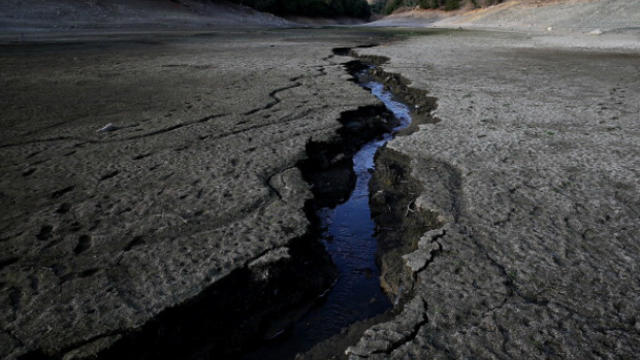
Members of Governor Browns' interagency Drought Task Force came to San Francisco Monday to meet with local government officials to learn more about efforts to respond to the drought.
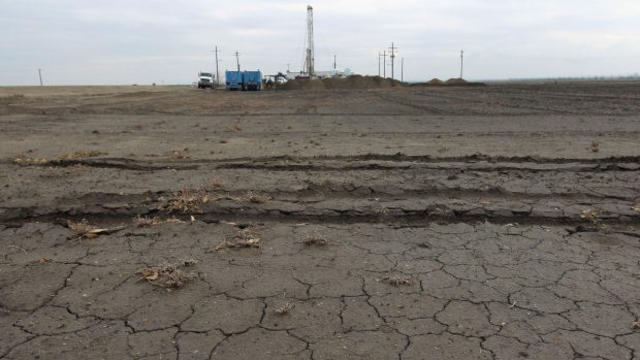
The current drought is covering all of California in extreme ways. It's the third driest year in 106 years of record keeping according to Jay Lund of the UC Davis Center for Watershed Sciences, our guest for this week's In Depth.

A new proposal before the Board of Supervisors would give significant tax breaks for property owners willing to set aside their empty lots as urban gardens.

The Supreme Court declined to hear an appeal from Drakes Bay Oyster Co., popular oyster farm the Point Reyes National Seashore that is facing closure, but the owners aren't giving up.
Cash registers in the Central Valley are seeing less activity these days because there's less water. The state's record drought is impacting farm towns in California's Central Valley in a major way.
California's record drought is affecting just about everyone across the state but the Central Valley's multibillion-dollar agricultural industry may be experiencing the impact the most.

Summer is here and nowhere is the drought being felt more severely than in California's Central Valley, where fertile farmland is slowly turning into a dust bowl.

This month, the city opened its first resource center for gardeners at the community garden in Golden Gate Park. It's a one-stop shop for city folks who aren't afraid to get their hands dirty.

Young people are drawn to big cities and the latest technology these days but, here in the Bay Area, a new generation of farmers is working the land on the urban edge.

BERKELEY (KCBS) — Results of a new study reveal that tule fog--the dense ground fog that blankets the Central Valley during the winter months—has been steadily decreasing for the last 30 years.

Researchers say California's drought could cost the state's agricultural economy $1.7 billion this year and leave more than 14,000 farmworkers without work.

Officials said Tuesday that, for the first time in decades, they plan to tap water stored behind a dam east of Fresno, as they try to help California farmers through the ongoing drought.

California agriculture officials are on the hunt for an invasive species of ant that's been spotted in an Southern California yard -- and they'll use Spam as bait.
An overwhelming majority of Californians agree the state is facing a serious water shortage, but most are also opposed to mandatory rationing.

Well drilling is booming across California's Central Valley, with some drilling companies booked for months.

Farmers throughout the state are using a mysterious and some say foolhardy tool for locating underground water: dowsers or "water witches."
Can plants replace eggs? A San Francisco startup backed by Bill Gates believes they can.

Robotic farming could provide relief from recent labor shortages, lessen the unknowns of immigration reform, even reduce costs, increase quality and yield a more consistent product.

Hitching health and greener planet hopes to the local food movement? You may want to reconsider.