Temperatures for the Pittsburgh area will be back in the 70s today

Temperatures for the Pittsburgh area will be back in the 70s today and could return to the 80s by tomorrow.
Any Alert Days Ahead? None
Aware: Overall trend heading into next week is warmer weather in place, with a string of mid-80 degree days expected
Morning lows in most places have dropped to the 50s in most places. I have Pittsburgh seeing a low of just 60 degrees, though. There is a light wind coming in from the west. We will see some early morning sunshine with clouds thickening to overcast by the time the kids are getting out of school. I do have a low isolated shower chance, but if you see anything, it would only be some sprinkles to very light rain and wouldn't last very long.
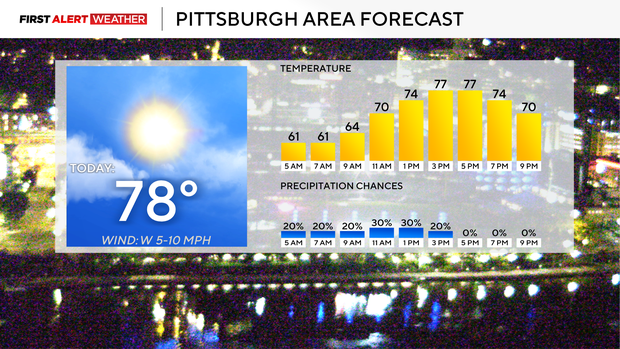
I have highs hitting the upper 70s. Yesterday saw highs in the low 70s.
Looking ahead, I have highs returning to the low 80s on Wednesday and staying in the 80s through the weekend.
There aren't too many more pool days in place for the year, but if you can get out to one of the area pools over the weekend, the weather should cooperate. I have highs in the mid-80s on both Saturday and Sunday.
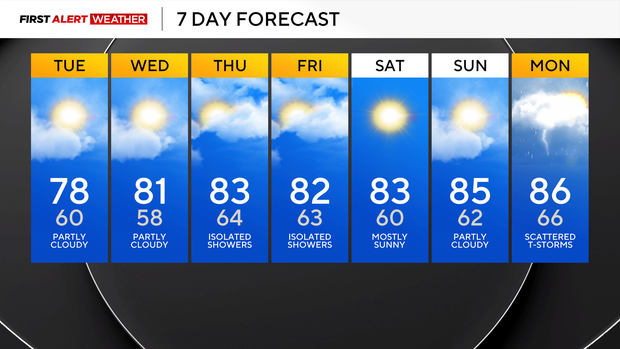
Our highest rain chance for the week occurs on Monday and Thursday.
Peak allergy season for western Pennsylvania occurs over the next 45 days
While spring allergies are certainly a thing, for Western Pennsylvania the fall allergy season is where we see our highest pollen counts of things like mold, grass, and weeds. It all comes together in what we know as hay fever season.
Hay fever is defined as cold-like symptoms caused by an allergic response to a harmless outdoor and indoor substance the body identifies as harmful, according to the Mayo Clinic. I am not going into things much deeper than that and will leave the deeper analysis of the whys to someone way more qualified. Historically, the allergy forecast has fallen on the 'station scientist' meteorologist, though, so here we are. While hay fever can occur at any time, pollen levels historically peak in the middle of spring (tree pollen) and then once again in late summer (grass) to early fall (weeds, mold). Pollen and mold levels normally peak over the next 45 days due to the quick overlapping of grass, weed, and mold spores.
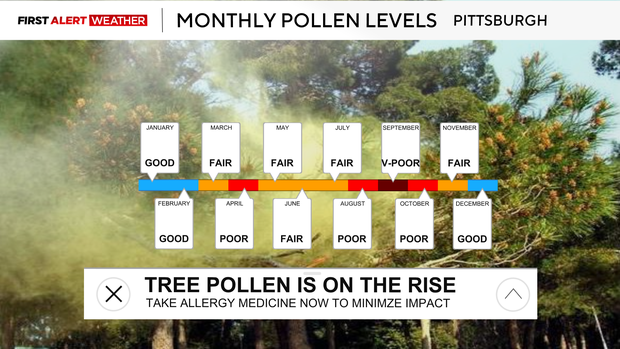
The main driver of hay fever is ragweed, and it begins to release pollen right now; as days are getting shorter, our weather pattern gets drier, and our mornings turn cooler. Ragweed loves to pollinate during stretches of low humidity and warm afternoons. If you have not yet been impacted by ragweed, but normally have issues around this time of the year, it is best to start taking your allergy medicine right now. Hopefully it will help limit any reactions to the foreign but harmless pollen your body is breathing in.


