Final report released on I-95 collapse in Philadelphia by NTSB. Here's what to know.
Nearly two years after a portion of I-95 collapsed in Northeast Philadelphia, the National Transportation Safety Board released its final report on Thursday, saying a combination of the driver speeding and potential fatigue led to the crash and fire that caused the northbound side of the highway to crumble.
The collapse happened on June 11, 2023, underneath I-95 on the northbound Cottman Avenue (Exit 30) exit ramp at 6:17 a.m. after a truck carrying gasoline crashed and caught fire, leaving the driver, 53-year-old Nate Moody, dead.
According to the NTSB, Moody was en route to the third stop on his route when the crash occurred, which was about five miles away from the site of the collapse on Oxford Avenue in Northeast Philly.
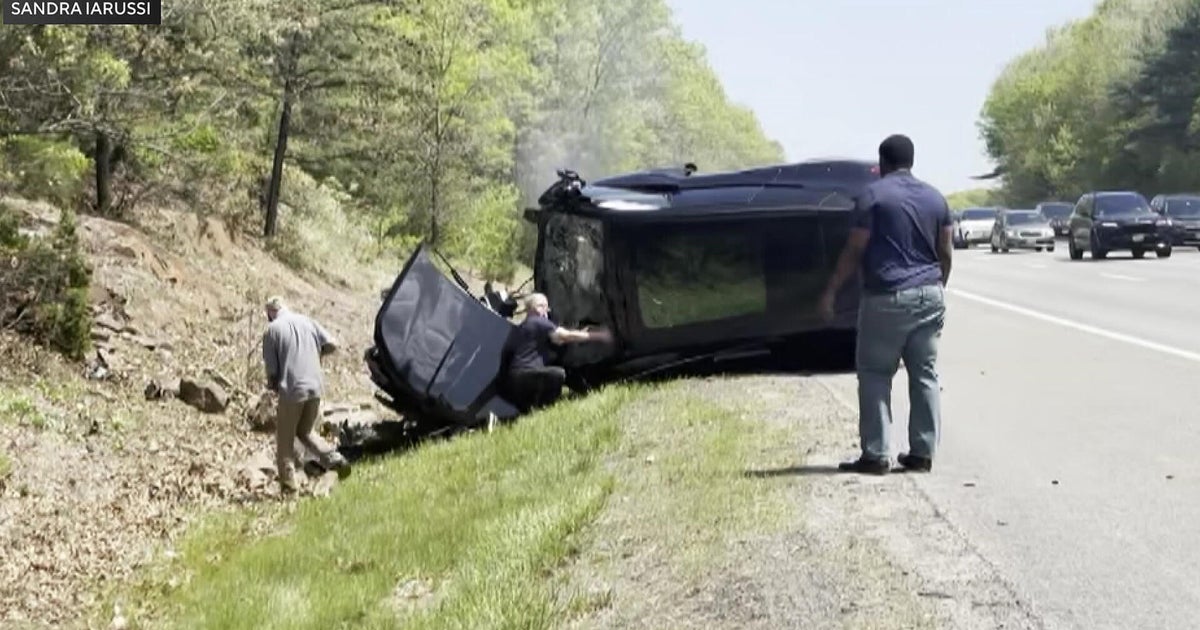
The NTSB said that Moody was driving an estimated 44-54 mph down the leftward curve on the Cottman Avenue exit ramp, lost control of his truck, and it overturned and crashed, which eventually led to it catching on fire. The Cottman Avenue exit has a speed limit of 25 mph for drivers and a truck rollover warning sign.
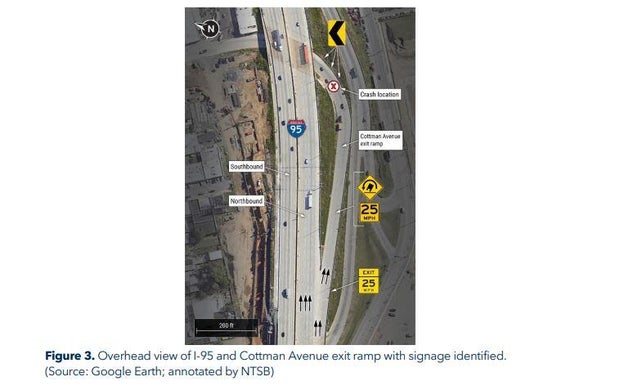
The NTSB stated that it used nearby surveillance video to conduct a vehicle performance study, confirming that the truck was traveling 19-29 mph above the posted speed limit.
The study also determined that electronic stability control (ESC) would've prevented the truck from rolling over. According to the NTSB, ESC is "designed to reduce crashes caused by rollover or loss of control."
The truck wasn't equipped or required to have ESC because the manufacture date of the vehicle was before August 2019, which is when ESC was required to be installed on vehicles with a gross vehicle rating of more than 26,000 pounds. The 2017 International truck-tractor driven by Moody was manufactured in 2016 and has a GVWR of 52,350 pounds, according to the NTSB.
The NTSB also believes that fatigue played a role in the crash.
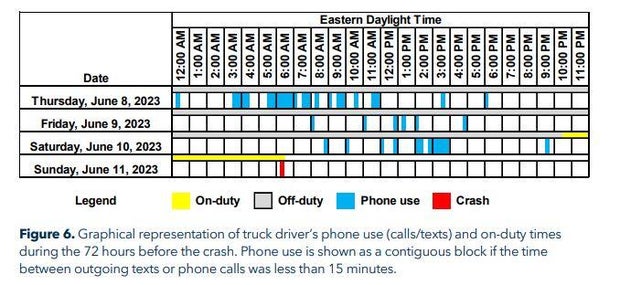
The NTSB said it examined Moody's cell phone records, which show he "reverted to a daytime schedule on days that he did not work." The federal agency said he worked Sunday to Thursday on a 10 p.m. to 8 a.m. shift. But on his off days, the NTSB said that Moody's cell phone showed him calling and texting people between the hours of 8 a.m. and 6 p.m. during his days off. The NTSB said he wasn't on his phone during the time of the crash.
The NTSB also said that the toxicology report showed Moody had diphenhydramine in his system, which is an antihistamine like Benadryl, but's unclear if that caused any impairing effect at the time of the crash.
"The driver's lack of alertness to the exit ramp advisory speed and loss of control of his vehicle suggest that he may have been fatigued when the crash occurred," the NTSB wrote in its final report.
Truck in I-95 collapse had an open manhole cover
The NTSB also obtained additional video evidence that showed one of the four manholes on the truck driven by Moody were improperly open at every location he stopped at during the day of the crash and fire.
Moody had driven the route at least 30 times in 2023 alone, according to the NTSB.
Before the crash, Moody had two other stops: one at a Wawa in South Hampton Township and another Wawa in Lansdale, Montgomery County, according to the NTSB. He was at a facility in Wilmington to get fuel for his final stop before crashing on Cottman Avenue.
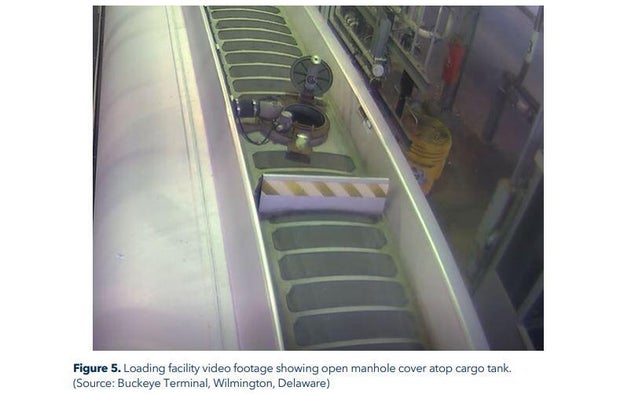
The NTSB said the fire after the crash originated from the front of the trailer and was likely fueled by gasoline as it escaped from an open manhole. The gasoline could've also spread through the truck's fuel tank if it was breached during the crash, but the NTSB said it wasn't able to determine a breach happened.
Due to the damage of the truck, the NTSB said it wasn't able to do a "functional inspection of the truck's steering system."
Driver's history before I-95 collapse
According to the NTSB, Moody was the owner and operator of the truck that lost control and crashed. It was leased to TK Transport, which in turn leased it to Penn Tank Lines.
The NTSB said in an interview with TK Transport's operations manager he described Moody as: "being highly regimented, doing his work, and never complaining."
According to Commercial Driver License Information System (CDLIS) records, Moody had 30 years of a truck driver. In the past 10 years, he had four traffic-related violations, including one for speeding in 2016. The NTSB said none of the offenses were with a commercial vehicle.
Moody was involved in two commercial vehicle crashes in the two years before the crash, but the CDLIS said he wasn't at fault in either incident.
When did I-95 reopen after the collapse?
Crews were able to reopen the highway -- and livestream the work -- 12 days after the collapse with a temporary roadway with six lanes atop a bed of a lightweight rock-like glass aggregate made by a company in Delaware County.
Traffic on I-95 in Northeast Philly returned to normal nearly one year after the collapse in May 2024.