Over 250 years later, colonial-era taverns are keeping Philadelphia's revolutionary spirit alive

Philadelphia is the proud home of award-winning bars and restaurants, but did you know that the city taverns back in the 18th century were a key part in the founding of our nation? One local spot is even keeping that spirit alive today.
The Declaration of Independence had just been signed in July 1776, and battles were raging in the colonies. This battle for freedom wasn't just a group of elite men holed up in Independence Hall, deciding the fate of a would-be nation. It was conversations had by all Americans, many of them shared over food and drink.
The words of Founding Father John Adams offer a glimpse into what life was like.
"He says, 'I drink no cider, but feast on Philadelphia beer and porter," Justina Barrett, chief learning and engagement officer with the Historical Society of Pennsylvania, said.
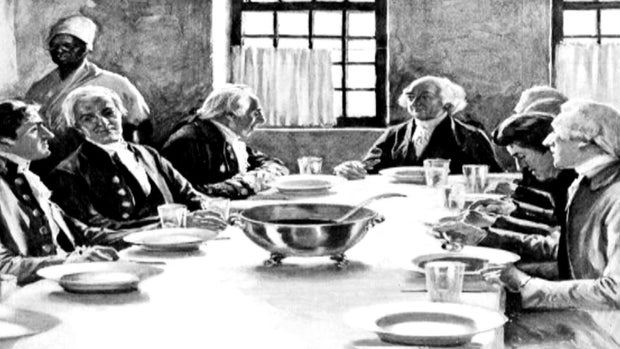
Beer played an important role in colonial Philadelphia. At the time, water was unsafe to drink, so beer was the choice for colonists of all classes. That made places like Tun Tavern and City Tavern the hubs of social activity and revolutionary ideas.
"Political arguments, people trying to sway you one way or another, those are all on broadsides that are being printed and distributed," Barrett said. "And obviously, the place that's going to be most effective to get your message out is where people gather, and that's going to be a watering hole."
In fact, Tun Tavern's fight for freedom is older than the Declaration of Independence itself. In November 1775, the Marines were founded there.
Declaring independence was not a sure bet, though, and the founders often turned to food to help make their case.
Wealthy founders could shell out for prime cuts of meat, sweets and items being sent from around the globe. More common folk, though, were partial to street vendors who served grilled oysters fresh from the Delaware River.
But signing the Declaration was just the first step. Now, the founders had to persuade people to fight for freedom. Where else would they turn but to taverns? The Declaration was read there, and colonists were rallied.
"That mixing of ideas, the fact that it happens publicly, or semi-publicly and not just privately, is crucial in convincing people to join the cause," Barrett said.
Getting a colonial feel might be hard to come by nowadays. But one spot in Old New Castle, Delaware, is keeping that historic spirit alive.
"Our motto is, 'Serving history while serving you,'" Justin Day, owner of Jessop's Tavern, said.
Jessop's Tavern sits just feet from where William Penn first touched American soil in a building dating back to the 17th century. There are muskets on the walls, candles on the tables and mismatched wooden chairs. They serve food from the time — like a half-duck with a cherry-glaze — and their famous bread pudding.
Day has also banned TVs, embracing conversation just like in Revolutionary times.
"It was wise men, and some not wise men, sitting around, drinking too much, pounding the table, putting out ideas," Day said.
And Day says having this feeling is more important now than ever.
"Oftentimes, these places are lost to time," Day said. "They get covered over, and the world moves on. And that's a shame because, considering what we're celebrating right now, we have to make sure we remember where we came from."


