This Philadelphia museum is setting the record straight on the Declaration of Independence — 250 years later

July 4th, 2026, marks 250 years since all of the Founding Fathers signed the Declaration of Independence … or does it?
CBS News Philadelphia recently visited the Museum of the American Revolution to learn more about the famous document.
"We have been thinking about 2026 here at the Museum of the American Revolution since we opened in 2017," Tyler Putnam, senior manager of gallery interpretation at the museum, said.
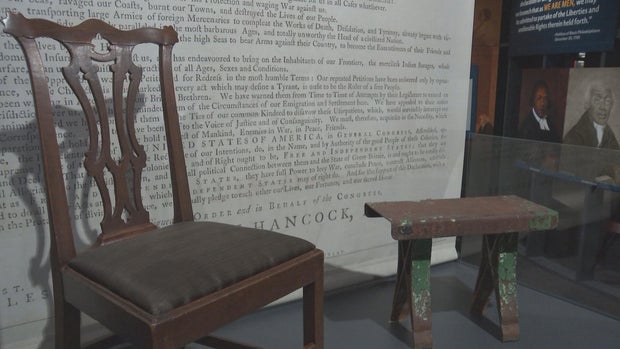
The Declaration is at the center of everything there. Within an exhibit called "The Declaration's Journey," Putnam pointed out two items in particular.
"This is a really amazing pairing of objects. This is a chair that Thomas Jefferson owned," he said. "This is a bench from a jail cell in Birmingham, Alabama."
The exhibit contains more than 120 artifacts, including some on loan, such as the bench from 1963 that has a connection to Martin Luther King Jr.
"King writes 'Letter from Birmingham Jail,' which quotes the Declaration of Independence, argues for an expansive sense of what those words have meant," Putnam said.
The exhibit explores the document's 250-year history, from its start a few blocks away to the present day. Putnam cleared up a few misconceptions about the Declaration.
Misconception 1: The Founding Fathers voted on, approved and signed the Declaration of Independence on July 4.
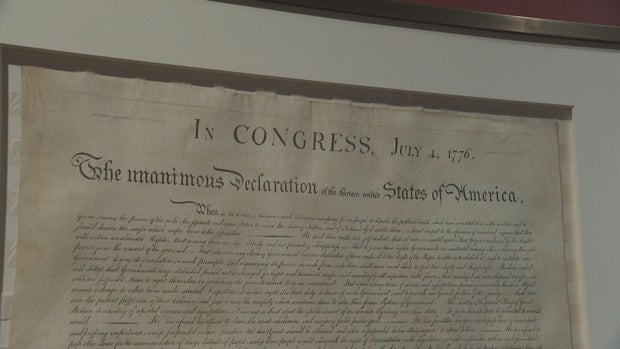
"Independence is passed as a resolution on July 2, and then they take two more days to finesse the language in this draft Declaration of Independence. They vote to approve the Declaration probably on the morning of July 4," Putnam said.
In other words, the document wasn't voted on, adopted and signed all on the Fourth of July.
Misconception 2: The signers all added their names to the Declaration on the same day.
Another common misunderstanding is that the document was signed by all of the delegates of the Second Continental Congress on the same day.
"It's probably not until Aug. 2, almost a month later, that anyone other than John Hancock signs that official document, and then the signatures continue for quite a while," Putnam said.
Misconception 3: This was the first document calling for American independence.
Putnam also said the Declaration wasn't the first call for independence.
Cue Thomas Paine's "Common Sense."
"Thomas Paine publishes 'Common Sense' in January of 1776, and this is a clarion call for not just reform of the British empire, but a new solution for independence," Putnam said.
And acceptance of the document back in 1776 wasn't immediate.
Misconception 4: The Declaration of Independence doesn't matter anymore.
"When you picture July 4, 1776, you might imagine that every single person who heard those words tossed their hat in the air, celebrated, thought of themselves as something new," Putnam said. "In fact, the people who had that reaction were in the minority. Most people were really skeptical, or they thought it was a terrible idea."
That notion has certainly changed for many over the last 250 years, and brings Putnam to the last misconception — that the Declaration only mattered in the United States and in 1776.
"Those words — 'all men are created equal, we hold these truths to be self-evident' — Thomas Jefferson wrote them and Congress edited them. Once they escape, they can be used all sorts of people around the world, right up to the present," Putnam said.
From inspiring fights for independence abroad to leading movements like Civil Rights, women's suffrage and LGBTQ+ rights, the more than 1,300-word document continues to make its mark across the globe.


