1st "booster pack" pacemaker implanted in adult with congenital heart defect on Long Island

A new electronic device that's the size of a grain of rice is making a big difference for heart patients. For the first time ever, it was implanted in an adult born with a congenital heart defect.
The procedure was performed by Northwell doctors at Long Island Jewish Medical Center. The patient was Michael Chaves, a 43-year-old special education paraprofessional from Staten Island who was born with a heart defect.
"It was terrible. Two days after, he stopped breathing, turning blue," his father, Ruven Chaves, recalled.
Michael Chaves had to have surgery before his first birthday and get a pacemaker at age 17.
"I couldn't keep up with the other kids," he said. "Shortness of breath, I'd get tired."
Doctors warned his heart would run into life-threatening problems around age 40.
"We kept hope that technology would invent something - and it did," Ruven Chaves said.
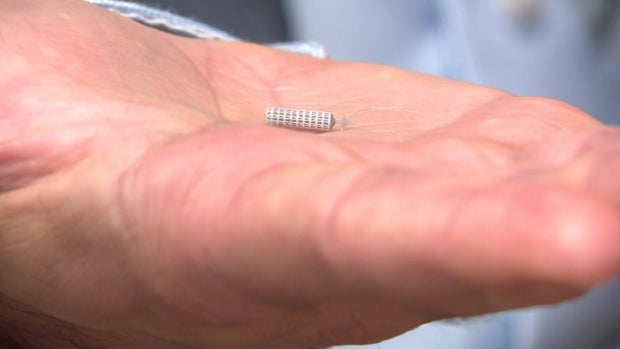
Earlier this year, Michael Chaves made medical history, becoming the first adult congenital heart patient in the world to receive a WiSE leadless pacemaker. The tiny wireless device is designed for heart patients who need more help than a traditional pacemaker.
Dr. Haisam Ismail explained the device contains "chips that communicate wirelessly with the other device to help the heart sync."
Like a booster pack for the pacemaker, it helps keep both sides of the heart beating in sync.
Michael Chaves says he felt the difference immediately. He was able to return to the gym without needing another open-heart surgery, and he says he finally feels his age.
"This is how I should be feeling at 43 years old," he said. "It's amazing. I can't say enough ... This device is life-changing."
The device can last a lifetime, but the battery has to be changed in five to seven years.
An FDA-required study is now tracking patients for five years to assess long-term performance and outcomes.