Redevelopment of NYCHA complex in Chelsea remains a contentious issue for some. Here's the latest on the plan.

A NYCHA complex in the heart of New York City's Chelsea neighborhood is set for a huge transformation.
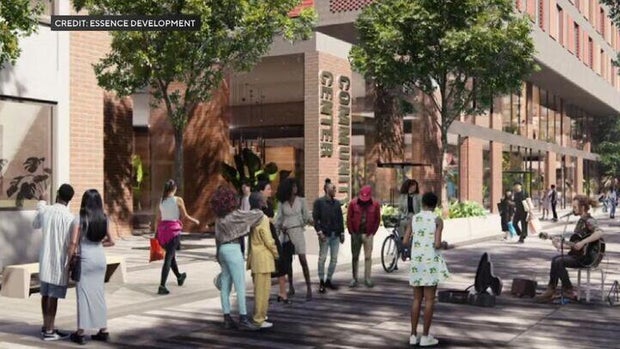
The proposal involves the construction of 15 new buildings on a redesigned campus to replace the Fulton & Elliott-Chelsea Houses, a 18-building property that is said to be beyond repair.
But the project has been fraught with lawsuits, claims of a land grab by the developer, and some accounts of mistreatment of senior citizens, who stand to be the first impacted by the project.
Objections to the redevelopment plan
There have been ongoing protests against demolition and lawsuits brought by both NYCHA and residents.
The result of one recent lawsuit was a ruling against NYCHA and in favor of senior tenants who were resisting the move. But if the plan proceeds, more than 80 senior households will be relocated for the first phase of the multi-billion dollar redevelopment to systematically demolish more than 2,000 apartments.
"The transformation will be a one-for-one replacement of every one of the 2,056 units that exists on this campus," said Jamar Adams, founder and managing principal of Essence Development.
Adams is a lead developer on the project.
"We are relocating the residents of these buildings into vacant refresh units on the campus," Adams said.
Adams also explained the contentious decision of having to move the seniors out of their homes first.
"That was the one building on the campus that, if you then was able to vacate and demo, it wouldn't have impact with utilities and other systems in the campus," Adams said.
Another potential change for the neighborhood is new street-level commercial space that will serve the proposed 3,500 additional apartments that are planned. Of those, 1,000 would be designated as affordable, while the remaining ones would be market rate.
"How do we replace every one of these units that are in very poor condition, filled with mold, filled with lead, filled with asbestos? The market rate and the mixed-income housing that will be built, which include new affordable housing, actually helps finance the replacement of the existing 2,056 units," Adams said.
Adams touts other advantages of relocation
"So they will move into a brand new, you know, quality housing and a quality building on this campus," Adams said. "We'll have a healthy grocer that will be brought to the campus, which currently can't exist because there's no retail permitted here."
Adams added the project will also redesign open and green space, capturing areas currently unused.
Within the NYCHA community there is still uncertainty and confusion. A local resident even questioned Adams during his interview with CBS News New York.
"I can understand the concern. Like someone tell you it's gonna be much better, but you're gonna pay the exact same money in rent," Adams said to the resident.
Activists like George Weaver are still fighting to preserve the tenants' current homes.
"Actually, nothing is wrong with their building. It's just a land grab," Weaver said.
"The demolition plan was never put to bid"
Layla Law-Gisiko is a local district leader who has been fighting for tenants opposed to the plan. She says demolition is more attractive to the developer for greater profit.
"We are all speculating that, you know, it's going to be more lucrative if they are demolished, and the developer related will make more of a profit," Law-Gisiko said. "There's no doubt that these buildings need much more care and maintenance. The demolition plan was never put to bid. You know, the switch happened in a way that was incredibly disingenuous, with no transparency, no consultation with the tenants."
Law-Gisiko added some senior residents felt mistreated and pressured to move.
"They're very old. They're very fragile. And, you know, quite frankly, they're telling us very clearly they want to die in their apartments," Law-Gisiko said.
Fulton & Elliott-Chelsea Houses residents speak out
Deborah Cruz, a 14-year resident of the Fulton & Elliott-Chelsea Houses, was recently moved into a larger, newly refurbished apartment on the campus, while her former building -- a designated "senior building" -- is emptied for eventual demolition in preparation for a complete reimagining of the area.
"To me, change is a good thing," Cruz said. "Over here, they gave us a microwave."

"I was sad and afraid, let me tell this to you," said 88-year-old Delores Payan. "We were working with the manager of the company for three years, and he kept promise to us, no, you don't gonna move."
However, Payan relocated as well, and said she's happy.
"Little by little, I'm feeling like a home," Payan said.
Tenants like Debbra Liverman and a woman who didn't want to be identified, however, said not all seniors are comfortable with the relocation plan.
"Okay, you want to build in the neighborhood up. But what happened to the seniors? What happened to them?" Liverman said. "It's very confusing. They want to help us, and I guess they want to help their [selves], too."
"I'm so afraid, upset, afraid, so worried every night, I can't sleep," the other woman said.
Other tenants say the process has been transparent.
"All the tenants were notified about this. We had so many meetings. Everybody was invited," one person said, adding repairs will never make their homes fully safe and livable.
"We are as entitled as everyone else to live in this area with dignity and respect. If someone doesn't invest in our community, then what do we do after that?" the speaker said.
As Adams stated, tenants who are moved out of their apartments and then back into new ones will be paying the same rent they are now. The timeline for the plan is said to be three to five years.