Young New Yorkers balance childhood with caring for sick or elderly family members

Millions of children across the country, including many in the Tri-State Area, are caring for a family member while juggling their own life and responsibilities.
Some children have to go to school, do their homework, and then take care of a parent, grandparent or sibling.
For many, it's not a choice; for others, it may be cultural.
According to the National Alliance for Caregiving, there are an estimated 5.4 million children across the country caring for a family member who is sick, disabled or has health needs.
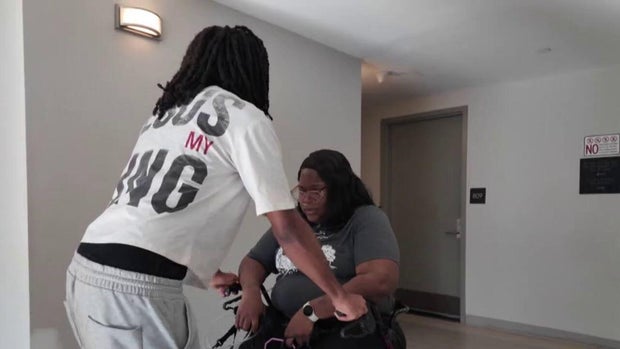
Two children in the New York City area have taken on very different adult responsibilities, but are getting help so they don't have to carry the load alone.
Alex Perez, 12, has been his blind grandfather Frank's extra set of eyes since he was 8. He has helped him navigate everything from busy streets and doctors' appointments outside his Bronx home.
"I'm very scared to walk by myself outside," Frank said. "Inside, I live here over 20 years and know the house well. Outside is very scary, very dangerous for me."
Alex helps pick out clothes, check emails and make sure Frank is taking his medication.
"One of the biggest blessings from god, my grandson Alex," Frank said.
Even though Alex is not even a teenager yet, he said it's not a job he clocks into. It's just what family does.
"Taking care of someone is a big responsibility. If you lose that person, you're gonna feel sad because you didn't take care of that person how you're supposed to, what they needed you to do," Alex said.
For most kids, home is where their childhood happens. But for Braden Oney, 17, many roles collided for him, even more middle school.
Oney's father died, his family survived a house fire and faced homelessness, all before he was 10.
His mother also has serious health challenges and his older sister had a mental health illness.
His mother, Iris Williams, needs an oxygen machine to breathe. She said she still lives with guilt every day, watching her son put everyone first, while his own childhood slips further down the list.
Oney said he would have to pick up and drop off his brother from school, check on his family and help his mother bathe and cook.
"I have to be a role model for my brother. I have to be a big little brother to my sister and I have to be like a big brother to my mom in a way," he said. "Then I have to be a student. So any roles collide. Where do I find time to do this and that?"
Williams said she is forever grateful for her son.
"Thank god every day for making my son. So many times my back was against the wall, you were always there, Braden," she said.
Caregivers Outreach, which started as a program to help youth caregivers ages 10 to 21, says there is sometimes a line when children become caregivers. Responsibilities can quietly grow and sometimes be invisible.
Kristin Morris, the chief operating officer, said the kids are providing emotional and medical support.
In many homes, caring for a loved one isn't seen as a burden. Morris said it is a family responsibility, and children have been raised to help support their family.
"These kids have to juggle a lot. They're struggling, behind, not going to school," she said. "They don't have the opportunity to hang out after school, go to a basketball game. They need to rush home, make dinner, pick up their younger sibling."
Caregivers Outreach said with Medicaid cuts and a shortage of home health aides, many families are unable to survive without loved ones stepping up to support.
So far, they have assisted nearly 100 youth life-liners and their families with everything from case management, meals, therapy and creating moments and trips for kids to be kids.
The goal isn't to take kids away from their families, but to give families the support they need so the kids aren't carrying the weight alone.
"We work with child protective services. We have been educating them on what youth caregiving i, and their goal is actually to partner with organizations like ours and others to support the family," Morris said.
Teachers and social workers in schools are learning about caregiver outreach. Educators are learning how to identify young caregivers, such as noticing if they're falling behind or always late, so they can provide the help they need.
Legislation has also passed in the New York legislature that would require the education commissioner to study youth caregiving, including identifying who they are and how it's affecting their lives.


