New Jersey now allows human composting as an alternative to traditional burial. Here's how it works.

New Jersey is offering a new option when saying final goodbyes to a loved one – human composting.
It works by placing the body inside a vessel that turns it into nutrient-rich soil that can either be given back to the family or used for natural preservation. The process, also called natural organic reduction, takes about 50 days.
"It's this really beautiful sort of cyclical process that returns you to nature," said Tom Harries, CEO of Earth Funeral.
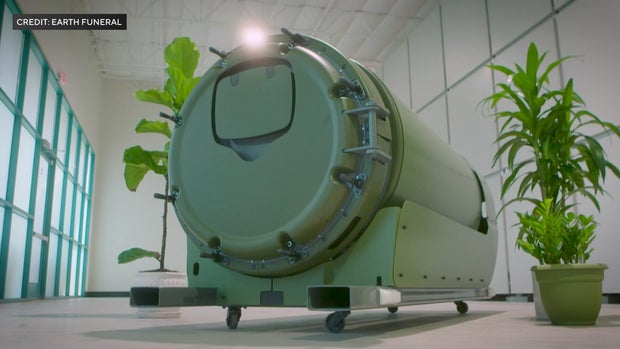
Human composting was first legalized in Washington state back in 2019. New York legalized the process back in 2022.
Before a bill signing last week, New Jersey residents who were interested would have to seek the process out of state, but now local funeral homes can legally offer the alternative.
"It's clearly in demand from folk in New Jersey," Harries said. "And now people are going to be able to do this locally, which is more convenient."
The service is set to start being offered within the next 10 months.
"Additional choice is only a good thing, and no one has to do anything they are not comfortable with," Harries said.
N.J. residents' mixed reactions to human composting
New Jersey's new law has been met with mixed reviews.
"It's a way to keep me around. I think it's a little more positive than having to visit a tombstone. I feel like there's a lot of sad emotions connected to that," resident Valentina Rivadeneira said.
Others find the process a little creepy. Resident Marquis Nelson said if a loved one requested to be turned into compost, he'd tell them he'd rather have them cremated.
"I don't know about decomposing no bodies," he said.
The Archdiocese of Newark released a statement to CBS News New York in opposition of the new law.
"The Catholic Church does not support human composting because the practice does not respect the human body in a manner consistent with our faith or reflect our hope in the resurrection," the statement said.