Which book should Club Calvi read next? Winner of Top 3 FicPicks to be announced soon
Please consider joining our Facebook group by CLICKING HERE.
Find out more about the books below.
Listen to the Club Calvi Podcast by CLICKING HERE.
A mother's obsession.
A daughter's deadly mystery.
A military dog's odyssey home.
Club Calvi's Top 3 FicPick choices are:
"With Friends Like You" by Amy Chozick is about a new mother in Manhattan who becomes obsessed with finding her college roommate who vanished into the world of adult entertainment.
"Runner" by Ashton Lattimore, set in a Black community on Martha's Vineyard during Prohibition in the 1920s, is about a woman who takes over her father's dangerous rum-running business after his mysterious death.
"Etna" by Paul Yoon is about a military dog who leaves the men he fought alongside during a long war and goes on an odyssey trying to return home.
You can read excerpts below.
Voting closed Sunday, Aug. 2 at 6 p.m. EST. The winner will be announced soon!
Club Calvi books may contain adult themes.
________________________________________________________________________________________________________
"With Friends Like You" by Amy Chozick

From the publisher: Emily is unmoored as a new mother in Manhattan—exhausted, broke, and slipping away from her well-meaning husband. She becomes fixated on finding the one person who ever truly understood her: her college roommate, Daisy. Cool, poetry-reading Daisy, who vanished years ago after she took a job dancing at a strip club off campus.
In her desperate search, Emily tumbles from new-mom message boards into a world of sex work, secrets, and a high-end escort service for global billionaires, hitting one dead end after another. Until the unthinkable happens: Daisy suddenly reappears.
Daisy infuses Emily's life with newfound purpose and community as the two launch a new mothers' group in a vacant luxury skyscraper. But the joy of their reunion soon fades, revealing deep, unsettling cracks in their relationship. Is Daisy the key to Emily's happiness, or is she unraveling her world? And where has Daisy really been all these years?
Amy Chozick lives in Los Angeles.
"With Friends Like You" by Amy Chozick (ThriftBooks) $23
"Runner" by Ashton Lattimore
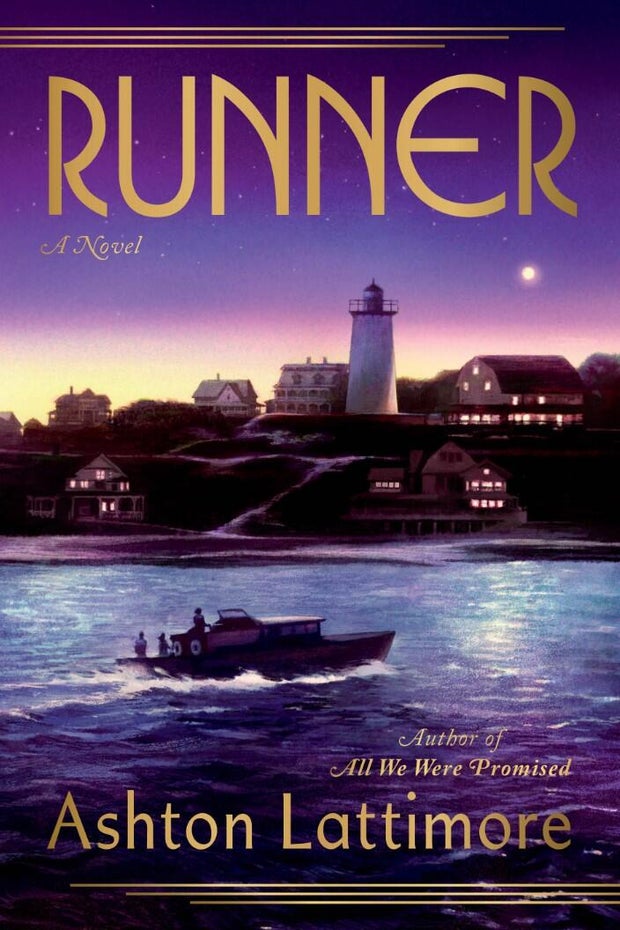
From the publisher:
Martha's Vineyard, 1923
The sea was the gift that kept on giving to Lena Jameson's father, Earl, a fisherman turned successful rumrunner who built up a small fortune smuggling liquor from offshore ships to thirsty customers back on the island. But when Earl and his entire crew are lost in a mysterious shipwreck that some whisper was no accident, his loved ones are left reeling and penniless—and Lena, who'd been on the cusp of a college career in Boston, sees her future slipping away.
Desperate to save her family as well as her own hopes of escaping their small town, Lena decides to take over Earl's rum-running business. For a crew, she ropes in Walter, her roguish big brother who leans too hard on the bottle; Sam, her steadfast local boyfriend who wants to keep her tethered to shore; and Dee, a glamorous young woman from Boston who is summering in the Vineyard and offers Lena a glimpse of the future that she still wants for herself—and who's keeping her own explosive secret.
The foursome embarks on a journey from the quaint, colorful streets of Oak Bluffs through gangland Boston to the jazz-filled clubs of Harlem during its Renaissance, all in search of quick money—and the truth about the shipwreck. But as buried secrets rise to the surface and the temptations of the glittering underworld pull Lena in deeper, everything she's fought to protect soon hangs in the balance: her heart, her family, and her place in a world that's quick to condemn women who dare to want more.
Ashton Lattimore lives in New Jersey.
"Runner" by Ashton Lattimore (ThriftBooks) $24
"Etna" by Paul Yoon
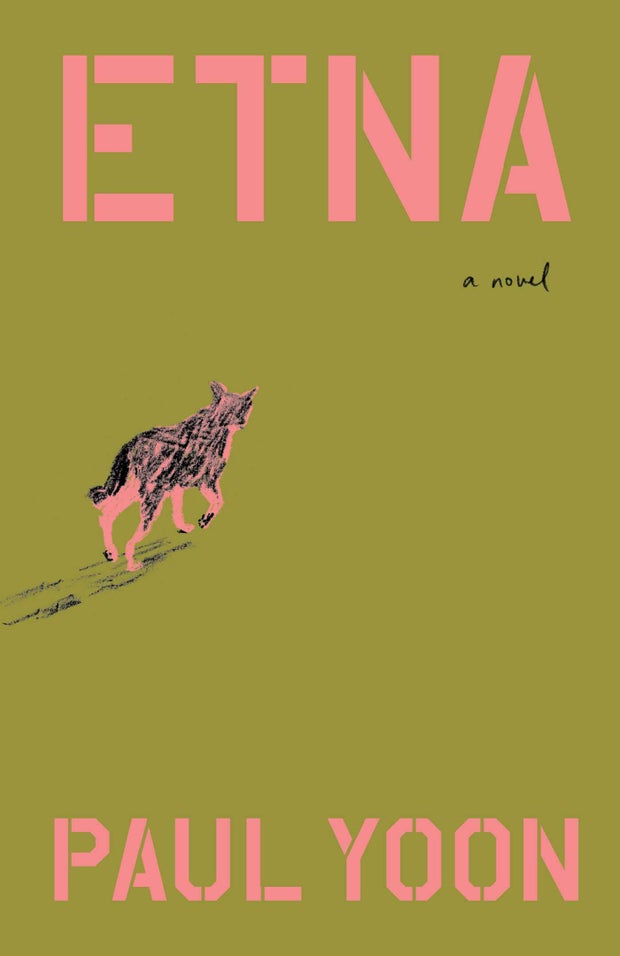
From the publisher: Set in a fictional country in the present day, this is a story told through the eyes of an ex-military dog, Etna. After surviving years of a devastating war, Etna decides one night to leave the men he has fought alongside for years and return home—to the place where he was taken from when he was young, in the thin but persistent hope that if a home exists for him, it might be there.
Thus begins an exhilarating odyssey told through the eyes of a dog as he traverses across ruined landscapes and fights to survive in a world that, even in peacetime, proves to be just as precarious. Along the way, he encounters other animals and humans who are attempting to figure out how to start again. What makes a life when there is no home to go back to? How do we begin to trust each other again after such profound loss?
Paul Yoon lives in the Hudson Valley, New York.
"Etna" by Paul Yoon (ThriftBooks) $22
________________________________________________________________________________________________________
Excerpt: "With Friends Like You" by Amy Chozick
IT DIDN'T TAKE MUCH to win over the Juju Bean moms. The facility was so plush, the childcare staff so overqualified and attentive, the organic diaper stash so plentiful, twenty minutes in and they were sold. By the end of week one, Sloane was saying "mommy" in two languages and had baked dairy‑free crème brûlée.
When Olivia picked Zoe and Chloe up, they were in embroidered onesies from that company that makes three‑hundred‑dollar cash-mere sweaters with feminist slogans.
I am not the kind of person who is into resistance cashmere, but Olivia clearly is, and that is the thing about 527 Park. Whatever kind of mom you are, we got you.
Daisy's condo, Apartment 8789, serves as our hub. The place where we check in each morning to get the day's affirmations. Daisy asked me to make a few remarks to welcome everyone. I moved to New York to do open mics, but I don't really do public speaking. I become cripplingly shy. But my glitchy postpartum brain is desperate to perform. To write poetry. For all the women looking up at me to think of me not as a crying heap on a toilet whose baby never latched but as someone who found meaning in all of our daily banalities. Someone to follow into the abyss.
Daisy appears behind me in a caftan, the silk enveloping her entirely, making her somehow look like a Saudi wife and a nudist. We check each other's breath. Hers is like warm mint and ten hours of sleep. Mine is . . . not great. She takes her spearmint gum out and puts it in my mouth. She gives me a nudge. A jolt at her fingertips on my skin. I look at her. If Daisy thought I could do it, then I could do it.
I recite a couple of affirmations, sticking to safe clichés at first. ("I am allowed to ask for help . . ." "I can miss who I was and still love who I am becoming . . ." "Motherhood didn't erase me. It expanded me.") The moms repeat the phrases halfheartedly.
Daisy has none of my hesitation. She has this ability to give herself entirely to the room. The muscle memory of a life spent exposed. As soon as she lifted a hand and spoke, whatever reservations some of the women had, whatever knot in the gut that said something didn't add up about this whole thing, melted away. By now, I'd heard her pitch a dozen times. It never got old.
"The sexual revolution was a fraud, perpetrated by men who wanted sex without consequences, dual incomes, and dinner on the table. We're a generation of women who watched our mothers try to be men. We're here to tell you it's a con. We were told to hustle. Well, you did. Poured your souls into LinkedIn profiles. Blink—your a** is thirty‑five and still too broke to procreate. You want to keep buying into their bull****? Or you want to burn it down? Say it with me."
Daisy looks out, her eyes spending time on each one of us, every type of mom, the full multiethnic spread of a Central Park playground on a September day, and we all repeat in unison, "To everything I've lost, thank you for setting me free."
The moms are all rapt. Daisy could say anything. Tell us to bathe in pesticides, microwave our Gerber baby oatmeal, breastfeed the devil, we'd do it. By then, nobody hesitates about signing the NDAs—that only adds to the sense that we get to be there at the beginning of a great experiment. We are the chosen people, creating a community based on compassion. Down there? They bleed us dry. Up here? We take something back. We just can't tell anyone about it, not yet.
Excerpted from With Friends Like You by Amy Chozick. Copyright © 2026 by Amy Chozick. All rights reserved. No part of this excerpt may be reproduced or reprinted without permission in writing from the publisher.
Excerpt: "Runner" by Ashton Lattimore
Chapter 1
Oak Bluffs—Martha's Vineyard, MA—May 1923
The house had space enough to hide things. Whether that was the cottage's finest quality or its most scandalous flaw was a question for another season. But with the late spring sunlight peeking into every crevice, lighting up the shadowy corners, Lena Jameson had only one question: Where had her father hidden the hooch?
Earl should've been back from his rum run before dawn, but the parlor's grandfather clock had just chimed out half past eleven and he was nowhere to be found. His lateness thwarted Lena's carefully laid scheme to meet him at the door with a plateful of fresh-baked cinnamon buns to bait the hook for all her asks and aspirations. And with the day slipping away, she had places to be. So in Earl's absence, she decided to settle for his liquor.
Every few weeks, all over the house, in the strangest of places, Lena would find bottles: a jug of Caribbean rum in the linen closet at the bottom of a basket of towels, some port wine under the floorboards in an upstairs bedroom, or a slim case of conveniently sized vodka flasks slid behind the wicker couch on the front porch. Her father's stash was as far flung as it was lightly concealed, and the hiding spots moved, but only for Lena's amusement. Earl didn't mean to keep the liquor from her, now she was grown—he was just playing an old game. When she was young, it had been seashells with intricate grooves and ancient-looking insides, or bite-size pieces of vanilla saltwater taffy stashed around the house, always with the promise that Lena could keep whatever she found. Now, his bootlegging operation was the worst-kept secret in Oak Bluffs, and though he never involved Lena in the business, he didn't begrudge her a drink—she was twenty-three years old, after all. She knew the ill-gotten liquor was around, the thrill was in discovering it—small thrill though it was. It was the most she could hope for in the sweet, stifling beach town she called home.
But the summer of 1923 would be Lena's last in Oak Bluffs, so help her, or she'd lose her mind. There, her every spare moment was spoken for, and between frying up fish and seasoned potatoes at her family's nearly deserted restaurant and helping her mother keep house and look after all the siblings, she'd had more than her fill of days tending to everyone else's needs. On that breezy, clear morning in late May, the key to her escape was tucked into the pocket of her loose-fitting peach-toned day dress, but it'd do her no good until she got her hands on the means to use it.
As she crept through the rooms of the lavender-shingled Highlands Victorian her family had moved into last year, peering behind every couch and chair, rifling through each cabinet in search of drinks worthy of a sunset beach party, Lena shook her head—the house really was too big. With three floors, seven bedrooms, and a wraparound porch, it was an airy behemoth boasting much more space than the family could ever use, and there'd been no good reason for the move beyond puffing up her father's considerable pride in being able to buy the place. Scanning the living room, Lena's eye landed on the bench in front of the polished mahogany baby grand piano the twins used for their lessons. She rushed over and pulled the bench toward her, and as it scraped across the floor, she heard something heavy roll inside, and then a telltale clink—thick-blown glass hitting glass, with liquid goodness sloshing around inside. She opened the bench, shoved aside the sheet music, and grinned as she uncovered two pristine bottles of single-malt whiskey. Not a second later, she heard her mother huff.
"A little early for that, isn't it?" Sarah Jameson stood in the doorway looking prim, her graying black hair pulled up and away from her deep brown face and piled loosely onto a bouffant. Lena sat back on her heels. Anytime her father was out of earshot, her mother would start in grumbling. Bad enough everyone knew Earl had swept them into this colossal new house on the tide of his bootlegging profits, she'd say. Did he have to leave contraband everywhere as a constant reminder on top of it? As Lena lifted the bottles out of the bench, Sarah frowned.
"Your father oughta be ashamed of himself, letting you dip into all this nonsense. And for what?" she asked. "Maybe a dry party would do you all some good—Prohibition's not going anywhere, you know, so you might as well go on and get used to it."
She wasn't wrong. Three years into Prohibition, people had sized up the constraints of the new world, and had made their adjustments. Some, like Sarah, gave up liquor just as the good Lord, the 18th Amendment, and Mr. Andrew Volstead intended. For the less virtuous, like Lena, there were workarounds—hidden flasks of hooch from years past, bootleg bottles rolling in along the shore, or freshly distilled liquor from the folks who took the new laws as a chance to get creative. And then there were men like Earl. Men who heard "crime" but saw only cash, and had the gumption to change their ships' courses; fisherman or bootlegger, the goods all came from the same sea.
"No need to get used to anything, Mama—I've got what I need," Lena said. "Besides, you always say it's not mannerly to show up to a party empty-handed."
Sarah sucked her teeth, but a small smile played at the corners of her mouth. "Ha! I wish you took half as much heed to everything else I tell you," she said. "Why don't you cook something instead, put in a little effort for the guests?"
"Since you mention it, I'm headed to the Clam Shack right now to whip something up," Lena said. "See? I take a little from Daddy, and a little from you."
Sarah smiled and nodded her head, seemingly satisfied. "What's the excuse for a party this time?"
It'd be a going-away party, if Lena got her way. In her pocket, a slim envelope from Boston University held a letter of acceptance, and all her hopes with it. She'd hardly expected to get in, especially as old as she was. But by some miracle she'd made the cut. More than that, the family finally had enough money to send her, and with the twins getting older, she wouldn't be needed so much at home. The timing was ideal, and—to Lena's mind—overdue.
Three years into a decade that seemed to promise nothing but novelty, so far Lena had missed the boat. Change had bubbled up all over the country after the war, and everyone else in her family had snatched some of the newness for themselves: a profitable—and prohibited—new gig for Earl and her big brother, Walter, and a grand new house to please Mama and delight Nettie and Louis, her decade-younger matched set of twin siblings. Lena should've had the world at her feet—the 19th Amendment claimed a young woman like her could be anything she wanted, or at least choose the governing men who'd tell her what she could be. But in her hometown, she walked a thin line between being sheltered and being burdened—the same family that covered and protected her bore down heavy on her freedom, and even the love of a good man sometimes felt like just another link in the chain holding her at bay. She'd missed her chance to get off this island once before, and she refused to let it pass her by again.
Excerpted from Runner by Ashton Lattimore. Copyright © 2026 by Ashton Lattimore. All rights reserved. No part of this excerpt may be reproduced or reprinted without permission in writing from the publisher.
Excerpt: "Etna" by Paul Yoon
Look! See the dogs . . .
I was born near water.
I was born on a farm where many other dogs and other animals were born and cared for and lived.
I would never learn what the farm was intending to do with me.
Maybe nothing at all. Maybe I was supposed to grow old there.
Or maybe I was always supposed to leave. To go work somewhere else and be with a new family.
But it was home to me. My mother was there. My brothers and my sisters. An early memory: waking up to a den of pale noses surrounding me before our mother came, the silhouette of her face looming over us in the sky, the tall triangles of her ears pocketing the smell of the coast.
Every day there was sand floating in daylight and the salt on our tongues. The sea wind over grass. The barn eaves where hornets made nests that resembled the empty shells of turtles hanging up there heavy in the wind.
The cloven hooves of goats and the enormous sleepy pig who never wanted to play with us.
And the birds. Birds everywhere. Their bright feathers and their music. Their shadows and all their s***, which I loved to eat.
I loved, too, listening to the farm owners talking to each other. I liked the softness of their two voices. The woman often speaking through strands of her hair. The way the man rubbed his finger over a button on his shirt when he was preoccupied or nervous. The way they both said weather and child and bucket and feed and bed and leak in the roof and don't forget about the dogs and beautiful and happy birthday and see you soon, I love you.
Then there was a day when their voices changed. It reminded me of when the man told the woman that his father had died. There was more silence and space between them, and when they spoke, it was about people fighting along a far border.
As the days went on, the farm owners kept talking about it. Whispering outside as they went to fill our water bowls, to feed the animals. About the country next to this one and then about other countries coming here, too, to help, to fight.
And then one day, not long after, a young woman arrived. She was alone and driving a pickup truck. When she got out, we saw that she was in a uniform. She took off her hat, revealing the long braid of her hair down her back as she approached the couple and said that she was hoping to find dogs to join up with and assist the armies arriving from North America and Europe.
I pretended not to notice her. I stayed close to my mother, who stood tall in the grass, our ears following the humans. I held the sounds of the words join up and armies and North America and Europe. I listened to the fabric of the young woman's uniform moving across her thighs as she walked around, the leafy smell of the back of her neck suddenly everywhere in the air, pushing away the floating particles of sand.
The pig sleeping. My mother's ears going stiff, and then her heart beating faster. The air inside that empty turtle shell above me vibrating as three shadows rushed across the grass. The woman scooped me up, and suddenly I was in the air and leaving, my mother barking and following until she couldn't follow us anymore.
Later, as we were speeding down a country road, the woman would say that she chose me because she could tell I would grow to be very fast and strong. I was sitting with her up in the front. A rifle was leaning upright between us, and she reached over as she drove and ran her hand down my front leg to my paw, which I did not like.
To my surprise, she apologized—the couple on the farm had never apologized when they touched my paws—and then the woman smiled and explained that she also chose me because we could speak to each other, which wasn't always the case with every dog she met.
It meant that I was special. And that she was in search of dogs that were special.
I didn't understand any of this. I was scared. I whimpered; I wanted to go back. I didn't know where we were going and I had never been in a vehicle before. Everything shook. I was trying not to listen to the scream of the engine and the tires spitting gravel and deep inside me the echo of my mother in the field, stuck behind the fence, and I was trying not to stare at the other dog in the seat behind me, asleep on her belly, paws out, eyes tightly and uncomfortably shut.
The dog was around my age, ten or eleven months, and she carried a faraway smell on her coat that I couldn't locate. Still, even though I had never seen her before today, her smell comforted me. It comforted me because I could no longer smell my mother and my brothers and sisters. My nose had emptied itself of them.
So I clung to the smell of the new dog behind me as the truck kept speeding and shaking and the trees appeared to fly by faster, like they were enormous kites, and the power line whipped up and down like a sea wave.
I licked the rifle barrel, but it tasted bad.
The woman smiled again. What's your name? she said. Why should I tell you? I quickly said back.
Fair enough, she said. It doesn't matter. You're going to get a new one. A better one.
And then it happened. I stood up straighter and turned toward her, understanding in that moment that she hadn't actually spoken out loud this time, that we were literally communicating with each other in a different way.
With other animals, the common language we were able to form between us, no matter the animal, was also always a silent one. Whenever we communicated, it was like dark shapes appeared and lived in a space between our eyes, shapes we could translate.
With this young woman, it was similar, but I felt her words more physically, and around me: it was like the air was pressing against my ears, and then a small door opened in my head into a corner I had never been inside before. The colors of the day got a little brighter, but less sharp, and it was as though her words, clear, were carried by those bright colors—like the words were currents, vibrating, and I was responding.
I faced the window again and went silent. I tried to focus on the power line outside, but my head now hurt.
It doesn't last, she said, placing a hand on my head. Besides, you'll get used to it. You'll get used to all of this, my darling.
She then told me her own name: Soojin. She was in her late twenties, still young for a human, I knew even then. I focused on the dog's smell behind me—different grass, vomit, clay, forest trees—as Soojin told me she was a doctor: a doctor now in this country's army, but that the Americans had hired her temporarily because they had heard she was good with handling dogs.
They don't know the half of it, she said, and tapped the side of her head and winked.
Excerpted from ETNA by Paul Yoon. Copyright © 2026 by Paul Yoon. Reprinted by permission of Scribner, an imprint of Simon & Schuster, LLC.