Club Calvi reveals new Top 3 FicPicks on which book the club will read next!
Please consider joining our Facebook group by CLICKING HERE.
Find out more about the books below.
You can listen to the Club Calvi podcast by CLICKING HERE.
Secrets, scandal, and family ties are themes in Club Calvi's new Top 3 FicPicks. Which book should Club Calvi read next? Vote now to help decide. Your choices are:
"Mazywood" by Tananarive Due is a horror novel about a filmmaker who confronts the legacy of his grandmother, a famous actress of old Hollywood, and the monster in the mountains she kept secret.
"The True Confessions of First Lady Freeman" is a satire by Deesha Philyaw. It's about the wife of a mega-church pastor who's caught in a spicy scandal. At a big event, she spins a tale, spilling all the secrets.
"The Three Graces of Pearl Street" by Elizabeth Wellington Rollins brings together three generations of women who spent years apart and now must live under the same roof, and the secrets they kept hidden are exposed.
You can read excerpts below and vote until Sunday, Sept. 27 at 6 p.m. EST. Club Calvi will announce the Readers' Choice on Tuesday, Sept. 29.
Club Calvi books may contain adult themes.
________________________________________________________________________________________________________
"Mazywood" by Tananarive Due

From the publisher: When Johnny—a filmmaker and grandson of the famous Black actress Mazelle Washington—brings his family to Mazywood, the secluded California mountain lodge left behind by his grandmother, he expects a quiet retreat. Instead, he uncovers a legacy of rage, secrets, and terror that has haunted his family for generations.
Set primarily in the present day, with haunting flashbacks to Hollywood's Golden Age, Mazywood explores three generations while following Johnny as he pieces together the true story of his grandmother. As a young Black actress whose career spanned from the 1920s to the 1940s, Mazelle brushed shoulders with giants like Lena Horne, Clark Gable, and Hattie McDaniel. But beneath her public appearance, she carried a secret she had kept and nurtured since she was a child, when a dark wish came true and changed the course of her life forever.
Now, fifty years after Mazelle's death, Johnny finds himself confronting the truth she buried—and the consequences she left behind. For a monster lurks outside Mazywood, hidden for generations, and Johnny brought his family to its hunting grounds.
Tananarive Due lives in Los Angeles, California.
"Mazywood" by Tananarive Due (ThriftBooks) $25
"The True Confessions of First Lady Freeman" by Deesha Philyaw
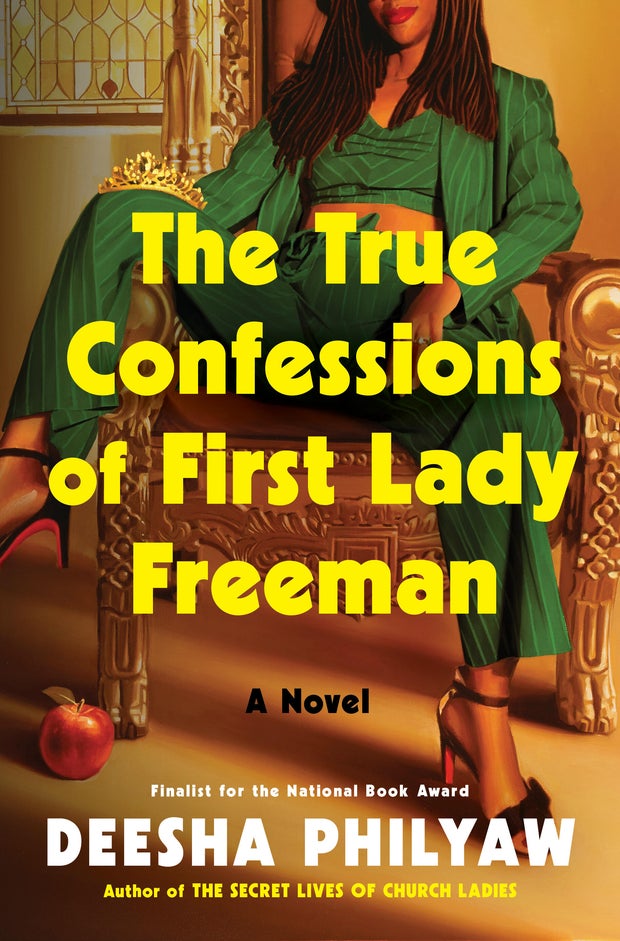
From the publisher: From the moment Scharisse Freeman ditched her humble roots and married a megachurch pastor fifteen years her senior, she's been labeled too brash and too "of the world" by church folks who grudgingly accepted her into their fold, and too holy by her estranged childhood bestie Petra. Schar doesn't have many allies, but that hasn't stopped her from building an enviable business empire spanning books to clothing to branded products, and living the comfortable life her husband's power affords her.
On the eve of her 40th birthday, Schar gets the final bit of validation she's always dreamt of: a coveted invitation to participate in the First Lady USA pageant. This is her chance to be accepted by the other pastors' wives—First Ladies—who are "like Jesus' disciples if they had been a group of mean girls." Finally, blissfully, the ice between Schar and the other First Ladies begins to thaw.
But as the pageant nears, a sensational scandal breaks with Schar at its center, and her carefully curated life implodes. Schar faces down shame and terrible secrets from her childhood and is reminded that in the eyes of the church, optics can matter more than the truth.
Deesha Philyaw lives in Miami, Florida.
"The True Confessions of First Lady Freeman" by Deesha Philyaw (ThriftBooks) $25
"The Three Graces of Pearl Street" by Elizabeth Wellington Rollins
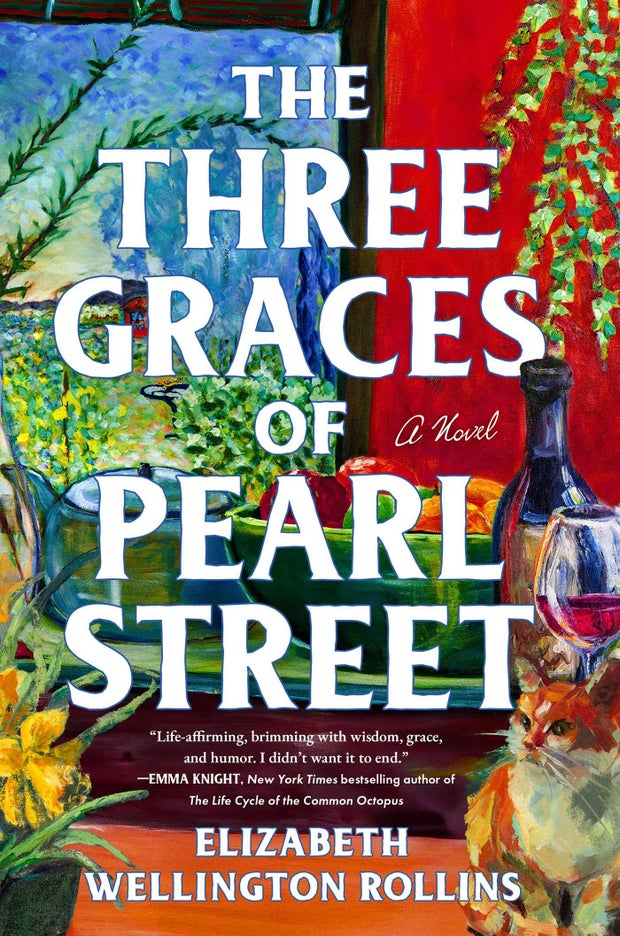
From the publisher: Graziella, a ninety-six-year-old former nun, spends her days running the parish's food kitchen, convinced it is her responsibility to keep everyone fed in their working-class New York neighborhood. Her daughter, Grace, a respected psychology professor, appears accomplished and composed, yet finds herself unmoored as her personal life falters. Ella—Graziella's granddaughter and Grace's daughter—is weary of defending her vegan diet and anti-capitalistic lifestyle; blind to her own brilliance, she longs, above all, for a place to belong. Living together again, the three Graces reckon with the distances that have shaped them, and with what it means, at last, to be fully known.
Elizabeth Wellington Rollins lives in Vermont.
"The Three Graces of Pearl Street" by Elizabeth Wellington Rollins (ThriftBooks) $23
________________________________________________________________________________________________________
Excerpt: "Mazywood" by Tananarive Due
Chapter One
GRACETOWN, FLORIDA
SUMMER 1926
Mazelle Washington worshipped the woods.
She didn't mind bug bites, or mysterious rustling in the brush, or twigs scratching her face and snagging her hair because the woods were so magical compared to the sameness of the cities her family had toured during her seven years of life. Rustling revealed deer, squirrels, raccoons, rabbits, possums, and animals she didn't yet know; quick flashes of brown, gray, and black. An entire world was hidden beneath the surface of the everyday one. Mother had read her stories about enchanted forests in fairy tales, but in Gracetown the enchantments felt real.
Today, she had set out to find the Wishing Pool, wearing overalls in case she needed to crawl or climb. It wasn't noon yet, so she had avoided the worst of the sun's afternoon glare. She waded into the high brush nestling the stand of pines, following the rough map she had drawn from the descriptions she'd heard, past the large wooden sign boasting FRESH PECANS! and the famed oak trees bending toward each other like twins. She'd crossed the road from her house to these woods, and knew she was headed the right way when she heard the gentle creek. She'd followed that creek many times to the more shaded parts of the forest, but never as far as the Wishing Pool.
She wanted to believe that if she found the Wishing Pool and threw in a penny—as long as she didn't touch the water in any way, even with her pinkie toe—her wish would come true the same day, or at least before morning. All the younger children at Jonathan C. Gibbs Primary School swore to the story, although the older children warned it was lies. Coincidences. Bad luck, some of the older children said. Others claimed that the Wishing Pool dried up and was impossible to find, except in the summer.
But it was summer now.
Priscilla Stephens had sat with her on the bench at lunchtime on the last day of school and told her how to make her wish, which she'd heard from her sister. Wishes always try to trick you, she warned her. So you have to say what you want without leaving nothin' out. Down to every little itty-bitty thing.
Mazelle had tried twice to find the Wishing Pool and given up, once because she was due for her chores and once because it was getting too dark—the woods changed its face at night, and her parents would be sick with worry if she didn't come home in time for supper. But today she had plenty of time. Mazelle ran past oak trees that had fooled her on her previous attempts, racing to follow the creek deeper into the wild woods.
She came upon it with a gasp as it appeared in the sun's rays splitting the treetops.
Grass shimmered like emeralds in the clearing ahead, so striking that she barely noticed the bending trunks of the mighty twin oaks, their leaves blending at their crowns. No grass grew in the deepest pond at the center, but it spread outward into the soggy grasses, more like a swamp. She looked down and saw she had almost stumbled into it—and if she had squatted lower to get a better look, she would have seen that the tippy-toe of her scuffed leather shoe had dipped beyond the spot where the water met the mud.
Hand shaking, Mazelle reached into her pocket and clutched her shiny copper penny in her clammy fingertips. She was about to toss it as hard as she could toward the Wishing Pool when she remembered to glance at the details of the wish she had written on back of her map. It would be foolish to come so far and fail at proper wishing. She took a breath and threw.
The penny arced, flying higher than she'd expected, but it still landed almost exactly where she'd aimed, rippling from the center of the pool after a tiny splash.
Mazelle closed her eyes because that was how she prayed.
"I wish I had a best friend forever," she said. "Someone to play with whenever I want. Who'll love me better than anyone else. Who'll keep me safe from anything bad." She didn't want to say in her wish that she wanted protection from her terrible older sisters, especially Doris, although it was true. She peeked at her wrinkled page again. She'd almost forgotten the most important part! "And I wish for my best friend to do shows with me, and we'll have the best act in the whole world."
Mazelle hoped she hadn't ruined her wish when she opened her eyes, but Priscilla had never told her to close them. Not knowing what else to say, Mazelle whispered, "Amen."
The sudden silence was an explosion in reverse.
No whirring bugs. No birdcalls or whispering leaves. Mazelle hadn't realized how noisy the woods were until the blanket of silence draped over her, as if the world had gone to sleep. Clouds she had not seen earlier muted the sunlight and turned the day gray. Mazelle remembered she was holding her breath when she saw red spots and swayed, dizzy.
Two birds squabbling overhead broke the quiet. Mazelle hadn't really expected to find her new best friend waiting on the other side of the Wishing Pool, but maybe she had a little. When she looked around and saw no one, she felt more alone than before her wish.
"I'm here!" she called out. "Come be my friend!"
The birds stopped fighting and fluttered away. No one answered. Of course.
The Wishing Pool, she decided, was just another lie.
On her way home, a dog was blocking her path in the middle of McCormack Road.
The dog wasn't big, but at Mazelle's petite size, it wasn't small either. Mazelle was in a bad mood after her gutting disappointment, and she didn't care a nickel for dogs. Her family had never kept pets because they spent so much time on the road. The only dogs she met were ragged strays, so she viewed children and dogs as natural enemies like gators and bobcats—except she didn't have sharp claws or teeth to fight back. And this dog was sitting ahead of her, fur matted as if it had crawled out of the rust-colored mud that dirtied her shoes from the woods. It was filthier than any city dog, caked in sludge with only two gray-white rings around its eyes to show its true color. The dog didn't look natural from the start.
When she stopped walking, the dog stood up, ears high at attention, tail wagging like it was trying to take flight. The dog might look like it was smiling, but all she saw were teeth that could bite through her clothes and crunch her bones.
"Git!" she said. "Get away!"
The dog only wagged a tail so short that it seemed chopped in half. Mazelle didn't know enough about the ways of dogs to understand that a wagging tail was a happy occasion, so the frantic motion from the stumpy tail looked like defiance. When his paws pitched forward, he looked like he was ready to launch at her.
She picked up a stick nearly as wide as her palm, waving it like a sword. Her heartbeat was throbbing in her hand, but she was ready to break this dog's skull if she had to. That's how easy killing to defend herself would come to Mazelle Washington from the time she wasn't as tall as the McCormacks' cattle fence.
But the dog did something she'd never seen any dog do: This dog lowered its head, let out a whimper… and collapsed its front legs, rear haunches still raised up high. The effect sounded crazy as she thought the word, but her eyes saw it plainly: This dog was bowing to her like one of King Arthur's knights in the stories Mother taught her at the schoolhouse. If this had been a grown man in shining armor instead of a muddy dog, he was bowing exactly as she'd imagined a knight should revere his queen.
"Good dog!" she said. His stumpy little tail wagged harder.
Excerpted from MAZYWOOD by Tananarive Due. Published by Saga Press/Simon and Schuster, an imprint of Simon & Schuster, LLC. Copyright © 2026 by Tananarive Due. All rights reserved.
Excerpt: "The True Confessions of First Lady Freeman" by Deesha Philyaw
First of All . . . a Note
Some folks who care more about tradition than the truth tried to get me to sign an NDA. But to hell with them, and that. None of the names have been changed. The people, institutions, and events that follow are as real as my regrets. Forget the gossip and lies you heard about my alleged failures as a wife and what I did behind closed doors. This is my story, the story of Scharisse Carmen (née Baxter) Freeman. And I'm telling it just like it happened, protecting no one, least of all my damn self.
Pageant Night
A Proverbs 31 woman is the Beyoncé of evangelicals. She rocks T- shirts and drinks from coffee mugs that declare, I'M A PROVERBS 31 WOMAN. Her babies wear bibs with MY MOMMY IS A PROVERBS 31 woman printed on them. Her husband drives a car with a KEEP CALM AND MARRY A PROVERBS 31 WOMAN bumper sticker. In an unlikely twist of fate in the early 1990s, I became a Proverbs 31 woman. But not just any Proverbs 31 woman. I became the ultimate Proverbs 31 woman, by marrying Rev. David Freeman, pastor of one of the largest Black megachurches in America. I wasn't yet twenty-three and my prefrontal cortex hadn't fully developed— so of course I thought I'd won the lottery.
Fast-forward eighteen years, and here I am backstage at the First Lady USA pageant, poised to take home the crown. I've spent most of these eighteen years unabashedly coveting the title. Both the New and Old Testaments list covetousness as a sin; I'm guilty as charged. But the saints would say I'm washed in the blood, so it all balances out. Now, finally, I get my chance to compete in the by-invitation-only pageant, which features twelve contestants, like Jesus's twelve disciples. All of us are pastors' wives, aka First Ladies.
The way I pictured it, becoming First Lady USA would be my life's pièce de résistance, the great equalizer between me and the other women, who, as the daughters and granddaughters and great-granddaughters of pastors, deacons, assistant deacons, Sunday school teachers, and other proper churchfolk, were born with respectable-but-not-quite-silver spoons in their mouths. I have no such lineage. The pageant had snubbed me for my first five years of eligibility, in part because I couldn't trace my family's church membership back to the signing of the Emancipation Proclamation, and in part because the space on my birth certificate marked "father's name" is blank.
Yet you best believe I've got the audacity— the pure, unmitigated gall— to parade around in this life and on this stage tonight like I belong here. Like I f****** own it.
I got invited to compete this year thanks to a changing of the guard in pageant leadership, namely Nate and Nikki Bailey, twenty-five-year-old, 420-friendly, millennial twins who recently told People magazine they like my "vibrations." Nate and Nikki's grandparents, Rev. and Mrs. Nathaniel Bailey, established the pageant in 1961 after their sixteen-year-old daughter Natalie missed her debutante ball due to a mysterious illness necessitating a nine-month stay at an unspecified clinic in California where her aunt just happened to live. Two years later, after Natalie married a preacher, Reverend and Mrs. Bailey hosted the very first First Lady USA pageant, rigged in Natalie's favor, of course. In 1980, the minimum age to compete was raised to thirty-five, after a newly crowned winner was quietly dethroned when pageant officials learned the married teen was sixteen, not eighteen, as she had claimed. No criminal charges were filed against her then-forty-five-year-old husband, who remained in the pulpit for another thirty years.
I first heard about the pageant from Lady Mae, my late mother-in-law. She'd competed in 1962 but didn't win and declined future invitations to compete. "Honey, those Baileys are something else," she told me. "Never met a paper bag test they didn't like."
"All the winners were light-skinned?" I'd asked.
"Not all, but enough of them for me not to waste my time again."
The pageant is held annually here in Belleton, Georgia, Nate and Nikki's hometown and mine too, in the one-thousand-seat Belleton Music Hall.* Before the Bailey twins took over, I'd been shut out of both the pageant and the unofficial sorority of First Ladies. But my age (I'm fifteen years younger than David) and lack of good church girl bona fides (my family only went on Easter, back in the day) aren't the only reasons I'm the odd woman out tonight. Eleven of the twelve of us competing have an especially not-so-great history. Ten years ago, I organized a trip to Honolulu, a "Sacred & Sensual" couples retreat sponsored by the Pure Passion sex toy company (except I had to spin it as a marital aids company). Honolulu proved to be the nail in the coffin for my admission into the sorority of megachurch First Ladies.
This pageant has been a reunion of sorts. By competing, I hoped to redeem myself in the eyes of my fellow contestants and gain their respect. I was so close. Before my scandale horrible broke, the other wives had finally started to warm up to me— even Daphne Lancaster, and she's colder than a witch's t**. See, the downside of marrying a pastor fifteen years older than me is that most of his peers' wives are also older, and since day one, they've whispered nasty things about me, like "child bride."
Anyway, you'd think antibiotics and a decade would have cleared things up between these ladies and me, but you would be wrong. These daughters of Jack and Jill, these purveyors of godly womanhood, these long-suffering brides of Kappas and Alphas, these wearers of lace-front wigs and Louboutins— these women really don't f*** with me. I have been with them, but not of them. In their eyes, I am still unworthy of their friendship, their sisterhood, their company, and most certainly of the First Lady USA title. Even if I win tonight, the victory will be bittersweet.
For the record, I've never been a fan of the Black church's insistence on treating pastors like heads of state and referring to their __________________________________________________________________________________________________________
* Belleton, Georgia, population 145,172, is located thirty miles southeast of Atlanta. Notable Belletonians, besides David and me, include the uncredited copywriter be hind the 1980s Hey Love compilation album, famous for the coldest line in TV advertising history: "Nooo, my brother. You got to buy your own.
__________________________________________________________________________________________________________
wives as First Ladies; it's not that deep. But along with the Prada-and-stiletto steez, the launch of my and David's custom line of dishware sold exclusively at Dillard's, and other trappings of this gig, I've taken the moniker in stride. I'm not a fan of hierarchies in general. And I've always felt conflicted about having my lifestyle funded by our congregation, some of whom can barely afford their rent, and who worship a god I'm not entirely sure I believe in. I'm definitely not on speaking terms with Him. But for nearly twenty years, I've kept those feelings and doubts locked up tighter than the Tiffany bracelets in my biometric safe.
Assistant stage manager Vanessa pops her gorgeous head, adorned with super- short, platinum curls, into the doorway of my dressing room. "You're up in five," she says. I nod.
I take one deep yoga breath— in through my nose, out through my mouth. And then another. Inhale nerves . . . exhale girl, you got this.
Excerpted from THE TRUE CONFESSIONS OF FIRST LADY FREEMAN" by Deesha Philyaw. Copyright © 2026 by Deesha Philyaw. Reprinted with permission from Mariner Books, HarperCollins Publishers.
Excerpt: "The Three Graces of Pearl Street" by Elizabeth Wellington Rollins
CHAPTER ONE
Christmas Eve
Arriving at 125 Pearl Street, Ella paused and then knocked on the door, which felt odd, given that she had spent every day of her childhood here. Her ninety-six-year-old nonna, who stood at four feet two inches tall, took one look at Ella and slammed the door shut.
Graziella Valentini had never been more disappointed in a person, a feeling she almost always reserved for men. Not when she found out Pope Pius XI had cooperated with Mussolini; not when her neighbor across the street installed sixty-seven garden gnomes in his front yard; not when her late husband dropped dead of a heart attack while making wine in the basement. The heart attack was not his fault, after all, but their granddaughter was. She had to be, because Grace was his fault too.
The connection between the three Graziellas, once as vital as an umbilical cord, had lost its pulse. For the past five years, Ella had only acquiesced to seeing them on Easter and Christmas Eve, which for an Italian-American family was equivalent to a declaration of war. Ella had first grown distant during her last year of college. She knew that visiting her grandmother's home today was likely to turn into a diplomatic incident.
"Nonna. Are you going to let me in?" Ella yelled, banging on the door.
"No," Graziella yelled back.
"No wonder she doesn't invite us to Brooklyn," Grace whispered to Graziella before opening the back door with a glass of red wine in one hand. Ella walked into the kitchen, and Grace hugged her. "How was the train, honey?"
Ignoring them both now, Graziella picked up two hot platters from the stove with hand towels.
"Fine," Ella said, her body rigid in Grace's grip. Grace let go, as though letting her daughter go was the most natural thing in the world.
"I'm sorry your dad couldn't be here," she added reflexively. Ella's father lived in Bermuda and commuted "home" once a month. Ella never saw him, and he didn't seem to mind, which racked Grace with a double dose of guilt despite her having no responsibility for either of them.
"I'm not sorry," Ella replied, taking off her puffer coat.
Grace's eyes took in her daughter's brittle frame—as delicate as the bony fish on the stovetop—and despair washed over her. Ella's loose, cropped shirt hung off the sharp edges of her collarbones and revealed the top of her insulin pump above her right hip. Grace softened her face, focusing on the light in Ella's chestnut eyes, knowing that her gaze would be felt by her daughter.
Graziella had no such sensitivities for her granddaughter's feelings. Unable to contain herself at the sight of such dire neglect, she put down the platters with a clang and grabbed Ella's hands, not out of warmth but to monitor their chill.
"Mostriciattola!" Graziella yelled in frustration. Ella's childhood nickname meant "little monster." It was supposed to be endearing, although it rarely felt that way.
Graziella ran so hot, she burned Ella to touch. She shook herself free. It was as if they thought her body was theirs rather than hers. It wasn't a new phenomenon. When Ella was diagnosed with type 1 diabetes at age five, the endocrinologist taught Grace and Graziella to recognize the clinical signs of dangerously high and low blood sugar.
In practice, avoiding both was a near to impossible challenge for Grace and Graziella, who were charged with balancing Ella's volatile blood sugar. Early mistakes in either direction meant an ambulance was called at home or at school. Much to Ella's benefit and regret, their knowledge of her condition soon surpassed the limitations of science and the boundaries she now wanted to have as an adult. The two older women developed a sensitivity to Ella's blood sugar the way a cat feels the weather change in its inner ear. Before Ella exhibited any symptoms of a blood sugar rise, Grace and Graziella were chasing her with a finger prick and an insulin pen—backstage before a choir performance, through a haunted house on Halloween, at a middle school dance.
Grace had tried to turn off this extra sense once Ella turned eighteen. It hadn't worked. Sometimes, she woke up in the middle of the night certain Ella's blood sugar was too low, despite her firm belief against superstition. Her profession as a psychologist forbade such magical thinking. Still, how else to explain the time she had tripped on the Upper West Side, sensing a blood sugar drop, and later discovered that Ella had fainted in a library nearby when her levels had bottomed out?
Graziella muttered something unintelligible and turned back to preparing the seven dishes she summoned from memory every year for the Feast of the Seven Fishes, an act of commemoration for her mother who had passed them on. Regardless of what anyone said about Christmas, Graziella believed it was a holiday for women—particularly women giving birth in dire circumstances, of which there were infinite variations. Ella did not understand, or she would take better care of herself. It had not been easy for the Valentini women to bring children into the world, let alone keep them alive. The problem was that Graziella's daughter, a renowned psychologist and Columbia professor, had overlooked the innate in favor of the intellectual. Grace spoke of parenting as if it were a philosophy. Parenting had failed Ella, and the girl had folded in on herself like thin paper bending into origami. This was how she'd become the empty shape that had arrived at Graziella's back door.
Excerpted from THE THREE GRACES OF PEARL STREET by Elizabeth Wellington Rollins. Published by Atria Books/Simon and Schuster, an imprint of Simon & Schuster, LLC. Copyright © 2026 by Elizabeth Wellington Rollins. All rights reserved.