Under Brooklyn's Kosciuszko Bridge, a native plant nursery flourishes amid pollution

In one of the most polluted corners of Brooklyn, a nursery of seedlings thrives beneath the Kosciuszko Bridge, supplying native plants to local parks and community gardens to help neighbors connect with nature.
Flowers enjoy their final days before winter's frost approaches in the lush greenspace, growing next to century-old industrial pollution and surrounded by three Superfund sites: two federal and one state.
"It makes the work that we do here even more poignant, even more important and even more needed," said Lisa Bloodgood, director of horticulture and stewardship at the North Brooklyn Parks Alliance.
Bloodgood says the organization founded the nursery three years ago on what had been an abandoned corner of the neighborhood.
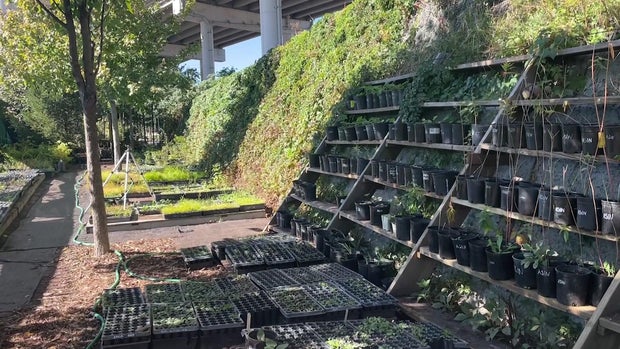
"We are growing from seed [plants] that are primarily wild, collected by our partners within the Parks Department," she said.
The focus is native New York plants — dozens of species collected from seed on a small hill lined with trees and perennial flowers.
"Native plants are like the quintessential New Yorkers. Like they are built to literally thrive in our ecosystem here," said Rebecca Louie, executive director of The Bee Conservancy, which works to protect pollinators.
"By being in our ground, they are building the resiliency of the city," Louie said. "They are great for absorbing water. They help mitigate the heat island effect."
The nursery plans to distribute close to 10,000 native plants this year, all free to parks and community gardens across the city.
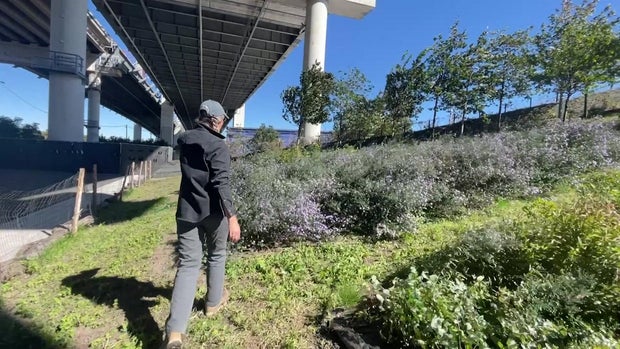
But operating in one of the most polluted neighborhoods in America comes with challenges. Hannah Wargo, community engagement coordinator with NYC Parks GreenThumb, the nation's largest urban gardening program, says safety is paramount.
"We provide clean soil and natural material to help balance their soil and make it safe for food growing," Wargo said. "And we also have safe soil policies. So any food that will be eaten has to be grown in a raised bed or growing container."
Despite the environmental legacy of industrialization, Bloodgood says the nursery demonstrates resilience.
"There are ways forward, there are ways to deal with it," she said. "There are plants that can do pretty incredible things. There's no silver bullet."
In a neighborhood where nature can be hard to come by, they'll cherish every flower that thrives under the bridge.
Have a story idea or tip in Brooklyn? Email Hannah by CLICKING HERE.