Senate fails again to advance funding for DHS as tempers flare over stalemate
Washington — The Senate failed again on Thursday to advance a measure to fund the Department of Homeland Security, with the impasse growing increasingly acrimonious nearly a month into the partial shutdown.
In a 51 to 46 vote, the measure fell short of the 60-vote threshold needed to move forward. The vote was Senate Republicans' fourth attempt to advance the measure, which would fund DHS through September. Sen. John Fetterman of Pennsylvania was the only Democrat to vote yes.
The department has been shut down since Feb. 14, after lawmakers allowed funding to lapse amid a disagreement over how to reform Immigration and Customs Enforcement and Customs and Border Protection, which are part of DHS. Democrats have opposed funding without reforms since the fatal shootings of Alex Pretti and Renee Good by federal agents in Minnesota in January.
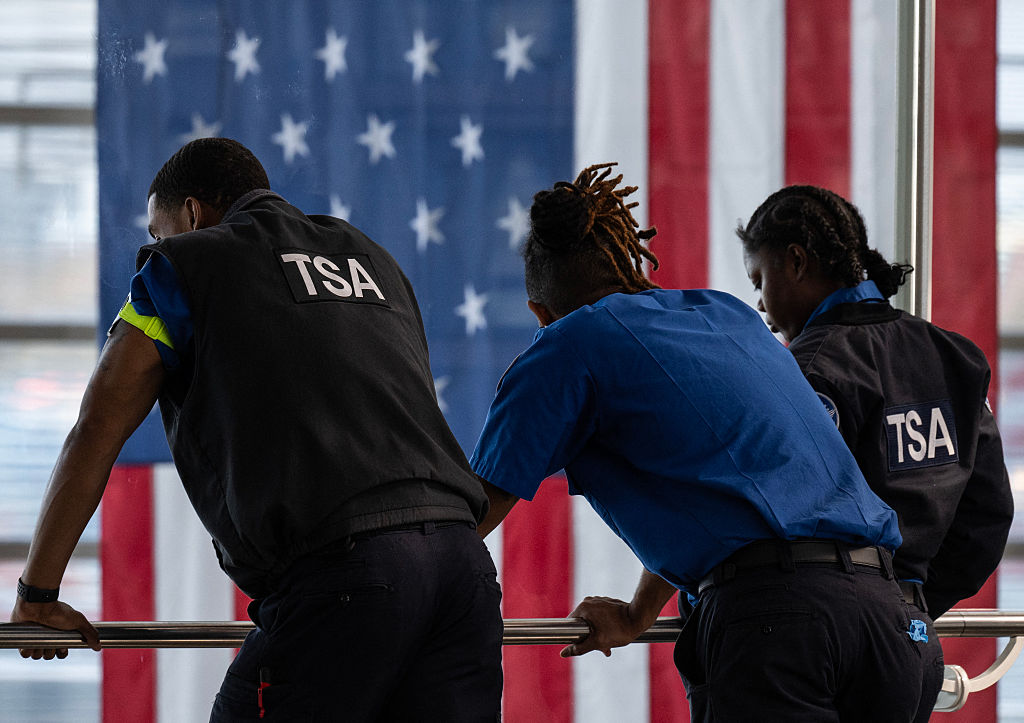
Democrats and Republicans alike have said they are nowhere near an agreement. The two sides have been trading blame in recent days as the shutdown's strains have begun to be felt, with long security lines stretching through airports. TSA agents are set to miss their first full paycheck this week. Absences have more than doubled, and hundreds of TSA workers have quit.
Both sides have pursued creative approaches to remedy the funding lapse. Ahead of the vote on Thursday, Republicans attempted to pass a short-term measure by unanimous consent to fund DHS while negotiations continue. Democrats blocked it. Democrats then attempted to pass measures to fund TSA, CISA, the Coast Guard and FEMA, which DHS also oversees. Republicans blocked those.
Senate Minority Leader Chuck Schumer outlined Democrats' position on the Senate floor Thursday, saying "we all know that we do not have agreement on how to deal with ICE." But he argued "we don't have to tie that disagreement up and use people at the airports and American citizens as hostages."
Senate Majority Leader John Thune responded to Schumer, reminding him that Republicans have tried repeatedly to pass a temporary measure to keep all of DHS funded as negotiations over immigration enforcement continue.
Republicans have railed against Democrats for their posture in the negotiations, claiming they have refused requests to sit down and resolve the issue. Sen. Susan Collins of Maine, the top GOP appropriator in the Senate, said "we cannot continue this way."
Collins argued that Democrats should support advancing the measure. She said the Senate should consider the White House's "good faith" offer from Feb. 26, which she said "addresses many of the concerns" that Democrats have raised.
"This offer would build on the reforms that were included in the bipartisan funding bill negotiated earlier this year, which included new safeguards to protect the American public and our law enforcement and increased oversight," Collins said, pointing to $20 million in the bill for body cameras.
The Maine Republican said the White House's latest offer "would go considerably further by increasing substantially the funding for the body-worn cameras."
"There are many other critically important, substantive reforms that are included in the White House's offer," Collins said. "But what do we hear from the Democratic leadership? Nothing, nothing in the two weeks since the offer was submitted. They won't even sit down and discuss the offer. I just do not understand it."
GOP Sen. James Lankford of Oklahoma said the White House's latest proposal featured options that he said Democrats should be able to agree on, including mandatory body cameras for ICE agents and CBP, name tags for all agents and ensuring that ICE has no presence at selective sensitive sites.
Lankford said the White House also offered deescalation training for federal agents; a full, open investigation of the two deadly shootings in Minnesota; and a change to the way that warrants are used, though he did not specify the change. Both the White House's proposal and the offers from Democrats that have been traded in recent weeks have not been made public.
Democrats have refuted the characterization that they are refusing to negotiate. Sen. Patty Murray of Washington, the top Democratic appropriator in the Senate, said on the Senate floor Wednesday regarding the White House talks that there are "continual conversations at that level." She argued that "having a few members talk is not going to resolve a situation where we need an understanding — and a clear understanding — from the White House."
"I am willing to talk to people, but I'm not willing to sit in a room, have coffee, give away a few things, and have Stephen Miller override whatever we all agreed to," Murray said.
Murray said it's up to the White House to make it "very clear" that someone is willing to negotiate who "understands what has happened in cities across our country, and in particular in Minneapolis, where two people were murdered."
"If we can hear those words, then I think we're on the way to coming to an understanding," she said.