Lindsay Clancy trial focuses on psychiatric care she received before killing children

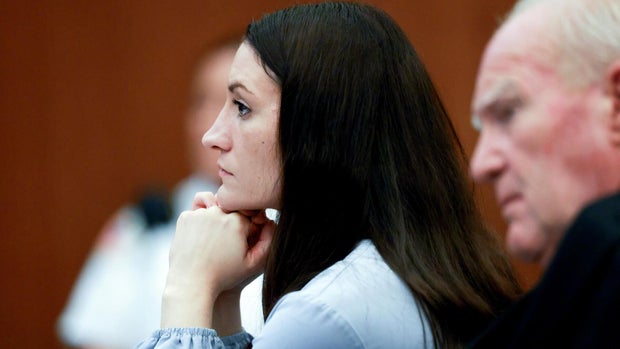
Lindsay Clancy's murder trial in Massachusetts resumed Tuesday with testimony from Rebecca Jollotta, a second psychiatric nurse practitioner who treated Clancy in 2022. Much of the questioning centered on the medication Clancy was prescribed and the care she received in the months before she killed her three children.
Clancy, who turned 36 on Tuesday, has pleaded not guilty to first-degree murder in the deaths of her three children, 5-year-old Cora, 3-year-old Dawson and 8-month-old Callan, in their home in Duxbury on Jan. 24, 2023.
Prosecutors, led by assistant district attorney Jennifer Sprague, say Clancy planned the murders. Clancy's attorney Kevin Reddington says she admits killing her children, but she shouldn't be held criminally responsible because she was suffering from postpartum psychosis and bipolar disorder.
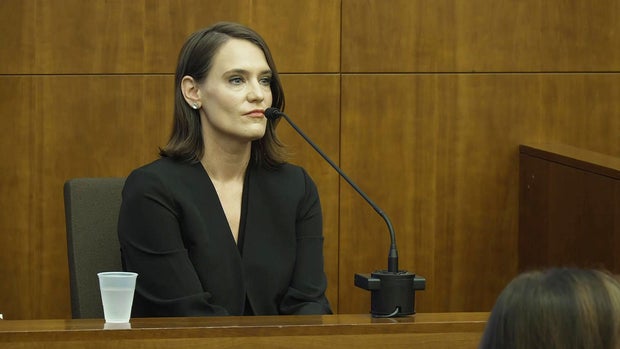
Rebecca Jollotta finishes testimony
Rebecca Jollotta, who works at South Shore Health in Weymouth and treated Clancy for several weeks starting in November 2022, spent nearly all of Tuesday on the stand.
On redirect questioning, Sprague attempted to show jurors that Jollotta did not believe Clancy was suffering from postpartum psychosis.
"In your experience in treating individuals with postpartum psychosis, whether they hear voices or not, did you ever have any concerns based on your contact with Lindsay Clancy that she was suffering from postpartum psychosis?" Sprague asked.
"I did not," Jollotta said, and Sprague ended her questioning.
Defense attorney Reddington spoke out following that answer, "It appears as though she was, doesn't it?" The prosecutor objected, but Reddington withdrew the comment and said he had nothing further.
Court ended for the day just before 4 p.m. as Jollotta concluded her testimony and stepped down.
Judge William Sullivan said attorneys tell him the proceedings are "well on schedule and somewhat ahead of schedule."
Patrick Clancy's concerns about medications
Earlier on cross-examination, Reddington asked Jollotta about Patrick Clancy's involvement in advocating for Lindsay. Patrick and Lindsay Clancy were married at the time of their children's deaths, but have since divorced and Patrick is now married to another woman.
Patrick came to one of Lindsay's appointments with Jollotta, and spoke with Jollotta on the phone two other times.
"I believe he was concerned about her symptoms and he thought they started when she started being medicated," Jollotta said.
Reddington asked her, "Do you recall that he said that 'You're turning her into a zombie?'" Jollotta said she did not recall that conversation.
"I would say he was concerned," Jollotta said.
Reddington asked if anyone addressed those concerns.
"I would say that day I collaborated with them to take her off certain medications," Jollotta said.
Cross-examination of Rebecca Jollotta
During cross-examination, Reddington went through the list of prescription drugs that Clancy was provided in the months before she killed her children.
He asked Jollotta if when a woman who has recently had a baby or is within the postpartum range comes to her clinic, it is normal for them to be treated.
"I in no way want to minimize what Lindsay experienced, but it's common for us to treat women who are …" Jollotta said, before Reddington interrupted and was reminded by the judge that only one person should speak at a time.
"Her symptoms were serious and it's not uncommon for me to treat women with serious symptoms in the postpartum period," Jollotta said, completing her answer.
Jollotta said she believed Clancy would be attending an outpatient program at Women and Infants Hospital of Rhode Island for two weeks in December 2022.
"Did you know that in fact they wouldn't accept her into the postpartum program because of their concern she had been overmedicated by drugs and they wanted to find out?" Reddington asked.
"I can't speak to that," Jollotta answered.
Reddington asked Jollotta if she knew that on Dec. 20, 2022, Women and Infants noted that they tried to reach Jollotta but did not receive a call back.
"They never called me. I absolutely would have called them back," Jollotta said.
Prosecutor finishes questioning psychiatric nurse practitioner
On Dec. 15, 2022, Lindsay and her husband at the time, Patrick Clancy, called Jollotta to say it had been "the worst day" for Lindsay.
Jollotta testified that Clancy was having persistent thoughts of suicide and they were ready to get her assessed for a higher level of care.
According to Jollotta, she told the couple to go to Mass General Hospital, which has a psychiatric unit. Jollotta said she recommended inpatient care for Clancy.
The next day, Jollotta learned that Clancy had gone to the ER but decided to remain outpatient. She began to attend a program at Women and Infants Hospital of Rhode Island.
After less than a week, Clancy was discharged from the program in Rhode Island. Jollotta said she told Clancy she was concerned that she'd been discharged.
Jollotta said her last contact with Clancy was Dec. 21, 2022. On Dec. 30, 2022, Patrick Clancy called South Shore Health to say his wife was safe but wanted to go to McLean Hospital in Belmont, Massachusetts.
Sprague completed her questioning just before 1 p.m. by confirming with Jollotta that Clancy never told her she had a plan to harm herself and kill her children.
Psychiatric nurse practitioner eyed bipolar disorder
Jollotta said that after mostly speaking virtually with Clancy, she later met with her and her ex-husband Patrick in person on Dec. 6, 2022.
According to Jollotta, Clancy did not mention anything about hearing voices, hallucinations or suicidal intent during the in-person meeting.
"I discussed to her and her husband the possibility of an underlying bipolar disorder," Jollotta said.
Jollotta said she recalls Patrick Clancy saying, "My wife is not bipolar."
The next day, Clancy messaged Jollotta to say that she had not slept well, took Ativan and then "got desperate" and took Benadryl.
"I'm desperate and really need help," Jollotta testified that Clancy told her.
Clancy asked for different medications, and Jollotta again suggested that she was concerned about a potential underlying mood and bipolar disorder.
On Dec. 12, 2022, Jollotta said she told Clancy she "strongly, strongly recommend" a partial hospitalization program.
Clancy had an in-person appointment scheduled for the next day, but she called to make it a virtual meeting.
"I feel like I'm going to die and I don't care"
Clancy was prescribed medications to help with her mental health struggles. According to Jollotta, after four days Clancy said the medication was not working. Jollotta said she encouraged Clancy to give it more time.
Jollotta said it was common practice to pair a low dosage of medications together to manage a person's symptoms.
"I thought it would help with depression, anxiety and sleep," Jollotta said.
Jollotta testified that Clancy did not report feeling suicidal, but said she "can't keep going on like this."
On Dec. 1, 2022, Clancy messaged Jollotta through the MyChart app.
"Sorry for all the messages, this is just a scary time for me," Clancy wrote, adding that she was scared of starting medications. In another message, Clancy wrote: "I'm willing to try anything."
Clancy said she was concerned that she felt addicted to one of the medications, Ativan.
"I feel concerningly numb right now ... like I have no emotion whatsoever," Clancy wrote to Jollotta that same day. "I feel like I'm going to die and I don't care. What do I do about this?"
Jollotta provided resources to Clancy for crisis intervention in case the symptoms got worse. She testified that she did not tell Clancy to go to the emergency room right away. She thought it seemed like anhedonia, which is a symptom of depression that can make people lose the ability to feel pleasure.
"My concern about that statement was that I wanted her to have access to the resources if it worsened," Jollotta said.
Defense wants to call TikTok user
Before testimony began for the day, attorneys argued before Judge William Sullivan about potential testimony from Emily Thorndike, who posted a TikTok video about her experience working at McLean Hospital in Belmont, Massachusetts.
Thorndike took issue with the positive description of McLean during Sprague's questioning of Lindsay Clancy's ex-husband Patrick.
Prosecutors say the testimony should not be allowed because Thorndike was not working at the facility when Clancy was admitted for treatment in 2022.
Judge Sullivan took arguments under advisement but did not make a ruling.
Lindsay Clancy trial
Julie Paul, the 61st witness in the trial, was on the stand briefly to start the day Tuesday. She testified for the prosecution Monday afternoon, telling the court she prescribed some psychiatric drugs to Clancy and that Clancy never mentioned having thoughts of killing herself or her children.
Paul was set for cross-examination on Tuesday, but it only lasted about a minute and she stepped down.
If convicted of first-degree murder, Lindsay Clancy faces life in prison without parole. If the jury of 12 women and six men finds that she was not criminally responsible for the deaths of her children, she will be sent to a state psychiatric hospital in Massachusetts.
If you or someone you know is in emotional distress or a suicidal crisis, you can reach the 988 Suicide & Crisis Lifeline by calling or texting 988. You can also chat with the 988 Suicide & Crisis Lifeline here.
For more information about mental health care resources and support, The National Alliance on Mental Illness HelpLine can be reached Monday through Friday, 10 a.m. to 10 p.m. ET, at 1-800-950-NAMI (6264) or email info@nami.org.


