Are 1-ounce silver bars a good investment?
While the price of gold tends to dominate headlines, the precious metal's counterpart, silver, has also been having a moment recently. As more investors flock to silver to diversify their investments and capitalize on potential price growth, silver prices have been surging to levels that even longtime investors are surprised by. Case in point? Silver's price skyrocketed from about $30 per ounce in early 2025 to over $100 per ounce in early 2026. The price of silver has moderated somewhat in the time since, but the sudden run-up has propelled silver from a quiet hedge into a hot topic among investors.
That renewed attention is also pushing more buyers, and new investors in particular, toward smaller, easier entry points like 1-ounce silver bars. These smaller silver bars are more affordable relative to larger options, are widely available online and are often marketed as a simple way to start owning physical silver. In turn, 1-ounce silver bars can feel like one of the most approachable ways to get exposure to the silver market without making a big financial commitment or investing in a more volatile asset.
But silver prices move quickly, and the form you choose matters as much as the decision to invest. So, does it actually make sense to invest in 1-ounce silver bars in today's market?
Start diversifying your investment portfolio with silver today.
Are 1-ounce silver bars a good investment?
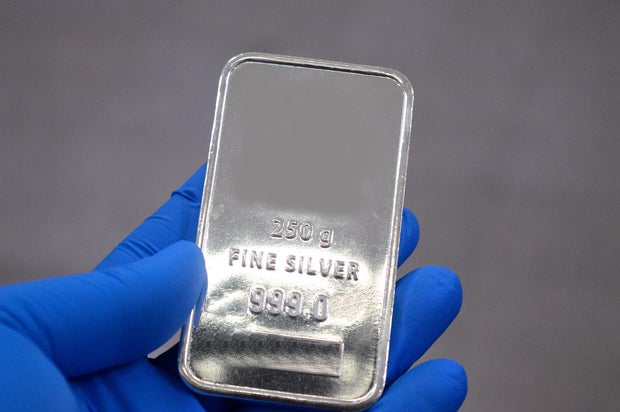
1-ounce silver bars are tangible, simple and familiar, and offer investors a small piece of physical silver with a clearly stated weight and purity. For many, that's part of the appeal. That said, whether they're a good investment depends on what you expect them to do for you. Here's what to know about 1-ounce silver bars before you buy in:
The higher premiums can eat into returns. Smaller silver products usually come with higher premiums over spot price than larger bars. In a market where silver has already run up sharply, that extra markup matters more. If you pay a steep premium going in, you need silver prices to climb even further just to break even when you sell, so keep that in mind when weighing your options.
The liquidity is solid — but it's not perfect. In general, 1-ounce silver bars are easier to sell compared to niche products, but they're not as universally recognized as popular government-minted coins. Local dealers and private buyers are typically more comfortable buying widely known silver coins, which can affect how quickly you can sell and at what price.
They offer purchasing flexibility to small, gradual buyers. If you're building a silver position slowly, focusing on 1-ounce silver bars lets you spread purchases out over time. That can help you manage timing risk in a fast-moving market, as you're not forced to guess the perfect moment to buy 10 or 100 ounces at once.
Storage and security still matter. Even small silver bars need to be stored safely to protect them from theft or other losses. And, as your silver collection grows, so does the responsibility of protecting it. That comes at a real cost, and it should be part of your overall return calculation.
They're best as a long-term hedge, not a quick trade. Physical silver shines as a store of value and diversification tool, not as something you flip in and out of every few weeks. If your goal is short-term trading or rapid liquidity, paper silver investments may be a better fit.
Compare your precious metal investing options online now.
What other silver investments are worth considering now?
If you're interested in silver but want to be strategic in today's market, it helps to look beyond just 1-ounce silver bars, as different formats solve different problems. Here's what to consider:
Larger silver bars: Larger silver bars usually come with lower premiums per ounce, which can make a meaningful difference when prices are already high. The trade-off, though, is flexibility. Selling part of your position is harder when your silver is tied up in fewer pieces, so that approach tends to suit investors who can commit more capital at once and hold long-term.
Silver coins from government mints: Coins like American Silver Eagles or Canadian Maple Leafs often carry higher premiums than generic silver bars, but they're widely recognized and easy to resell. In choppy markets, that liquidity can matter, so this option can make sense for investors who value fast resale and broad acceptance.
Silver rounds: Silver rounds look like coins, but they aren't legal tender, and as a result, this option typically costs less than government-minted coins while still being familiar to buyers and dealers. For investors who want a balance between recognition and lower premiums, silver rounds can be a practical option.
Silver exchange-traded funds (ETFs) and paper silver: If storage and security feel like a hassle, silver ETFs offer exposure to price movements without physical ownership. They're easy to buy and sell, and they work well for short-term positioning. The downside? You don't actually own the metal, and you're exposed to market and fund risks.
The bottom line
1-ounce silver bars can make sense if you're looking for a simple, tangible way to start owning physical silver, especially if you're building a position gradually. But in a market where silver prices and premiums are elevated, they're not always the most cost-efficient choice. For larger allocations, bigger bars or a mix of coins and bars may stretch your dollars further, while ETFs offer flexibility for more active strategies.